FibroCeram Materials
FibroCeram Materials
FibroCeram Materials
Engineered to operate under extreme thermal conditions, offering low thermal conductivity, high tensile strength, and optimized energy efficiency.
Providing industry-leading solutions with high-purity raw materials and world-class manufacturing processes.
Industrial thermal insulation is no longer just about choosing a barrier; it is about engineering a system that optimizes thermodynamic performance, reduces CO₂ emissions, and guarantees mechanical integrity under high heat stress. Henan FibroCeram Advanced Materials Co., Ltd. (operating globally with Titan New Material) stands at the forefront of this industrial revolution as a premier Chinese manufacturer of high-purity aluminosilicate ceramic fibers.
By blending advanced chemical formulations with precise processing controls, our refractory solutions address critical thermal transfer vectors: conduction, convection, and radiation. Minimizing the shot content (unfiberized particles) in our raw bulk fiber ensures that our materials maintain superior structural cohesion and insulating capacity over years of continuous operation at temperatures exceeding 1000°C.

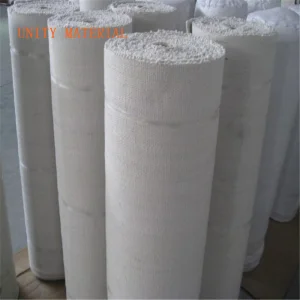
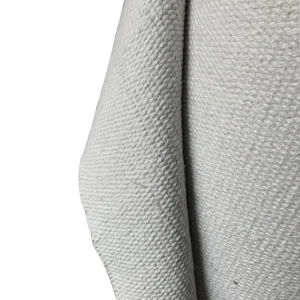
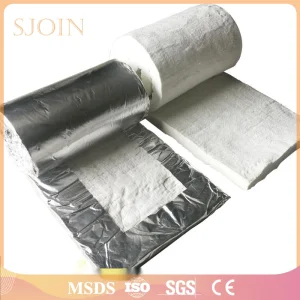
Our ceramic fiber blankets are manufactured utilizing double-needle stitching, which eliminates the need for organic binders. This process guarantees high tensile strength both before and after heating, ensuring they do not tear under rapid thermal cycling.
Classified into three temperature thresholds—1260°C, 1300°C, and 1430°C—these blankets feature thicknesses ranging from 6mm to 50mm and densities from 64kg/m³ to 160kg/m³ to suit specific industrial configurations.

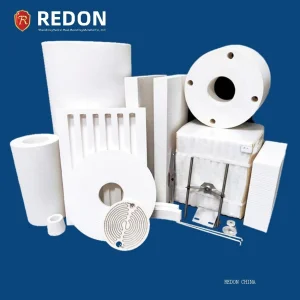
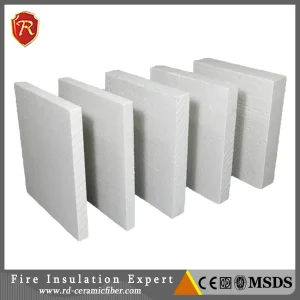
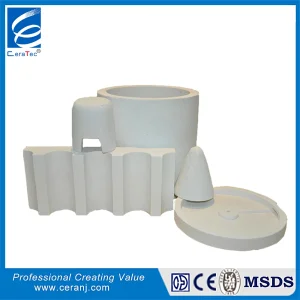
Engineered via vacuum-forming processes, our ceramic fiber boards provide excellent structural rigidity and compressive resistance. Developed to handle mechanical loads and gas velocities, they are ideally suited for furnace hot-face linings and flue-gas ducting.
Classified across 1260°C and 1430°C limits, these boards come in thicknesses from 6mm to 100mm, with custom densities ranging between 220kg/m³ and 600kg/m³.

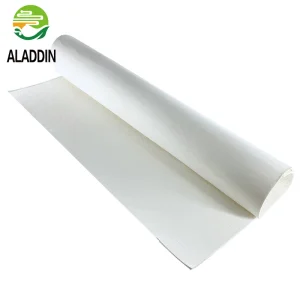
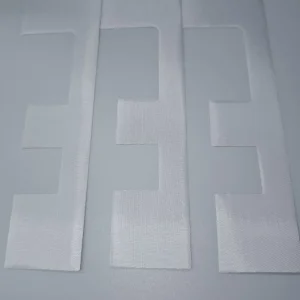
Designed for space-constrained, high-precision thermal insulation applications, our ceramic fiber papers are formulated with highly washed fibers and a minimal, clean-burning organic binder. This configuration delivers high tensile strength and flexible handling characteristics.
Available in three specialized variants—1260°C Standard, 1350°C High-Aluminum, and 1430°C Zirconia (ZrO₂)—with thicknesses spanning 1mm to 10mm and densities between 170kg/m³ and 220kg/m³.

Designed to optimize furnace lining speed and minimize joint shrinkage, our pre-compressed fiber modules offer a robust thermal barrier. Available in both stack-bonded and folded variants, they expand laterally upon installation to seal joints securely.
We provide these modules in densities from 160kg/m³ to 240kg/m³. Each module can be pre-configured with integrated anchoring kits (Type S, M, or T) manufactured from heat-resistant SUS304 or SUS310 stainless steel.
How ceramic fiber solutions adapt to critical regional industries, from municipal waste processing to aerospace metallurgy.
Our high-density blankets and customized vacuum-formed modules line the hot faces of Regenerative Thermal Oxidizers (RTOs), shuttle kilns, rotary kilns, and muffle furnaces. They resist cyclic gas erosion and thermal shock, maximizing uptime and reducing fuel consumption.
Movable and tunnel kilns used in structural clay and ceramic manufacture require lightweight roofs and walls. Upgrading to fiber modules and blankets reduces support structure weight by up to 40% and simplifies maintenance.
For commercial pizza and baking ovens, safety is paramount. Our food-contact safe, bio-soluble, and low-bio-persistent blankets provide efficient insulation, allowing ovens to reach operating temperatures quickly while keeping outer shells safe to touch.
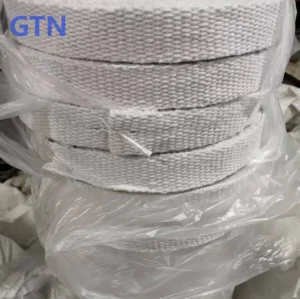
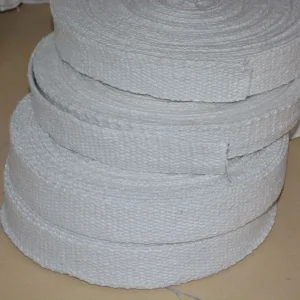
From ladle covers to reheating furnace linings, the steel sector operates under demanding physical conditions. Our reinforced fiber tapes and high-zirconia blankets prevent heat loss and protect critical mechanical structures from slag splatters and radiant heat spikes.
Standard building regulations require strict fire barriers in commercial structures. High-density, thin ceramic blankets and papers fit inside fire doors, preventing smoke passage and keeping unexposed face temperatures low during fire events.
Refineries and chemical plants route superheated process steam across long pipe networks. Wrapping piping with ceramic fiber blankets or rock wool protects operations against ambient weather variations and minimizes heat loss.
How the ceramic fiber industry is evolving to meet decarbonization goals and international environmental regulations.
Focusing on refining raw materials to reduce shot content to below 5%. This step increases the volume of active insulating fibers per cubic meter, lowering thermal conductivity and improving tensile strength across all product lines.
Developing Alkaline Earth Silicate (AES) fibers that dissolve in human lung fluids. This design addresses health and safety regulations (such as REACH and OSHA) without compromising high-temperature insulation capabilities.
Integrating nano-pore silica aerogels into ceramic fiber structures to achieve low thermal conductivity at temperatures below 600°C. This hybrid technology is designed for electric vehicles (EV) and compact electronic systems.
China is a leading global supplier of ceramic fibers, accounting for over 50% of the world's production capacity. Our manufacturing hubs in Henan leverage high-grade bauxite deposits and local industrial integration to secure raw material supplies and stabilize pricing.
This localized supply chain allows us to maintain consistent lead times, even during energy market shifts. By pairing modern electric arc smelting furnaces with automated packing lines, we ensure high material purity and consistent quality control across every production batch.
Our proximity to major deep-water ports (such as Qingdao and Tianjin) ensures smooth ocean logistics, enabling container shipments to reach global industrial sites on schedule.
Entering international markets requires alignment with strict industrial compliance codes. Our export products are fully compliant with global standards:
Engineering-grade answers to help you select, install, and optimize ceramic fiber systems.
Thermal shrinkage is primarily caused by crystallization and grain growth within the aluminosilicate structure at high temperatures. Continuous exposure to temperatures near the classification limit results in density changes and linear contraction. To prevent this, design linings with a safety margin (e.g., using a 1430°C ZrO₂-stabilized blanket for continuous 1250°C applications) and use pre-compressed ceramic fiber modules to absorb thermal movement.
Shot content refers to unfiberized glass particles created during the melt-blowing or melt-spinning process. These particles do not contribute to insulation; they increase the bulk density and thermal conductivity of the material while lowering its tensile strength. Keeping shot content below 5% through refined washing processes ensures low thermal conductivity and improved handling strength.
Organic binders are added to ceramic papers to improve flexibility and green strength during die-cutting and installation. When first heated above 180°C, these binders burn off, which can cause minor smoke and odor. If you are operating in closed environments or vacuum ovens, specify a pre-fired or low-binder grade paper to prevent outgassing and contamination.
Spun fibers feature longer average length and higher tensile strength, making them ideal for applications subject to physical vibration or requiring high mechanical durability (such as blankets and modules). Blown fibers are shorter, producing a fine, low-conduction structure that is well-suited for vacuum-forming processes, ceramic board production, and complex custom shapes.
Ceramic fibers offer excellent resistance to chemical attack from most acids and organic solvents. However, they are susceptible to damage from hydrofluoric acid, phosphoric acid, and strong alkalis (like sodium or potassium hydroxides), which react with silica to form low-melting-point silicate eutectics, degrading the fiber structure.
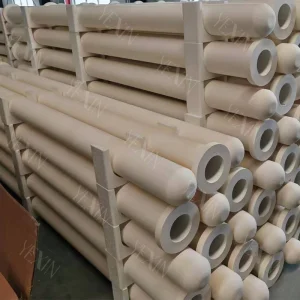
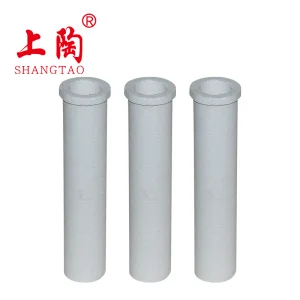
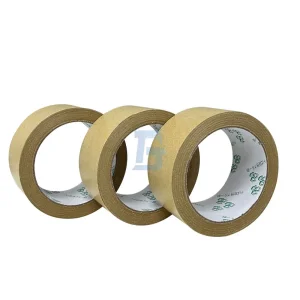
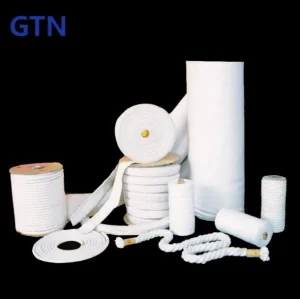
Tailored configurations including vacuum-formed tubes, papers, and high-integrity tapes for specialized thermal insulation applications.