FibroCeram Materials
Four high-demand specifications for Mulifanua-based fabricators, marine engineers and industrial maintenance teams. Each grade is available in rolls, sheets and cut-to-size panels with documented thermal data.
The Mulifanua market sits at the crossroads of Samoa's tourism-driven construction boom, its small but growing manufacturing base, and its heavy reliance on imported industrial goods. Understanding that supply map is the single biggest lever for procurement cost control.
Samoa's insulation demand is import-led. There is no domestic ceramic fiber production in Samoa. Every roll of refractory blanket used by a Mulifanua workshop, resort boiler room or marine repair yard arrives by container from abroad. That makes supplier selection — not material cost — the dominant variable in total landed cost.
Chinese factories compress the landed price. Henan FibroCeram Advanced Materials Co., Ltd. operates as a direct manufacturer rather than a trading intermediary. Bulk raw material purchasing, continuous needling lines and in-house quality control remove two layers of margin that a regional distributor would otherwise add. For Mulifanua buyers consolidating a mixed container, that can translate to 18–32% savings versus sourcing through an Australian or New Zealand re-exporter.
Consolidation matters more than unit price. Because Samoa's shipping lanes are limited, Mulifanua importers typically build mixed containers. A manufacturer that produces blankets, boards, papers, modules and castables under one roof shortens the consolidation cycle and reduces the number of suppliers a buyer must audit — a critical factor for a market with a small number of active industrial importers.
Mulifanua is best known for its ferry terminal and international wharf — the primary cargo gateway linking Upolu to Savai'i and to overseas freight. That geography creates a very specific cluster of insulation use cases.
Ferry terminal maintenance crews and marine repair contractors use high-density ceramic fiber blanket as a fire barrier and thermal shield around exhaust runs, engine-room bulkheads and hot pipework on inter-island vessels and tugboats serving the Mulifanua crossing.
Beachfront resorts along the northwest coast run diesel generators, hot water boilers and commercial kitchen ovens continuously. Blanket insulation in 25mm and 50mm formats wraps boiler shells and ductwork, reducing heat loss and protecting staff from surface burns.
Small-scale food processors producing bread, cocoa products and coconut derivatives rely on brick and deck ovens. Ceramic fiber blanket acts as a lightweight backup lining that cuts warm-up time and stabilizes chamber temperature between bakes.
Fire-rated doors, service penetrations and generator enclosures in commercial buildings use high-density blanket as a core insulant. Local fabricators cut and laminate the material on-site, which requires predictable thickness tolerance from the factory.
Samoa's construction material producers operate tunnel and movable kilns. Ceramic fiber modules and blankets line kiln car tops and expansion joints where rigid brickwork would crack under repeated thermal cycling.
Workshops performing heat treatment, welding and brake servicing use small blanket offcuts as welding blankets and localized heat shields — a low-cost, high-turnover consumable that suits compact island inventory budgets.
Most competitor pages describe ceramic fiber blanket in generic technical terms and stop there. What a Mulifanua buyer actually needs is a decision framework: which grade survives salt-laden humid air without binder breakdown, how a 128kg/m³ blanket compares to a 96kg/m³ blanket in a mobile ferry engine room, and what documentation a Samoan customs broker will require at the wharf.
This page is structured to answer those questions rather than to repeat the same specification table found on a hundred other sites.
Sourcing from a Chinese factory across a long Pacific freight lane creates legitimate concerns about documentation, moisture damage and after-sales responsiveness. These are addressed structurally, not with promises.
Ceramic fiber supply is not static. Several shifts are actively changing how Pacific island buyers specify and purchase blanket insulation.
Health-and-safety frameworks are tightening around respirable fibre exposure. Bio-soluble blankets — including the 1200°C aerospace-oriented grade in this catalogue — dissolve more readily in physiological fluids and are increasingly preferred where installers lack full respiratory protection.
Demand is moving from thick 50mm batts toward 25mm and 13mm high-performance blankets and aerogel composites. In island markets where storage space is scarce, thinner material delivers comparable R-value with far less warehouse footprint.
Post-pandemic inventory discipline has pushed Mulifanua importers away from annual bulk buys toward quarterly mixed orders. Factories that support low minimum order quantities and flexible container consolidation are winning share over those demanding full-container single-SKU orders.
Buyers increasingly expect digital batch traceability — a scannable record linking a delivered roll to its production run. This is becoming a differentiator in tender responses for resort and infrastructure projects funded through international development programs.
Aerogel-blanket laminates and ceramic-fiber-plus-microporous hybrids are entering the market for space-constrained applications. These command a price premium but reduce total installed thickness — attractive on vessels where every millimetre of engine room clearance counts.
Pacific freight rates fluctuate sharply. Compressed, higher-density blanket packaging lets buyers fit more thermal performance into the same container volume — effectively hedging against rate spikes without changing supplier.
Henan FibroCeram Advanced Materials Co., Ltd. — Thermal Insulation Material Experts — is a major ceramic fiber manufacturer in China, offering ceramic fiber blankets, bulk fiber, boards, papers, modules, refractory castables and refractory bricks. Global demand for these product families continues to concentrate around manufacturers who can supply the full refractory system rather than isolated components.

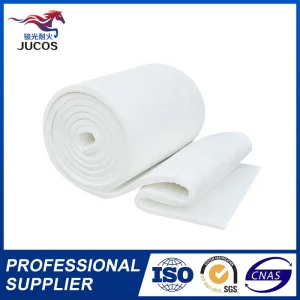
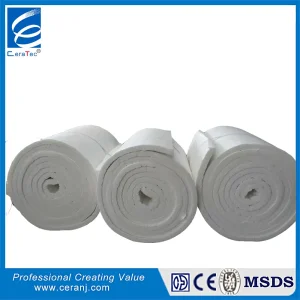
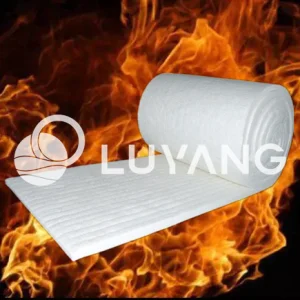
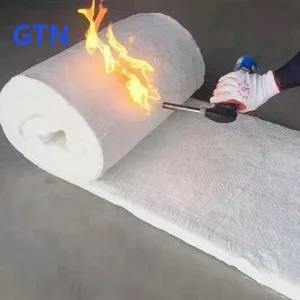
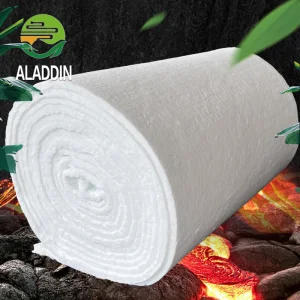
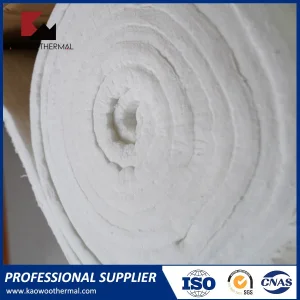
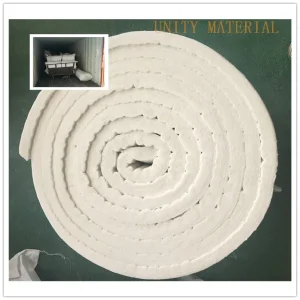
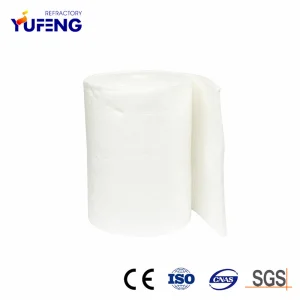
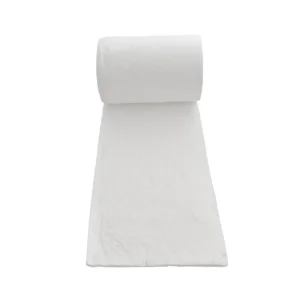
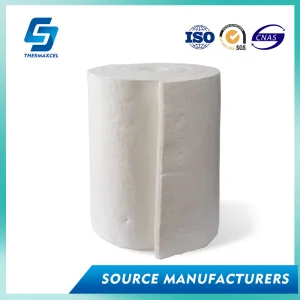
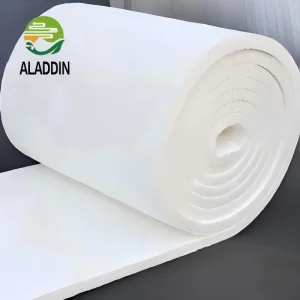
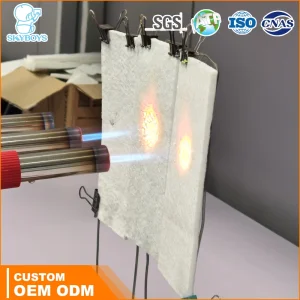
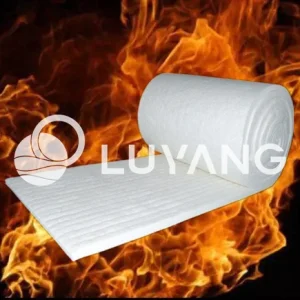
Classified into three temperatures 1260°C, 1300°C and 1430°C, with thickness from 6mm to 50mm and densities from 64kg/m³ to 160kg/m³.

Two temperature classes, 1260°C and 1430°C, with thickness from 6mm to 100mm and densities from 220kg/m³ to 600kg/m³.

Three types — 1260°C standard, 1350°C high alumina and 1430°C ZrO₂ — with thickness from 1mm to 10mm and densities from 170kg/m³ to 220kg/m³.

Made from ceramic fiber blanket in stack-bonded and folded forms, density 160kg/m³ to 240kg/m³, with Type S/M/T anchors pre-installable.
For Mulifanua buyers, this breadth is operationally significant. A single purchase order can cover kiln lining blanket, fire-door board, expansion-joint paper and furnace module — all produced to a single quality system and shipped in one consolidated container. That reduces the number of commercial invoices, the number of quality audits and the number of parties who can introduce specification error.
Our ceramic fiber products are widely used in the ceramics industry, metallurgical industry, electrical appliances, pipe thermal wrapping and passive fire protection sectors — all of which have direct equivalents in Samoa's commercial landscape.
RTO incinerator, shuttle kilns, rotary kilns, rolling kilns, muffle furnaces etc.
Movable and tunnel kilns for ceramics and red bricks.
Thermal insulation for pizza ovens.
Refractory materials are widely used in the steel industry.
High-density ceramic fiber blankets are widely used as the thermal insulation material of fire doors.
Ceramic fiber or Rockwool are widely used as the thermal insulation material for industrial pipings.
Explore the complete range of ceramic fiber blanket specifications. Each product link leads to detailed technical data, available thicknesses and density options, and current factory pricing for consolidated export orders.
Tropical maritime climates impose specific stresses on refractory insulation. These are the practical selection rules our technical team applies when advising Pacific island buyers.
For static furnace and kiln linings, 96–128kg/m³ blankets offer the best balance of insulating value and mechanical resilience. Where vibration or physical abrasion is present — ferry engine rooms, mobile kiln cars — move up to 128–160kg/m³. Lower densities like 64kg/m³ are suitable only for protected cavity fills.
Organic binders burn off on first heat-up, producing a temporary smoke plume. In enclosed food-processing rooms or resort plant rooms, specify the binder-free or low-binder CE-certified line to avoid odor complaints during commissioning.
25mm is the workhorse thickness for duct wrap and boiler shells where space is limited. 50mm is preferred for kiln and furnace hot-face backup where the thermal gradient across the lining is steep. 13mm and 6mm formats suit gasket and expansion-joint duty.
Salt-laden air accelerates corrosion on steel substrates. Blanket itself is chemically inert, but specify low-chloride formulations where insulation contacts stainless steel, and always ensure the blanket stays dry before enclosure. Wet-installed blanket traps chlorides against the shell.
Yes. Blanket rolls are consolidated and shipped by sea from Chinese ports, typically transiting through a Pacific hub before arriving at the Mulifanua wharf. Standard lead time from order confirmation to arrival is generally in the range of five to eight weeks depending on sailing schedules and consolidation. LCL shipments are possible for smaller orders, and full containers are more economical for orders above roughly 15 cubic metres.
For exhaust and hot pipework shielding on vessels operating out of Mulifanua, a 1260°C grade blanket at 128kg/m³ in 25mm or 50mm thickness is the standard recommendation. The higher density resists vibration-induced compression, and the 1260°C classification comfortably covers exhaust gas temperatures on most inter-island ferry and workboat engines. Where weight is critical, thinner high-performance grades can be substituted after a thermal calculation.
Ceramic fiber blanket can cause temporary skin irritation from mechanical abrasion. Standard practice is to wear long sleeves, gloves and a dust mask during installation. Bio-soluble grades — such as the 1200°C bio-soluble blanket in this catalogue — are formulated to be more readily cleared from the respiratory system and are preferred where full PPE compliance is difficult to enforce. Always follow the supplied safety data sheet.
Every export order includes a commercial invoice, packing list, bill of lading and certificate of origin. CE-certified products additionally ship with a declaration of conformity and batch test certificate. Safety data sheets are provided in a format suitable for port authority review. Where a Samoan customs broker requires specific additional declarations, these can be prepared on request before shipment.
Yes, and for most Mulifanua buyers this is the most economical approach. Because blankets, boards, papers, modules and castables are all produced within the same manufacturing operation, a mixed container can be assembled with a single set of export documents and one quality system behind every item. This reduces both freight cost per unit and the administrative burden on the importer.
Rockwool is generally adequate for lower-temperature pipe insulation and is often cheaper per cubic metre. Ceramic fiber blanket becomes the better choice above roughly 650°C, where rockwool's binder breaks down. For steam and hot-water lines in resort plant rooms, rockwool may suffice; for exhaust runs, kiln areas and furnace-adjacent pipework, ceramic fiber blanket is required.
Yes. Sample swatches of standard blanket grades are available so that Mulifanua buyers can verify thickness, density and handle before committing to a container order. Sample requests are typically processed alongside a specification discussion so that the sample matches the intended application rather than being a generic offcut.
Minimum order quantities depend on the grade and format. Standard 1260°C blanket rolls can be shipped in relatively small LCL volumes, while custom-density or custom-thickness production typically requires a larger minimum. For buyers uncertain about volume, the practical approach is to combine several product families into one consolidated order, which brings the total shipment to an economical threshold without over-committing on any single SKU.
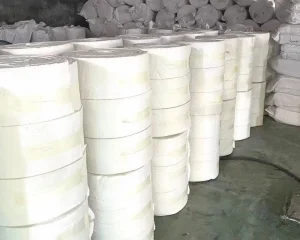
Store rolls in a dry, covered area off the ground, with the original poly-wrap intact until installation. Mulifanua's humidity means unprotected blanket can absorb moisture, which reduces insulating performance and can introduce chlorides against steel substrates. If blanket becomes damp, it should be dried thoroughly before enclosure. Desiccant sachets included in the original packing should remain in place until the roll is opened for use.
Yes. Technical support covers installation guidance, grade substitution advice when a specified format is unavailable, anchor and module layout drawings for relining projects, and replacement-part matching against historical order records. Response is handled through the same contact channel used during the original enquiry, so the technical context is retained.
Send your application details — operating temperature, thickness, density and quantity — and our technical team will respond with a specification recommendation and a consolidated export quotation.
Send Inquiry Now