 FibroCeram Materials
FibroCeram Materials
FibroCeram Materials
High-performance ceramic fiber blankets optimized for Latvian district heating, metal fabrication, and sustainable thermal processing plants.
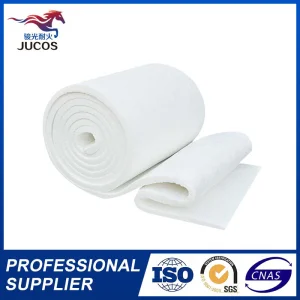
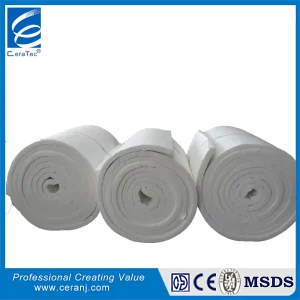
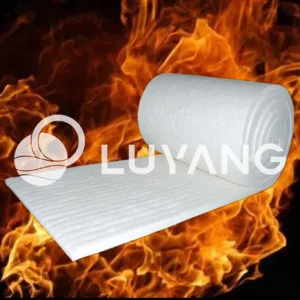
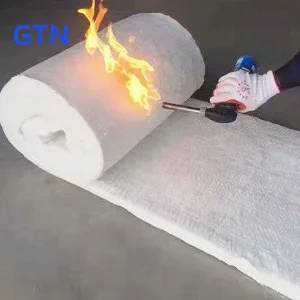
Latvia's strategic geographical location on the Baltic coast makes it a pivotal hub for regional logistics, green energy transitions, and wood-processing operations. In recent years, Latvia's industrial sector has prioritized thermal efficiency and decarbonization in line with European Union energy efficiency regulations. This shift has driven significant demand for advanced refractory insulation materials, particularly ceramic fiber blankets.
Key industrial centers such as Riga, Daugavpils, Liepāja, and Ventspils are home to manufacturing complexes that require heavy-duty thermal insulation. From timber drying kilns and biomass CHP (Combined Heat and Power) plants to metallurgical foundry operations, the necessity of maintaining thermal integrity while reducing greenhouse gas emissions is paramount. High-performance ceramic fiber products provide the low thermal conductivity, high tensile strength, and thermal shock resistance required to optimize operations in these demanding environments.

The global refractory insulation market is experiencing a significant technological evolution, characterized by a transition from traditional slag wool and rock wool insulation to high-purity spun alumina-silica fiber systems. In Latvia, where importing raw materials is crucial for domestic production, partnering with vertically integrated manufacturers ensures consistency in material composition and high temperature thresholds.
As a prominent global exporter, Henan FibroCeram Advanced Materials Co., Ltd. (operating globally with the Titan New Material brand) maintains state-of-the-art production facilities to engineer ceramic fiber blankets that meet stringent European standards, including CE certification, ISO 9001 compliance, and REACH chemical safety standards. By utilizing high-purity alumina and silica sands, our production processes yield blankets with extremely low shot content, ensuring exceptional thermal barrier properties and structural durability across the Baltic region.
Thermal Insulation Material Experts Engineering Global Class Solutions
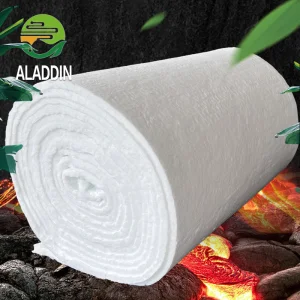
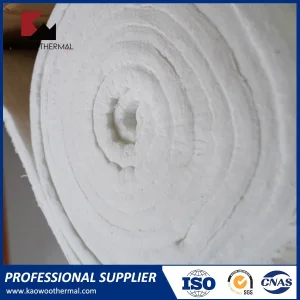
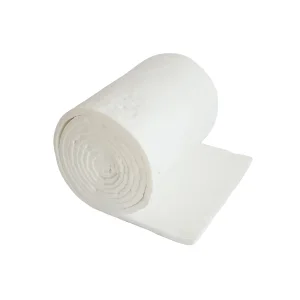
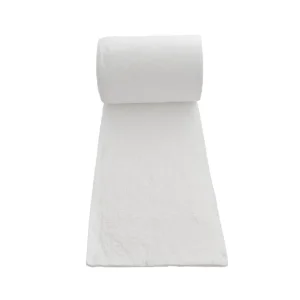
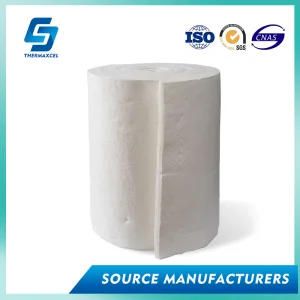
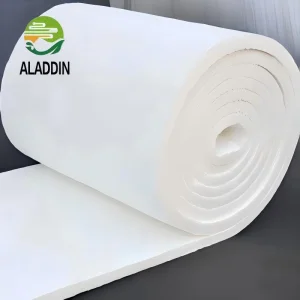
Classified under three primary temperature profiles (1260°C, 1300°C, and 1430°C) with thicknesses ranging from 6mm to 50mm and densities from 64kg/m³ to 160kg/m³. Outstanding tensile strength for easy handling and structural stability.
Classified into 1260°C and 1430°C configurations. Thicknesses range from 6mm to 100mm, with densities from 220kg/m³ to 600kg/m³. Offers high rigidity, structural modulus, and resistance to erosive gas velocities.
Engineered in Standard (1260°C), High-Aluminum (1350°C), and Zirconia-Grade (1430°C) categories. Thickness range: 1mm to 10mm; densities: 170kg/m³ to 220kg/m³. Ideal for precision gaskets and expansion joints.
Manufactured using folded or stack-bonded blankets. Densities from 160kg/m³ to 240kg/m³. Features integrated anchoring systems (Types S, M, and T) designed to expedite furnace lining retrofits and minimize downtime.
Selecting the correct refractory insulation involves analyzing chemical purity, density, and thermal conductivity under operational pressure. Below is the technical specification profile for our core ceramic fiber blankets deployed across European thermal facilities:
| Technical Characteristic | Standard Grade (1260°C) | High-Pure Grade (1300°C) | Zirconia Grade (1430°C) |
|---|---|---|---|
| Chemical Composition (%) | Al2O3: 44-46% | SiO2: 52-54% | Al2O3: 47-49% | SiO2: 50-52% | Al2O3: 39-40% | SiO2: 42-43% | ZrO2: 15-17% |
| Density Options (kg/m³) | 64, 96, 128, 160 | 96, 128, 160 | 96, 128, 160 |
| Thermal Conductivity (W/m·k) | 0.09 - 0.12 (at 600°C) | 0.08 - 0.11 (at 600°C) | 0.12 - 0.16 (at 1000°C) |
| Tensile Strength (MPa) | 0.04 - 0.06 | 0.05 - 0.07 | 0.06 - 0.08 |
| Shot Content (d > 0.25mm) | ≤ 15% | ≤ 12% | ≤ 10% |
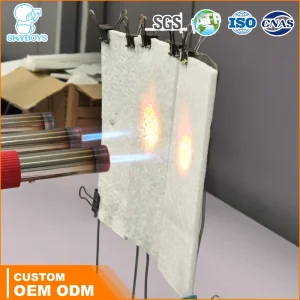
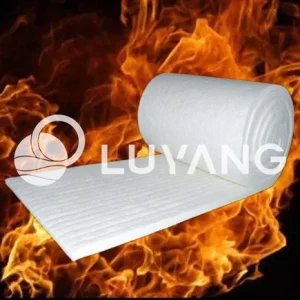
The performance of ceramic fiber blankets is directly linked to fiber diameter and fiber length uniformity. The double-needle stitching process employed during manufacture locks the fibers in place, providing excellent handling strength. This configuration allows for high mechanical vibrations and resistance to air currents, making the blanket suitable for exhaust systems and high-velocity piping insulation.
Engineered thermal barriers designed to meet the rigorous operational standards of Latvian processing facilities.

Thermal insulation for RTO incinerators, shuttle kilns, rotary kilns, rolling kilns, and high-temperature Muffle furnaces across Latvia.
Refractory linings for movable and tunnel kilns used in structural ceramics and red clay brick manufacturing facilities.

Highly efficient thermal insulation for commercial and domestic wood-fired pizza ovens, maintaining outer dome stability.

Advanced refractory blankets and boards configured to withstand metal splashes and thermal cycling in foundry environments.
High-density ceramic fiber blankets utilized for thermal barriers in certified fire doors and structural bulkheads.

Robust thermal insulation systems for industrial steam transmission lines, gas turbines, and complex energy piping networks.
Modern thermal engineering is shifting towards materials that combine high heat resistance with improved ecological safety. As regulatory requirements in the EU become more stringent, industrial operators in Latvia are increasingly seeking out high-temperature bio-soluble fiber blankets.
These bio-soluble blankets are formulated from unique chemical blends (alkaline earth silicate composition) designed to dissolve in physiological fluids while maintaining reliable thermal performance at temperatures up to 1200°C. By implementing these bio-soluble materials in new furnace builds and public district heating projects, operators can maintain compliance with strict occupational health and safety regulations.
Another key development is the integration of ceramic fiber substrates with aerogel coatings. This combination creates highly insulating blankets that offer low thermal conductivity in a thin form factor. These systems are highly effective for space-constrained installations, such as subsea pipelines, aerospace shielding, and compact industrial piping systems in metropolitan areas like Riga.
Precision-engineered high-temperature insulation solutions manufactured to strict international specifications.
Critical engineering answers regarding importing, testing, and applying refractory materials in the Baltic zone.
Since Latvia is a member of the European Union, all refractory and insulation materials must comply with CE certification standards. Additionally, materials must adhere to REACH (Registration, Evaluation, Authorisation and Restriction of Chemicals) regulations to ensure they do not contain harmful concentrations of hazardous components. Our products are shipped with certificates of conformity and safety data sheets (SDS) meeting European standards.
Density (ranging from 64 kg/m³ to 160 kg/m³) affects both mechanical strength and thermal conductivity. At lower temperatures, lower density blankets contain more air pockets, providing efficient insulation. However, at higher temperatures (above 800°C), higher density blankets (such as 128 kg/m³ or 160 kg/m³) perform better as they offer higher resistance to radiative heat transfer and have lower shrinkage rates.
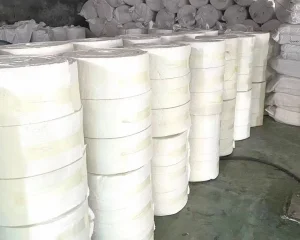
Bulk shipments are dispatched from major Chinese ports via ocean freight directly to the Port of Riga or Port of Liepāja. Delivery times typically range between 35 and 45 days. For urgent projects, we offer multi-modal transport routes via overland rail connections. All shipments are packed on pallets and protected with moisture-resistant shrink-wrap to withstand marine transit conditions.
Yes. High-purity ceramic fiber blankets are highly effective for lining the combustion chambers and heat exchange passes of biomass boilers. Because biomass combustion yields moisture and ash, we recommend using high-density (128 kg/m³) blankets or pre-fabricated modules treated with a surface-hardening agent to resist hot gas erosion and minor chemical interactions.
Standard ceramic fiber is composed of alumina and silica, which can remain in lung tissue for longer periods if inhaled. Bio-soluble fiber is made from an alkaline earth silicate composition (calcium-magnesium-silicate) that dissolves quickly in lung fluids, minimizing health risks. Bio-soluble fibers are typically rated up to 1200°C, while standard aluminosilicate fibers can withstand up to 1430°C.
Get in touch with our technical team today to request structural calculations, tailored thermal conductivity graphs, or volume pricing for the Baltic region.
Send Inquiry Now