 FibroCeram Materials
FibroCeram Materials
FibroCeram Materials
Discover our premium selection of ultra-high-temperature insulating felts, papers, ropes, and custom-engineered blankets designed to optimize thermal efficiency and reduce energy costs.
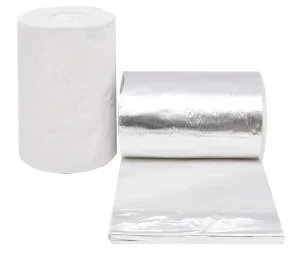
Superb insulation flexibility with minimal thermal conductivity at operational extremes.
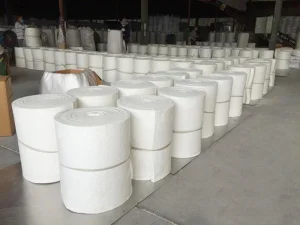
Needled structural integrity ensuring excellent mechanical strength and vibration resistance.
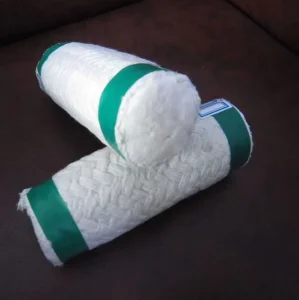
Designed for high-performance sealing in heavy industrial doors, furnaces, and boiler gaskets.
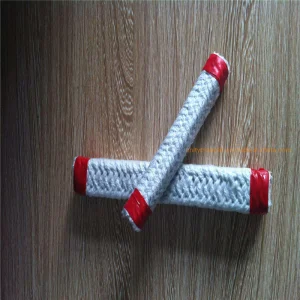
Woven textiles reinforced with steel wire for high mechanical loads under thermal stress.
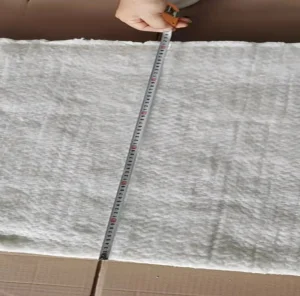
Low-density boards offering rigid yet lightweight back-up thermal protection in furnaces.
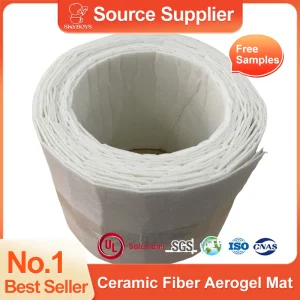
Nanotechnology-driven aerogel blanket achieving ultimate thin-profile thermal barrier properties.
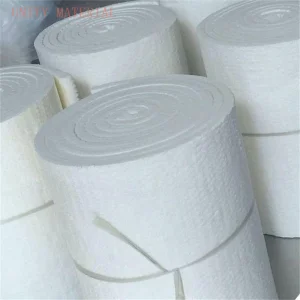
Industry-leading double-needled structural blanket providing maximum durability at 1260°C.
Extremely flexible and uniform structure, ideal for precision gaskets and expansion joints.
Under our premier brand Titan New Material, Henan FibroCeram Advanced Materials Co., Ltd. stands as a powerhouse of industrial ceramic fiber manufacturing in China. With decades of material science research and advanced plant infrastructure, we deliver reliable, state-of-the-art lining systems to processing industries worldwide.
We specialize in the research, development, and high-volume manufacture of ceramic fiber blankets, bulk fibers, rigid boards, papers, modules, refractory castables, and heat-resistant insulating bricks. By deploying automated production lines and implementing stringent quality controls, we ensure every roll and panel meets global engineering standards for safety, thermal efficiency, and mechanical durability.
We leverage science-driven materials to ensure high efficiency, stability, and longevity under aggressive thermal environments.
Modern heavy industries are undergoing transitions driven by energy decarbonization and operational efficiency. Ceramic fiber linings are central to this transformation.
Global metallurgical, chemical, and ceramics plants are under strict mandates to reduce carbon emissions. Light-weight ceramic fiber linings reduce heat storage within kiln walls, enabling fast heat-up and cool-down cycles, resulting in up to 15-30% fuel savings compared to traditional heavy refractory bricks.
Due to health and safety regulations, particularly in European markets, biosoluble fibers (AES) are gaining market share. These materials have low biopersistence and dissolve in body fluids while providing thermal insulation up to 1200°C.
Instead of single-material linings, advanced furnace design utilizes hybrid layering. Putting high-performance ceramic fiber paper near the shell, followed by a microporous or nano-aerogel insulation sheet, and finally heavy-duty monolithic modules facing the heat zone optimizes insulation thickness and minimizes structural weight.
We process high-purity alumina-silica raw materials through spinning and blowing technologies to produce four primary product classes.

Needled structural blankets classified at 1260°C, 1300°C, and 1430°C. Available in thicknesses from 6mm to 50mm and densities from 64kg/m³ to 160kg/m³.

Rigid vacuum-formed boards classified at 1260°C and 1430°C. Ideal for furnace walls subjected to velocity forces. Thicknesses: 6mm–100mm; Densities: 220–600kg/m³.

Highly flexible papers for gaskets and joints. Three types: 1260°C Standard, 1350°C High Alum, 1430°C Zirconia (ZrO2). Thicknesses: 1mm–10mm; Densities: 170–220kg/m³.

Pre-compressed modules in stack-bonded or folded structures. Density ranges from 160kg/m³ to 240kg/m³. Pre-installed with anchoring systems (Types S, M, T).
Deploying the correct lining variant requires a deep understanding of its chemical and physical behavior under heat stress. Use the engineering reference below:
| Property / Grade | Standard (1260°C) | High-Alumina (1350°C) | Zirconia Grade (1430°C) | Bio-Soluble (1200°C) |
|---|---|---|---|---|
| Al2O3 Content (%) | 44% - 46% | 52% - 55% | 39% - 41% | - (CaO + MgO: 30-38%) |
| SiO2 Content (%) | 51% - 53% | 44% - 46% | 42% - 44% | 60% - 70% |
| ZrO2 Content (%) | - | - | 15% - 17% | - |
| Linear Shrinkage (%) | < 3.0% (at 1000°C/24h) | < 3.0% (at 1150°C/24h) | < 3.0% (at 1350°C/24h) | < 3.0% (at 1000°C/24h) |
| Thermal Conductivity (W/m·K) | 0.085 (at 600°C, 128kg/m³) | 0.080 (at 600°C, 128kg/m³) | 0.076 (at 600°C, 128kg/m³) | 0.090 (at 600°C, 128kg/m³) |
| Shot Content (%) | < 15% | < 12% | < 10% | < 12% |
We provide engineered lining solutions tailored to specific industries. Each industry faces unique thermal challenges:

Tailored thermal barrier designs for RTO incinerators, shuttle kilns, rotary kilns, rolling kilns, and high-frequency Muffle furnaces.
Movable and traditional tunnel kiln linings designed to resist continuous abrasion and structural thermal fatigue.

Safe, non-toxic, and high-insulating ceramic fiber papers and blankets designed for dome pizza ovens.
High-purity refractory materials for blast furnace linings, reheat furnace doors, and molten steel ladle backup lining.
Ultra-dense ceramic fiber blankets and boards integrated into doors to prevent heat transmission during structural fires.

Highly flexible ceramic fiber wraps and mineral rockwool jackets for high-temperature steam pipelines.
We align our manufacturing standards with the evolving expectations of global energy efficiency and material safety regulations.
Our engineering research team is working to reduce shot content in spun ceramic fibers. By utilizing specialized air separation technology, we aim to lower the shot content of our blankets below 5% by 2026. This increases thermal efficiency and tensile performance.
Standard ceramic fiber papers contain organic binders that volatilize and burn out during initial heat-up. We are developing organic-free papers using mechanical microfiber interlocking processes, eliminating outgassing in closed-chamber high-vacuum processes.
We are engineering ceramic fiber modules with embedded sensor channels. These channels allow the insertion of thermal sensors near the steel shell, helping operators monitor real-time lining wear and prevent run-out accidents.
Global procurement teams in the US, Europe, and Japan require reliable quality verification and traceability. At Henan FibroCeram, we ensure our ceramic fiber products conform to international testing methodologies:
To minimize transit damage, our blankets are wrapped in heavy polyethylene film inside multi-wall cardboard cartons or loaded onto heat-treated, ISPM-15 compliant wooden pallets.
We also provide engineering support, including thermal calculations, lining design drawings, and onsite deployment supervisors for complex installation projects.
Explore detailed answers to engineering questions about ceramic fiber linings, selection criteria, and maintenance.
Ceramic fibers undergo crystallization and grain growth (devitrification) when exposed to high temperatures over time, leading to shrinkage. Standard 1260°C grade fibers show minimal shrinkage at 1000°C. For continuous operating temperatures above 1150°C, high-alumina or zirconia (1430°C) grade fibers should be used, as the zirconium oxide content stabilizes the alumina-silica glass phase and limits structural shrinkage.
Spun fibers are manufactured by pouring molten raw material onto high-speed spinning wheels, resulting in longer fibers with high tensile strength and resilience. Blown fibers are produced by using high-velocity compressed air to atomize the molten stream, producing shorter, finer fibers. Spun fibers are typically used for high-strength blankets and modules, while blown fibers are ideal for raw bulk material, paper manufacturing, and vacuum-formed board applications.
Folded modules are constructed with pre-compressed folds that expand laterally upon cutting the binding bands, creating a tight seal between adjacent modules. They are standard for large furnace walls. Stack-bonded modules are made from cut sections of blanket stacked together, offering higher resistance to gas velocities. They are typically used in areas subjected to high gas velocity flow or mechanical wear.
Yes, ceramic fiber products resist wetting by molten aluminum and zinc. They are widely used in launder linings, tap-out cones, and riser sleeves for aluminum casting. However, they should not be exposed to direct mechanical impact from the pour flow without a hard protective coating, such as a refractory mastic or high-purity coating.
Choose from our advanced line of high-purity papers, vacuum boards, tubes, and reinforced woven fabrics designed for specialized industrial heating systems.
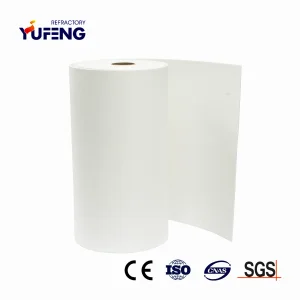
Excellent dielectric strength and clean die-cutting capabilities for precision hot-top sealing.
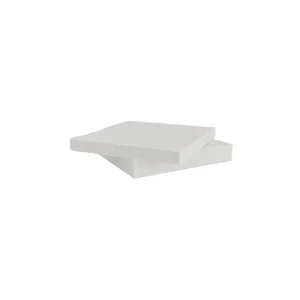
Rigid thermal barrier featuring high resistance to gas erosion and excellent mechanical strength.
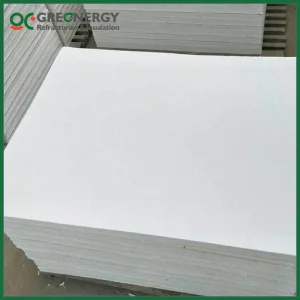
Engineered for high load-bearing capacity and structural insulation behind refractory bricks.
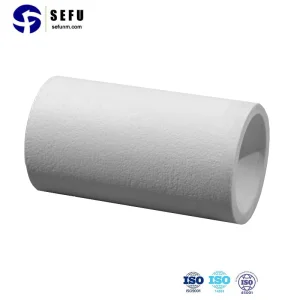
Precision-molded cylindrical sleeves designed for cable, wire, and hot pipe protection.
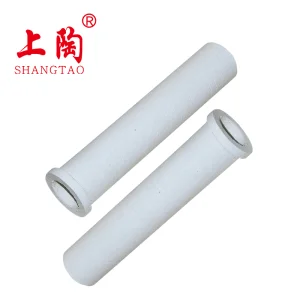
Vacuum-formed refractory tube designed to withstand rapid temperature changes without cracking.
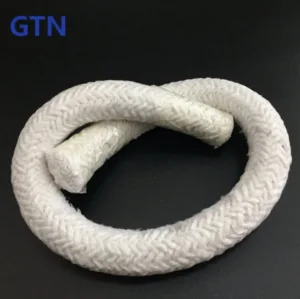
Aluminum foil laminated face to reflect radiant heat and shield against moisture vapor.
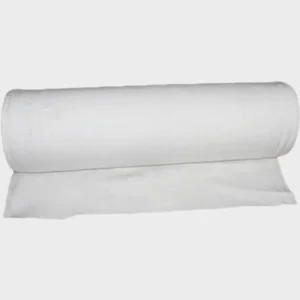
Woven insulation fabric ideal for expansion joint covers, heat shielding, and pipe wrapping.
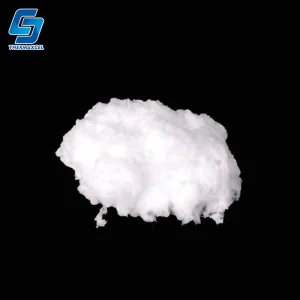
High-purity raw blown/spun bulk fiber for loose fill packing and complex joint fills.