 FibroCeram Materials
Titan New Material is a major ceramic fiber manufacturer in China. We offer ceramic fiber blankets, bulk fiber, boards, papers, modules, refractory castables, refractory bricks, and a complete portfolio of vacuum-formed shapes and textile derivatives. As a vertically integrated ceramic fireproof material factory and exporter, we combine raw-material sourcing, precision forming, and export-grade quality assurance under one roof — serving kiln builders, EPC contractors, steel mills, and fire-protection fabricators across more than 40 countries.
Every product below is manufactured in our Henan facility with traceable batch records, and is available for container-load, LCL, and sample-order export. Click any product for detailed specifications.
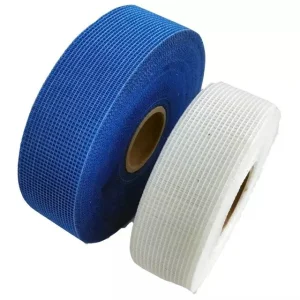
Fiberglass Mesh Joint Tape for Ceramic Tile
View Product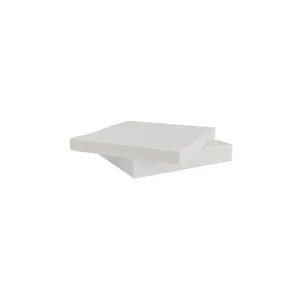
Ceramic Fiber Boards for Furnace Wall Insulation High Insulation Ceramic Fiber Board
View Product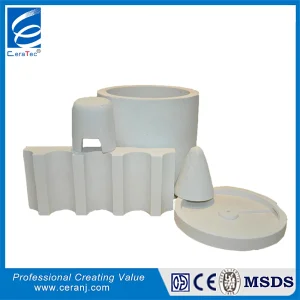
CT 1260 High Temperature Insulation Ceramic Fiber Vacuum Formed Shape
View Product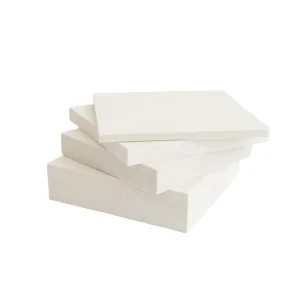
Fireproof Insulation Kiln Alumino-Silicate 1430c Ceramic Fiber Board
View Product
1260c High Quality New Best Selling Insulation Ceramic Fiber Bulk for Kiln
View Product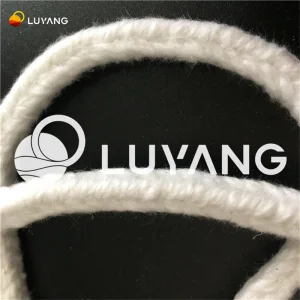
Luyangwool Yarn Stainless Steel
View Product
Cost-Effective Thermal Insulation Fireproof Ceramic Fiber Tube for Construction Made in China
View Product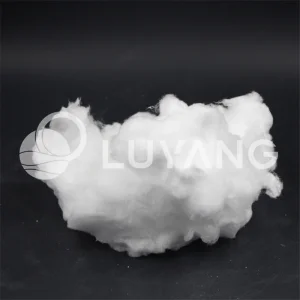
1260 Ceramic Fiber Std Wool Bulk
View ProductCeramic fiber blankets are classified into three temperatures 1260C, 1300C and 1430C with thickness ranging from 6mm to 50mm and densities from 64kg/m3 to 160kg/m3.
Ceramic fiber boards are classified into two temperatures 1260C and 1430C with thickness ranging from 6mm to 100mm and densities from 220kg/m3 to 600kg/m3.
Ceramic fiber papers are classified into three types: 1260C standard, 1350C high aluminum, and 1430C ZrO2, with thickness ranging from 1mm to 10mm and densities from 170kg/m3 to 220kg/m3.
Ceramic fiber modules are made out of ceramic fiber blankets. Stack bonded type and folded type are its two major forms. The density ranges from 160kg/m3 to 240kg/m3, and three types of anchors (Type S/M/T) can be pre-installed.
China has consolidated its position as the world's dominant supplier of refractory ceramic fiber, and the reasons are structural rather than purely price-driven. Understanding these advantages helps procurement teams benchmark quotes and qualify suppliers with confidence.
The global ceramic fiber market is being reshaped by decarbonization policy, energy-price volatility, and tightening fire-safety codes. These macro forces directly affect specification choices and supplier qualification criteria.
Industrial furnace operators are replacing dense firebrick linings with low-thermal-mass ceramic fiber to reduce heat-up cycles and cut fuel consumption by 20–35%, driven by carbon-reduction targets in the EU, ASEAN, and the Middle East.
Regulatory pressure in Europe and North America is accelerating adoption of biosoluble (low-biopersistence) ceramic fiber grades, pushing Chinese exporters to offer dual-line production: standard aluminosilicate and biosoluble formulations.
Instead of flat boards and blankets alone, buyers increasingly request complex vacuum-formed shapes — burner blocks, riser sleeves, and launder linings — that reduce on-site cutting and installation labor.
Leading exporters now provide batch-level traceability data — heat number, density test report, and shot-content analysis — as part of tender submissions, mirroring the documentation standards of steel and cement supply chains.
Prefabricated insulation modules with pre-welded anchors are shortening kiln installation schedules, a trend strongly aligned with the fast-track EPC model used in Middle East and Southeast Asian projects.
Recycled and low-shot-content fiber grades are entering the market, driven by waste-reduction commitments from large steel and aluminum producers seeking to reduce landfill of spent refractory lining.
Our ceramic fiber products are widely used in the ceramics industry, metallurgical industry, electric appliances, pipe thermal wrapping, and passive fire protection sectors. Below is how each scenario maps to a specific product recommendation.

RTO incinerator, shuttle kilns, rotary kilns, rolling kilns, muffle furnaces, etc. Recommended: ceramic fiber modules and boards for hot-face lining.
Movable and tunnel kilns for ceramics and red bricks. Recommended: high-density blankets and 1260C boards for car-bottom and crown insulation.

Thermal insulation for pizza ovens. Recommended: 1260C blanket and paper for dome and floor insulation with food-safe non-fibrous facing.

Refractory materials are widely used in the steel industry. Recommended: 1430C boards, gunning mix, and vacuum-formed shapes for tundish and ladle.
High-density ceramic fiber blankets are widely used as the thermal insulation material of fire doors. Recommended: 128kg/m³ blanket with foil facing.

Ceramic fiber or Rockwool are widely used as the thermal insulation material for industrial pipings. Recommended: ceramic fiber paper and tube sections.
Sophisticated buyers rarely purchase a single SKU. They require a thermally engineered system — hot-face, back-up, and cold-face layers — with matched expansion allowances, anchor spacing, and vapor-barrier detailing. We support that system-level specification.
A complete lining package combining 1430C ceramic fiber modules (hot face), 1260C boards (back-up), and ceramic fiber paper (expansion joint). Includes anchor-type selection (S/M/T) based on shell temperature and furnace atmosphere, plus installation sequence drawings. This approach cuts on-site labor by roughly 30% compared with site-cut blanket lining.
For fire-rated doors, curtain walls, and penetration seals, we supply high-density blanket (128–160 kg/m³), fire-rated ceramic paper gaskets, and intumescent-compatible fiber rope. All materials meet non-combustibility requirements and are supplied with test documentation suitable for third-party fire-rating submissions.
Fabricated from needled blanket, ceramic fiber paper, and stainless-steel-reinforced yarn, this solution serves exhaust ducts, reformer piping, and chimney liners up to 1260°C continuous. The system is supplied as cut-to-length rolls or pre-formed tube sections to minimize field cutting.
Vacuum-formed riser sleeves, launder linings, and tundish boards for aluminum and steel casting. These shapes are engineered for low thermal conductivity, non-wetting behavior, and controlled thermal expansion — critical for dimensional stability of castings.
Based on tender patterns from EPC contractors, steel producers, and OEM kiln builders across Europe, the Middle East, Southeast Asia, and Latin America, the following criteria consistently determine supplier shortlisting.

Low Thermal Conductivity 1260c Heat Resistant Seal Ceramic Fiber Paper
View Product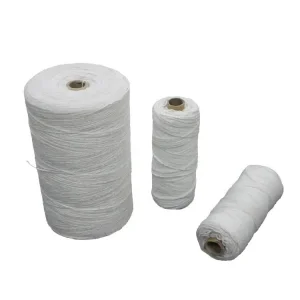
High Temperature Fireproof Stainless Steel Reinforced Aluminum Silicate Ceramic Fiber Fiberglass Yarn
View Product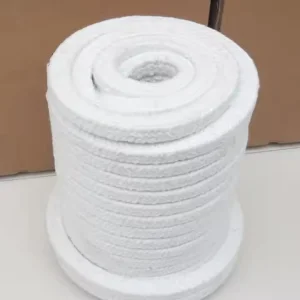
Refractory 1430 Ceramic Fibre Square Rope Fireproof for Furnace Sealing
View Product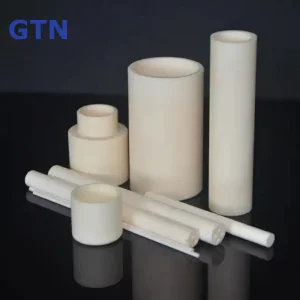
99% Al2O3 Ceramic Fiber Tube 3mm Refractory Roller for Rod Tempering Furnace Kiln Industrial Ceramic Welding Included
View Product
High-Temperature Ceramic Fiber Paper Roll
View Product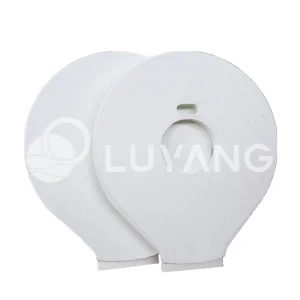
Ceramic Fiber Vacuum Formed Parts
View Product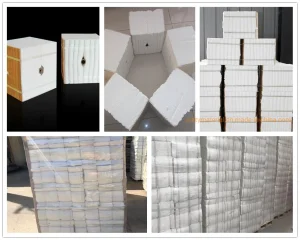
1260c 1350c 1430c High Temp Aluminum Silicate Refractory Kaowool Fibre Block Module Ceramic Fiber Wool for Heat Furnace Thermal Insulation
View Product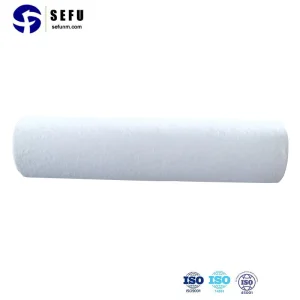
Sefu China Insulation Ceramic Fiber Shape Supply Refractory Vacuum Formed Tube
View ProductThe classification temperature reflects the maximum continuous service temperature the fiber can withstand without excessive shrinkage. 1260°C is standard alumino-silicate; 1350°C is high-alumina; 1430°C contains zirconia (ZrO2) for enhanced thermal stability. Selection depends on actual hot-face temperature, furnace atmosphere, and required lining life — not simply picking the highest grade.
Yes. All products are 100% asbestos-free and supplied with non-asbestos declarations. We can also supply biosoluble (low-biopersistence) grades on request for European and North American markets where regulatory requirements apply.
We support trial orders as small as one pallet for most standard products, and full container loads for larger programs. Mixed-SKU containers are possible for buyers who need multiple product types in a single shipment.
Yes. Our vacuum-forming line can tool custom shapes — burner blocks, riser sleeves, launder linings, and gaskets — from customer drawings or 3D models. Tooling lead time is typically 2–3 weeks depending on complexity.
Each batch is tested for density, shot content, classification temperature, and tensile strength. Batch records are retained for traceability, and third-party inspection (SGS, BV, TUV) can be arranged on request for tender-driven projects.
Standard documentation includes packing list, commercial invoice, MSDS, certificate of origin, and inspection certificate. Additional documents such as REACH declarations, CE-related technical files, and third-party test reports are available upon request.
Whether you need a single pallet for a pilot furnace or a multi-container program for a greenfield EPC project, our engineering team can prepare a specification-matched quotation within 48 hours — including thermal calculations, anchor layouts, and installation guidance.
Request a Technical Quotation