 FibroCeram Materials
FibroCeram Materials
FibroCeram Materials
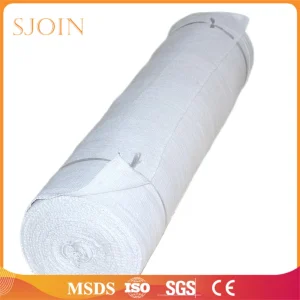
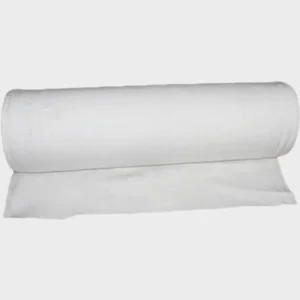
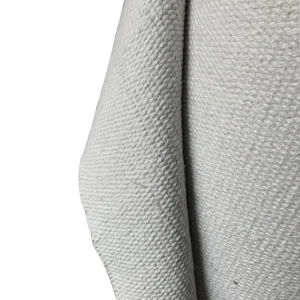
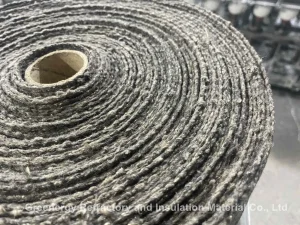
High-durability high-alumina woven ceramic fiber fabrics engineered for extreme heat containment, thermal shielding, and expansion joint sealing.
Adapting Next-Generation Refractory Textiles to Kathmandu's Unique Industrial Density, Environmental Standards, and Energy Dynamics
The Kathmandu Valley—encompassing Kathmandu, Lalitpur, and Bhaktapur—along with adjacent corridors like Hetauda and Panchkhal, is experiencing a rapid industrial transition. As Nepal advances its manufacturing footprint in ceramics, structural clay bricks, food processing, steel rolling mills, and pharmaceutical packaging, energy efficiency has emerged as a cornerstone of operational profitability.
Industrial enterprises operating within the Balaju Industrial District, Patan Industrial Estate, and Bhaktapur Industrial Estate face distinct macroeconomic challenges: volatile energy tariffs, stringent municipal environmental directives to curb atmospheric particulate emissions, and cross-border transit logistics. High-performance Ceramic Fiber Cloth manufactured by Titan New Material / Henan FibroCeram serves as a strategic material solution, directly lowering thermal loss in boilers, kilns, heat exchangers, and steam distribution piping networks.
Deep Insight into Chemical Microstructure, Mechanical Reinforcement Systems, and Thermal Resistance
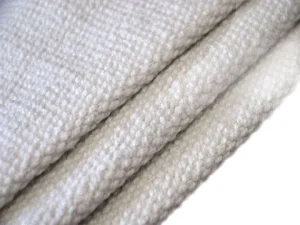
Our ceramic fiber textiles are produced from high-purity spun alumina-silica fibers (47-49% Al₂O₃, 50-52% SiO₂). The long, amorphous fiber filaments provide minimal thermal conductivity (0.09–0.12 W/m·K at 600°C), extraordinary thermal shock resistance, and zero structural degradation under extreme thermal cycling.
To preserve tensile integrity under structural vibration and movement, yarns are reinforced with either continuous E-Glass Filament (for operating temperatures up to 650°C continuous) or Inconel / Stainless Steel (SS304/SS316) Wire (for high-tensile structural applications up to 1050°C continuous, 1260°C peak exposure).
Standard ceramic fiber textiles contain approximately 15-20% organic carrier fibers that facilitate yarn spinning. During the initial heat-up cycle (around 200°C–300°C), these binders burn off cleanly without altering the thermal insulation performance or structural resilience of the remaining ceramic fiber matrix.
When selecting between glass fiber reinforced and SS wire reinforced ceramic fiber cloth for high-pressure boiler doors or thermal expansion joints in Kathmandu mills, SS wire reinforcement delivers superior tensile resistance (over 300 N/5cm wrap), preventing fabric tear during repeated mechanical opening/closing cycles.
Benchmark Technical Performance Metrics Across Textile Grades
| Property / Parameter | SS Wire Reinforced Ceramic Cloth | Fiberglass Reinforced Ceramic Cloth | Bio-Soluble (AES) Fiber Cloth | Legacy Asbestos Cloth (Obsolete) |
|---|---|---|---|---|
| Classification Temp. | 1260°C (2300°F) | 1260°C (2300°F) | 1200°C - 1300°C | 550°C (Degrades rapidly) |
| Continuous Working Temp. | 1050°C | 650°C | 1000°C | 400°C |
| Reinforcement Insert | SS304 / SS316 Alloy Wire | E-Glass Filament Yarns | SS Wire or Glass Filament | Organic Organic Cotton/Wire |
| Tensile Strength (N/5cm) | ≥ 350 N | ≥ 220 N | ≥ 300 N | < 150 N (Deteriorates) |
| Thermal Conductivity (600°C) | 0.11 W/m·K | 0.09 W/m·K | 0.10 W/m·K | 0.22 W/m·K |
| Health & Safety / EHS | Non-hazardous (RCF Safe handling) | Non-hazardous | Exempt from EU carcinogen classification | Severe Carcinogen (Banned) |
Targeted Applications Engineered for Heavy Industry, Infrastructure Projects, and Commercial Sector Facilities
Kathmandu Valley relies heavily on modernizing brick kilns (such as high-efficiency Zig-Zag kilns) to supply urban construction. Ceramic fiber cloth is widely utilized for fire curtains, kiln car seals, duct insulation, and top flue sealing to prevent cold air leakage and maximize fuel combustion thermal efficiency.
With cement production plants located around the Kathmandu-Hetauda corridor, high-vibration rotary kilns require robust flex seals. Ceramic fiber cloth with SS wire reinforcement forms tight inlet/outlet bonnet seals, enduring heavy abrasion, soot, and thermal spikes up to 1200°C.
Beverage plants, food manufacturing, and edible oil refineries across Balaju and Sonapur operate extensive steam lines and boilers. Ceramic fiber cloth serves as ideal outer insulation wrapping and removable thermal jackets for valves, flanges, and high-pressure steam distribution headers.
Modern commercial infrastructure, hospitality venues, and hospitals in Kathmandu are adopting elevated fire safety codes. Ceramic fiber textiles serve as core fire barrier linings within fire-rated doors, acoustic dampers, and emergency ductwork containment systems.
Small-to-medium metal casting foundries in Patan and industrial zones utilize ceramic fiber cloth for splash shields, ladle covers, expansion joint packing, and stress-relieving post-weld heat treatment (PWHT) blankets.
Kathmandu's famous wood-fired and specialized baking ovens (including commercial pizza ovens in urban eateries) use high-purity ceramic fiber weave cloth to shield exterior walls, preventing accidental burn hazards while retaining heat.
As corporate social responsibility (CSR) and ISO 14001 environmental management frameworks expand among Nepalese corporate entities, industrial health and safety standards have risen dramatically. Titan New Material leads the shift toward Bio-Soluble Alkaline Earth Silicate (AES) Ceramic Fiber Cloth.
Bio-soluble fibers are chemically formulated from calcium, magnesium, and silicate compositions that possess high bio-solubility in human lung fluids. This ensures that inhaled fibers are rapidly cleared by human biological mechanisms, satisfying EU Directive 97/69/EC Note Q standards and zero-carcinogen hazard declarations.
By transitioning to bio-soluble ceramic fiber textiles, factory owners in Kathmandu eliminate occupational health liabilities while enjoying equivalent thermal shielding performance up to 1200°C.
Titan New Material is a major ceramic fiber manufacturer in China. We offer ceramic fiber blankets, bulk fiber, boards, papers, modules, refractory castables, refractory bricks, etc., supplying custom thermal management products across the globe including the Kathmandu market.

Classified into three temperatures (1260°C, 1300°C, and 1430°C) with thickness from 6mm to 50mm and densities from 64kg/m³ to 160kg/m³.

Classified into two temperatures (1260°C and 1430°C) with thickness from 6mm to 100mm and densities from 220kg/m³ to 600kg/m³.

Classified into 1260°C Standard, 1350°C High-Aluminum, and 1430°C ZrO2 with thickness from 1mm to 10mm and densities from 170kg/m³ to 220kg/m³.

Made out of ceramic fiber blankets in stack-bonded or folded types (density 160–240kg/m³) with pre-installed S/M/T anchors.
Our ceramic fiber products are widely used in ceramics, metallurgical, electrical appliances, pipe thermal wrapping, and passive fire protection sectors.

RTO incinerators, shuttle kilns, rotary kilns, rolling kilns, and muffle furnaces.
Movable and tunnel kilns for ceramics, refractories, and red building bricks.

High-efficiency non-toxic thermal insulation blanket & cloth for pizza ovens.
Refractory ceramic fiber fabrics used extensively in steel processing & reheating.
High-density ceramic fiber textiles used as fireproof core material in commercial fire doors.

Ceramic fiber and rockwool wrapping cloth for high-pressure industrial piping lines.
Seamless Factory-Direct Export Engineering and Local Compliance for Nepalese Importers
We provide streamlined freight handling from our manufacturing facilities to Kathmandu via Kolkata/Haldia Port (India) to Raxaul-Birgunj Integrated Check Post (ICD Birgunj). Overland transport along the Tribhuvan Highway delivers door-to-door cargo right to your Kathmandu facility.
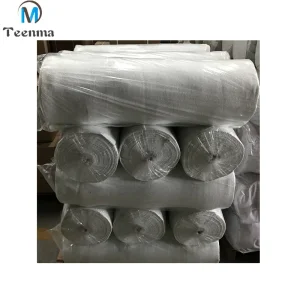
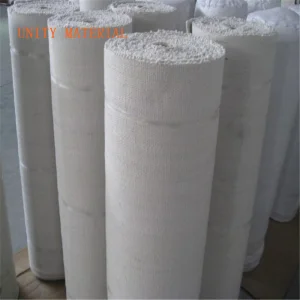
Given the heavy monsoon seasons across South Asia, all ceramic fiber cloth rolls are wrapped in air-sealed polythene moisture barriers and packed into solid export-grade woven sacks or wooden crates to prevent ambient moisture absorption during transit.
Full documentation support—including Certificate of Origin (COO), Commercial Invoice, Packing List, ISO Inspection Certificates, and Mill Test Certificates (MTC)—is provided to ensure frictionless clearance under Nepalese customs harmonized system (HS) codes.
Quantifiable Economic Savings from Upgrading Thermal Insulation
For an uninsulated hot surface operating at 500°C inside a manufacturing unit, heat loss into ambient surroundings exceeds 4,500 W/m². By applying a multi-layer insulation jacket featuring 3mm SS-wire reinforced ceramic fiber cloth as the protective outer and inner fabric shell, thermal dissipation drops to under 350 W/m².
Drastically lowers ambient thermal ambient radiation inside work zones.
Typical payback period based on heavy fuel oil (HFO) or coal cost savings.
Extends life of surrounding electrical wiring, valves, and structural framing.
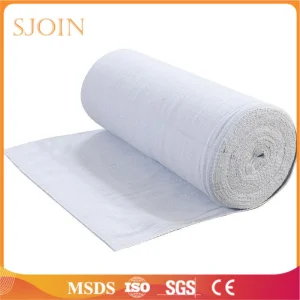
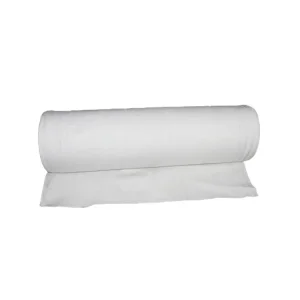
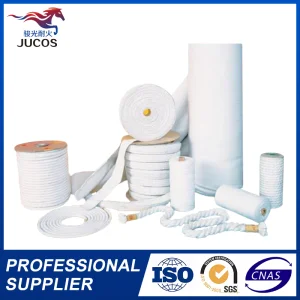
High-performance high-temperature woven products available for direct bulk procurement in Kathmandu and across Nepal.
Expert Technical Clarifications for Refractory Engineers and Procurement Managers
Contact our senior refractory engineers today for technical consultation, material data sheets, and competitive factory-direct pricing for your project in Nepal.
Send Inquiry Now