FibroCeram Materials
FibroCeram Materials
FibroCeram Materials
Engineered refractory components designed for extreme environments up to 1800°C. Select a product below to inspect detailed specifications.
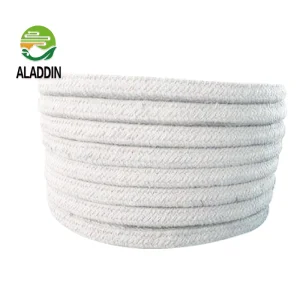
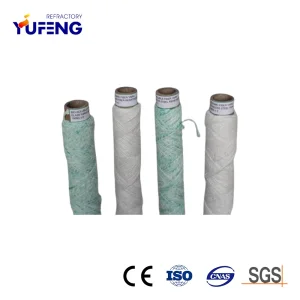
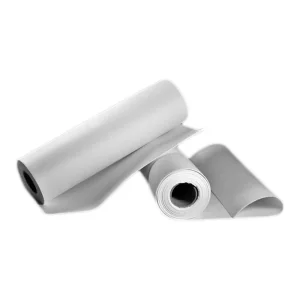
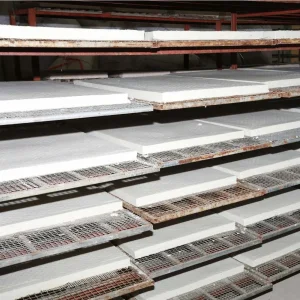
Titan New Material stands as a premier ceramic fiber manufacturer and supplier in China, delivering state-of-the-art high-temperature refractory and thermal insulation solutions to over 80 countries worldwide. Our production facility spans advanced wet-vacuum forming lines, continuous automated needle-punching blankets lines, and precision CNC shape processing units.
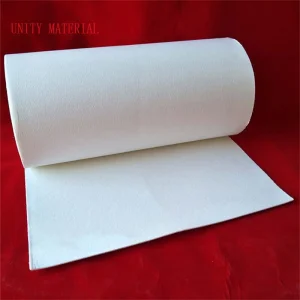
We supply a complete spectrum of high-temperature inorganic materials, including high-density ceramic fiber panels, flexible blankets, inorganic bound non-combustible boards, bio-soluble low-toxicity fibers, thermal papers, engineered modules, refractory castables, and high-alumina fire bricks. Designed to dramatically reduce furnace energy consumption, mitigate structural heat loss, and extend equipment lifecycles.
Understanding the transition from heavy refractory bricks to ultra-low thermal mass bio-soluble ceramic fiber panels in modern industrial furnaces.
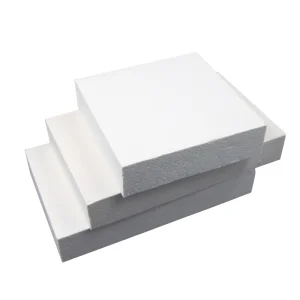
Traditional heavy firebrick linings store massive amounts of thermal energy, requiring immense fuel expenditure during heating cycles. Modern ceramic fiber panels possess extremely low thermal conductivity and low heat storage capacity (1/10th of heavy refractories), enabling rapid heating/cooling cycles in industrial kilns, reducing fuel costs by up to 35%.
Conventional fiber boards utilize organic binders that outgas toxic smoke and turn black during initial firing. Advanced manufacturing now incorporates colloidal silica and alumina inorganic binder matrix systems. This yields zero smoke, zero odor, and zero burnout weight loss—essential for cleanroom furnaces and medical/lab heating equipment.
To align with strict EU REACH standards and health safety mandates, Bio-Soluble Alkaline Earth Silicate (AES) fiber boards are rapidly replacing traditional RCF (Refractory Ceramic Fiber). These fibers exhibit high solubility in human lung fluids if inhaled, while maintaining thermal stability up to 1200°C–1300°C.
| Product Category | Classification Temp | Available Thickness | Density Range | Primary Chemical Composition | Key Application Features |
|---|---|---|---|---|---|
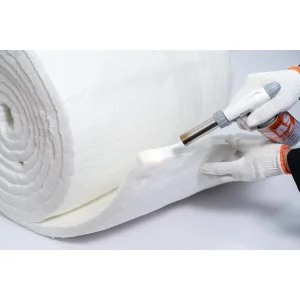
| Ceramic Fiber Blankets | 1260°C / 1300°C / 1430°C | 6mm to 50mm | 64 kg/m³ – 160 kg/m³ | Al2O3: 45-55%, SiO2: 45-54%, ZrO2: 0-17% | High tensile strength, double-needled, flexible pipe & furnace wrapping |
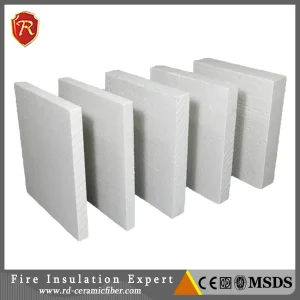
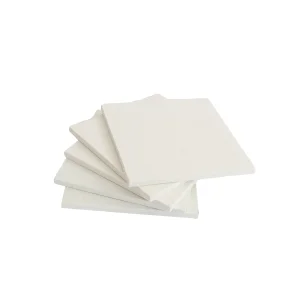
| Ceramic Fiber Boards (Panels) | 1260°C / 1430°C / HT-1800°C | 6mm to 100mm | 220 kg/m³ – 600 kg/m³ | Alumino-Silicate / Polycrystalline Alumina | Rigid structural strength, high modulus of rupture, flame erosion resistance |
| Ceramic Fiber Papers | 1260°C Standard / 1350°C High-Alumina / 1430°C ZrO2 | 1mm to 10mm | 170 kg/m³ – 220 kg/m³ | Al2O3 + SiO2 + Organic/Inorganic Binder | Die-cut gaskets, expansion joint filler, micro-gap thermal sealing |
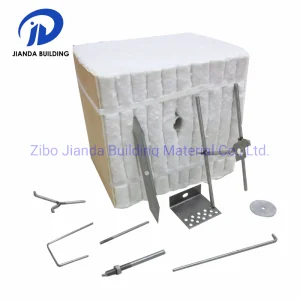
| Ceramic Fiber Modules | 1260°C / 1350°C / 1430°C | 150mm to 300mm block | 160 kg/m³ – 240 kg/m³ | Pre-compressed Blanket Blocks with Anchors | Monolithic lining, fast installation, welded S/M/T stainless anchors |
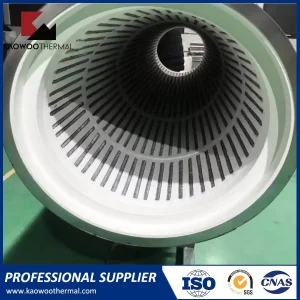
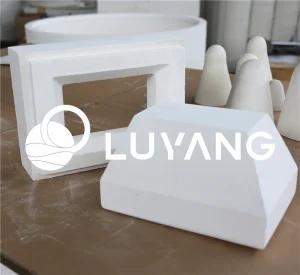
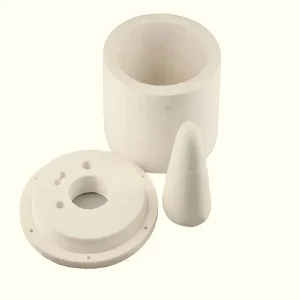
| Vacuum Formed Shapes | 1260°C / 1430°C Zirconia | Custom Molded | 260 kg/m³ – 450 kg/m³ | Formulated Alumino-Silicate Slurry | Non-ferrous molten metal launders, burner blocks, sight hole tubes |
Our ceramic fiber panels, modules, and insulation textiles deliver superior thermal control across heavy industrial processing and consumer appliances.

Designed for Regenerative Thermal Oxidizers (RTO), shuttle kilns, rotary kilns, and muffle furnaces. High-density 1430°C Zirconia fiber boards resist chemical vapors, hot gas velocities, and thermal shock during rapid cycle operations.
Modular insulation linings for tunnel kilns and movable kilns. Using pre-compressed ceramic fiber modules with integrated S/M/T anchors reduces overall kiln weight, speeds up construction times, and ensures uniform heat distribution.
Extensive application in ladle covers, continuous casting launders, reheating furnaces, and annealing lines. Ceramic fiber vacuum-formed shapes resist molten aluminum/non-ferrous wetting and preserve heat energy.
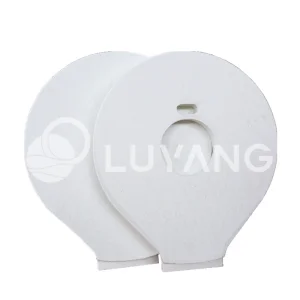
Rigid, high-density ceramic fiber boards act as non-combustible core materials for UL-rated fire doors, security safes, and marine bulkhead firewalls. Achieves 2-hour to 4-hour fire endurance ratings without structural collapse.

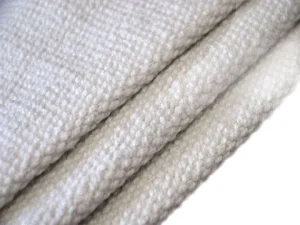
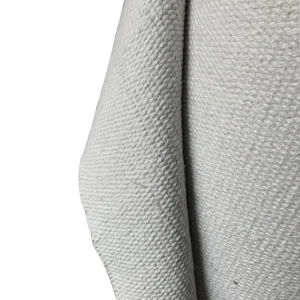
Flexible ceramic fiber blankets, aerogel felt composites, and woven textiles wrapped around steam pipelines, chemical reaction conduits, and exhaust ducts to lower skin temperatures and prevent operational thermal loss.

Compact, high-efficiency insulation boards and blanket wraps under dome decks ensure maximum floor heat retention, reducing wood or gas consumption while maintaining safe touch-temperatures on exterior casing.
Key technical parameters, quality verification benchmarks, and total cost of ownership (TCO) considerations for international enterprise purchasing.
Procurement teams must analyze thermal conductivity curves ($\text{W/m}\cdot\text{K}$) across working temperatures (400°C to 1200°C) rather than relying solely on ambient density ratings. A optimized ceramic fiber board balances mechanical rigidity with low thermal conductivity to minimize skin temperature without adding unnecessary weight.
Linear shrinkage indicates structural stability under continuous heat load. Titan New Material boards maintain less than 2.5% shrinkage at 1260°C/1430°C over 24-hour soak tests, preventing crack formation, thermal bridging, and joint failure within the furnace chamber.
Panels used in high-velocity gas environments or subject to mechanical vibration require elevated flexural strength (MOR $\ge$ 0.5 – 1.2 MPa). Precision-milled vacuum-formed boards allow easy cutting, drilling, and slotting on-site without delamination or excessive dusting.
Evaluating iron content ($Fe_2O_3 < 0.2\%$) is critical when insulation is exposed to reducing atmospheres (CO, $H_2$, neutral gas). Low iron levels prevent catalytic carbon deposition that leads to premature fiber disintegration inside gas-carburizing furnaces.
Delivering standardized refractory solutions backed by rigorous quality control, international compliance, and localized technical support.
Strict quality management systems ensuring consistent raw material purity, fiber diameter control, binder dispersion, and batch-to-batch structural integrity.
All bio-soluble products and standard fiber linings conform to European REACH regulations, guaranteeing safe handling, eco-friendly disposal, and low SVHC content.
Rigorous verification matching ASTM C612, ASTM C201 thermal conductivity test methods, and ASTM C356 linear shrinkage evaluations for full transparency.
Custom dimensions, CNC water-jet cut gaskets, beveling, slotting, and pre-installed anchor assembly tailored to original equipment manufacturer drawings.
Emerging research directions in ultra-high-temperature nano-composites and zero-carbon furnace engineering.
Integrating nanoporous silica and alumina aerogels into high-density ceramic fiber matrices. This hybrid architecture achieves ultra-low thermal thermal conductivity (below 0.020 W/m·K at 400°C), allowing for 50% thinner thermal barriers in space-constrained industrial equipment.
Scaling up sol-gel synthesized Polycrystalline Alumina (PCW) boards with 72%–99% $Al_2O_3$ content. Free of vitreous phase transformation, these boards resist thermal shrinkage up to 1800°C, making them essential for hydrogen-fueled furnaces and semiconductor crystal growth processes.
Developing ceramic fiber modules with integrated high-temperature fiber-optic sensors to monitor real-time thermal gradient changes, lining degradation, and heat leakage. This empowers predictive furnace maintenance and AI-driven energy optimization.
Answers to technical, operational, and installation inquiries curated by senior thermal application engineers.
Explore our specialized vacuum-formed shapes, high-temperature boards, aerogels, and industrial module systems.