FibroCeram Materials
FibroCeram Materials
FibroCeram Materials
In the contemporary industrial landscape, the demand for high-temperature containment and thermal insulation has evolved from simple thermal resistance to comprehensive thermodynamic optimization. Historically, manufacturing operations relied heavily on dense refractory bricks and monolithic castables. However, these materials struggle with significant heat storage, high weight, and vulnerability to thermal shock. As heavy industries target carbon neutrality and energy efficiency, the adoption of lightweight refractory ceramic fiber (RCF) solutions has accelerated.
Modern industrial operations face volatile energy prices and stringent environmental regulations. Integrating ceramic fiber insulation reduces energy consumption, lowers carbon footprints, and minimizes furnace startup times. From metallurgical smelting to chemical vapor processing, advanced ceramic fibers provide the thermal insulation required for modern thermal systems.
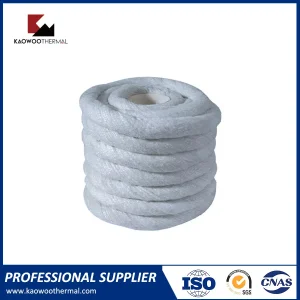
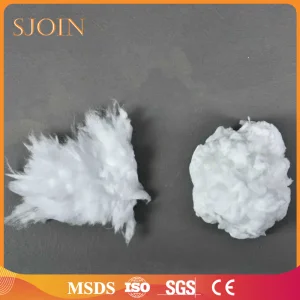
As thermal insulation experts, Henan FibroCeram Advanced Materials Co., Ltd. (operating with flagship brand division Titan New Material) is a prominent ceramic fiber manufacturer in China. Our comprehensive product portfolio addresses diverse high-temperature requirements:
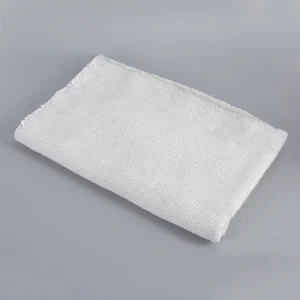
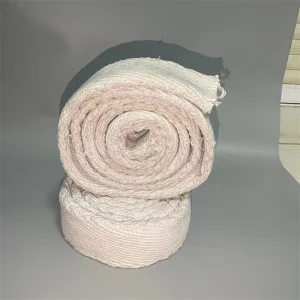
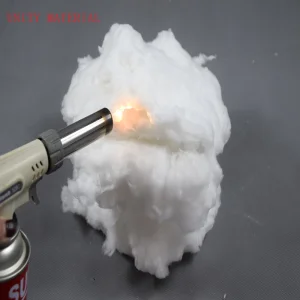
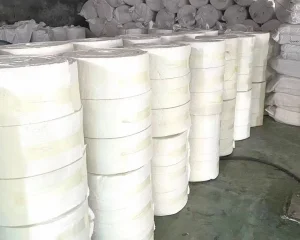
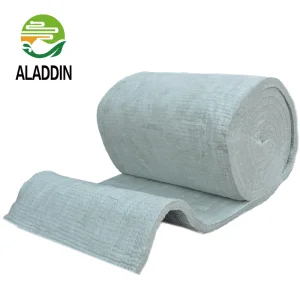
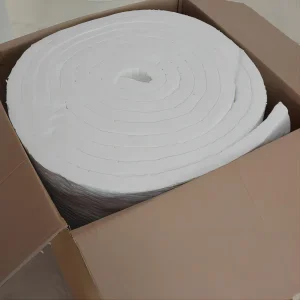
Double-needled ceramic fiber blankets are classified across three classification temperatures: 1260°C, 1300°C, and 1430°C. Available in thicknesses ranging from 6mm to 50mm, with densities spanning 64 kg/m³ to 160 kg/m³. High-purity spun alumina-silica fibers yield high tensile strength and minimal thermal shrinkage.
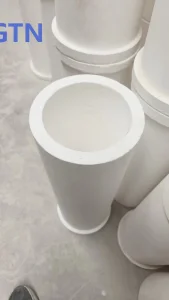
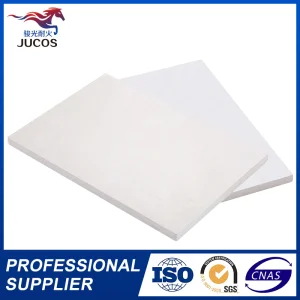
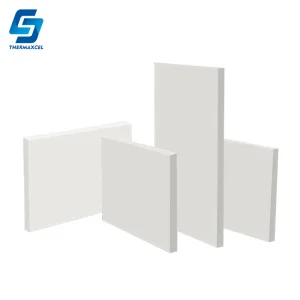
Engineered through vacuum-slurry forming, these rigid boards operate at 1260°C and 1430°C, with thicknesses from 6mm to 100mm and densities from 220 kg/m³ to 600 kg/m³. They resist gas erosion, mechanical vibration, and localized compressive stresses.
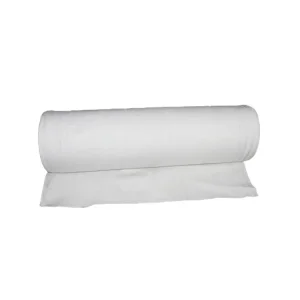
Our papers come in standard 1260°C, 1350°C high-alumina, and 1430°C ZrO₂-grade formulations (1mm to 10mm thickness). Stack-bonded and folded modules utilize pre-compressed blankets (160 to 240 kg/m³) with integrated S/M/T alloy anchors for rapid installation and tight joints.
Global procurement teams in heavy industry prioritize cost efficiency, material compliance, and supply chain reliability. Selecting high-temperature insulation requires strict attention to chemical compositions and mechanical specifications. For example, in reducing atmospheres, the presence of heavy oxides (like iron oxide, Fe₂O₃) accelerates catalyst poisoning and structural decay. Titan New Material addresses this by maintaining Fe₂O₃ content below 0.2%, ensuring chemical stability in demanding kiln environments.
Furthermore, modern procurement decisions incorporate life-cycle analysis. Low-quality ceramic fibers often exhibit high shot content—unfibered particles that increase thermal conductivity and density. By utilizing advanced raw materials and controlled melting, our fibers show minimal shot content, optimizing insulation efficiency and reducing the Total Cost of Ownership (TCO) for global thermal operations.
Our manufacturing facility leverages Factory 4.0 principles to deliver high performance at scale. Fully automated raw material batching and continuous resistance-melting furnaces ensure consistent fiber diameter distribution and thermal characteristics. Real-time computerized control of vacuum forming lines guarantees tight thickness tolerances and uniform density across all fiber board and tube production runs.
This automated setup provides high agility to accommodate custom formulations, variable thickness requirements, and urgent, high-volume production schedules. Strategically positioned near essential raw materials and key transport hubs, Henan FibroCeram minimizes logistics overhead, ensuring cost-efficient distribution to international markets.
Our ceramic fiber innovations are deployed worldwide across various demanding industrial fields, optimizing thermal performance and extending refractory life.
Providing linings for Regenerative Thermal Oxidizers (RTO), shuttle kilns, rotary kilns, rolling kilns, and muffle furnaces to withstand high temperatures and rapid thermal cycling.
Providing reliable thermal insulation for both tunnel kilns and modular residential ovens, balancing high performance with efficient, low thermal mass properties.
Used as backup insulation in steel ladles and tundishes, and as core fire barrier materials in rated fire doors and expansion joints.
Standard-grade papers utilize high-purity alumina-silicate formulations suitable for applications up to 1260°C. In contrast, zirconia-grade papers incorporate zirconium dioxide (ZrO₂) within the fiber chemistry, increasing the classification temperature to 1430°C. This formulation reduces high-temperature shrinkage and increases resistance to chemical degradation in demanding kiln atmospheres.
Shot content refers to non-fibrous ceramic particles remaining after the melt-spinning process. High shot content increases the bulk density and thermal conductivity of the blanket while reducing overall tensile strength. Minimizing shot content ensures better insulation value, lighter installations, and improved resistance to mechanical wear.
Choosing the correct anchors depends on furnace module layout: S-type (Threaded) anchors suit modular layouts requiring individual module adjustment; M-type (Slide-on) anchors provide secure placement in environments prone to mechanical vibration; T-type (T-Bar) anchors are optimal for high-density, pre-compressed modules, ensuring rapid installation and tight joints.