FibroCeram Materials
FibroCeram Materials
FibroCeram Materials
Explore our top-tier catalog of refractory blankets, precision cords, and vacuum-formed custom components.
Under the specialized manufacturing division of Titan New Material, Henan FibroCeram Advanced Materials Co., Ltd. stands as a premier global authority in refractory engineering, manufacturing, and supply chain management. We specialize in producing comprehensive ceramic fiber products designed to mitigate thermal energy loss, resist intense thermal shock, and endure temperatures up to 1430°C in heavy industrial atmospheres.
Our commitment to continuous technological development, rigorous quality assurance frameworks, and customized engineering services enables us to provide significant information gain and cost efficiency. From structural monolithic linings to custom-machined precision components, our research-backed approaches guarantee stable thermal boundaries for petrochemical, metal processing, glass manufacture, and power generation systems globally.
Our high-purity alumina-silica fibers feature excellent fiber index, low thermal conductivity, high tensile strength, and minimal thermal shrinkage. This leads to extended furnace campaign lives, minimized maintenance intervals, and substantial fuel efficiency improvements across all thermal processing sectors.
High-purity chemical compositions coupled with precision manufacturing processes to handle the most demanding thermal cycles.

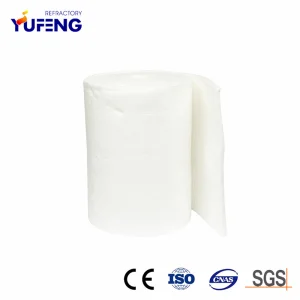
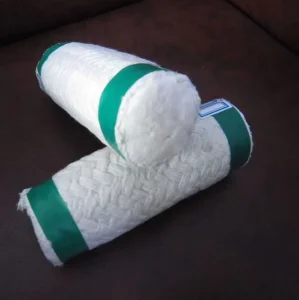
Classified into three temperature boundaries: 1260°C, 1300°C, and 1430°C. Engineered with thickness dimensions ranging from 6mm to 50mm and densities from 64 kg/m³ to 160 kg/m³. Double-needled structurally to prevent tearing and delamination under high gas velocity, providing extreme thermal insulation capacity and chemical durability.

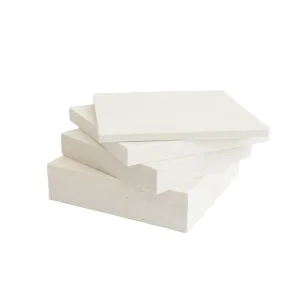
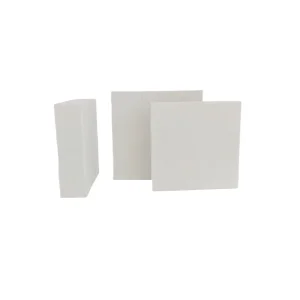
Classified in 1260°C and 1430°C thermal grades. Thickness options range from 6mm to 100mm, with densities spanning 220 kg/m³ to 600 kg/m³. Features high modulus of rupture, outstanding structural flat rigidity, and smooth machinability, making them ideal for furnace hot-face linings, expansion joint seals, and backup insulating layers.

Offered in three tailored chemical variants: 1260°C Standard, 1350°C High-Aluminum, and 1430°C ZrO2 (Zirconia stabilized). Thickness limits span from 1mm to 10mm, with densities from 170 kg/m³ to 220 kg/m³. Their highly flexible, wash-free structure ensures clean die-cutting for thermal gaskets and expansion joints.

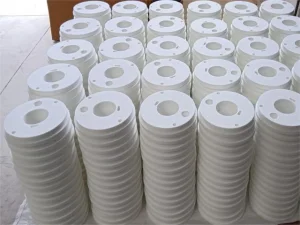
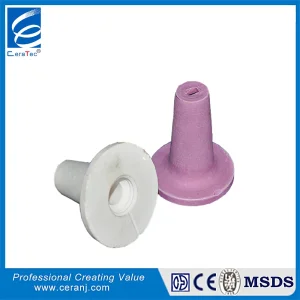
Fabricated from compressed ceramic fiber blankets in stacked or folded configurations. Designed with density ranges between 160 kg/m³ and 240 kg/m³. Integrated anchoring systems (Type S, M, and T anchors) are pre-installed to simplify mounting on industrial shell plates, eliminating joints to prevent thermal bridging.
Comprehensive application profiles demonstrating engineered thermal protection across multiple global sectors.

Thermal lining solutions for RTO incinerators, shuttle kilns, rotary kilns, roller hearth kilns, and muffle furnaces. High-temperature fiber modules improve heating cycle efficiency and decrease fuel use.
Insulation for movable and tunnel kilns used in structural red brick and technical ceramic manufacturing, protecting structural steel frameworks from thermal damage.

Custom thermal insulation wraps and floor backing boards for residential and commercial wood-fired pizza ovens, maintaining steady heat retention and food-safe thermal barriers.

Refractory components for continuous casting lines, reheat furnace doors, ladle insulation, and tundish covers, resisting molten metal spatters and intense thermal shock cycles.
High-density ceramic fiber blankets and customized boards designed to fit fire doors, providing passive fire protection that meets global building safety requirements.

Concentric wraps utilizing premium ceramic fiber and high-performance rockwool to insulate piping, reducing energy loss in high-temperature steam lines and petrochemical transfer networks.
The global refractory industry is transitioning toward clean, low-carbon solutions. Industrial furnace designers are replacing traditional heavy brick linings with lightweight fiber technologies. By adopting low-thermal-mass ceramic fibers, companies can lower their energy consumption during heating cycles.
Additionally, modern environmental standards are increasing the demand for bio-soluble alkaline earth silicate (AES) fibers. These fibers maintain high-temperature stability while offering a biosoluble chemical composition that meets strict global health and safety guidelines.
Procurement departments look for partners who can deliver consistent material quality, stable supply chains, and international compliance. At Titan New Material, we address these priorities through our integrated supply chain. We maintain raw material reserves and operate automated production lines to secure prompt delivery times even during market fluctuations.
We provide full chemical and physical test reports for every batch of fiber, verifying dimensional stability, density, and chemical composition. Our global logistics network supports various delivery options (FOB, CIF, DDP) to simplify supply chains for our clients.
Beyond supplying raw materials, we provide comprehensive thermal engineering solutions. Our engineering division works with industrial operators to design optimal thermal linings. Using heat flow analysis (Finite Element Method), we calculate temperature distributions across multi-layered walls, allowing us to specify the correct mix of blankets, boards, and anchoring systems.
These engineered solutions prevent hot spots, reduce thermal bridging, and protect steel furnace casings, helping to increase operational uptime and lower maintenance costs.
Our R&D team is focused on developing next-generation refractory systems. We are working on inorganic binder technologies for vacuum-formed shapes to eliminate binder burn-off during initial heating cycles, which keeps industrial workspaces smoke-free.
We are also investigating polycrystalline alumina fibers for continuous use up to 1600°C. These high-performance materials are designed to meet the demands of advanced chemical reactors and aerospace thermal barriers.
Our products comply with major global regulatory standards. Titan New Material's ceramic fiber range is CE certified and conforms to REACH and RoHS directives. We manufacture under ISO 9001, ISO 14001, and ISO 45001 management systems to ensure consistent product quality and safe working conditions.
Our global technical service representatives help local installation teams follow proper layout practices, helping customers get the maximum lifespan out of their refractory linings.
Engineering answers to key questions about design, application limits, and material selection.
The classification temperature is the maximum temperature limit at which the fiber will show linear shrinkage of less than 3% or 4% in a non-combustible laboratory environment over a 24-hour test period. The safe continuous use temperature is typically 100°C to 150°C below the classification limit, depending on chemical exposure, heating cycle profiles, and physical stress.
Standard vacuum-formed ceramic fiber shapes contain a small amount of organic binders to hold their shape during forming and handling. When heated above 150°C for the first time, these binders burn off, which may cause minor smoke and odor. The shape's mechanical strength is maintained by its inorganic silica-alumina bond network. We also offer inorganic-bonded, smoke-free options for sensitive environments.
For standard applications, SS304 or SS310 stainless steel anchors (Type S, M, or T) perform well. In atmospheres containing high sulfur, chlorine, or heavy metal vapor, we recommend using high-nickel alloys like Inconel 601 or ceramic cuplock anchors to prevent corrosion and support long-term lining stability.
Our engineers calculate thermal conductivity based on ASTM C201 standards, evaluating values at mean temperatures (ranging from 200°C to 1000°C). These calculations allow us to design multi-layered lining systems that keep cold-face casing temperatures within client-specified ranges (typically below 80°C).
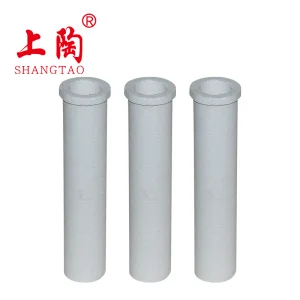
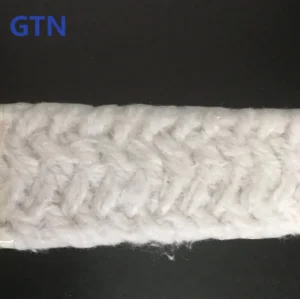
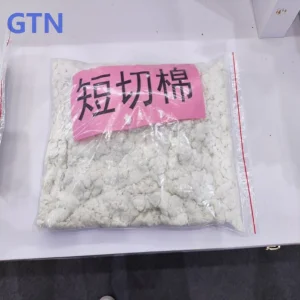
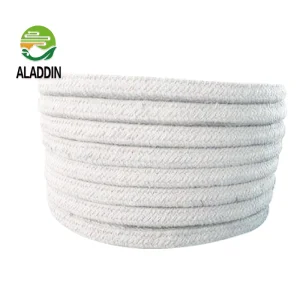
Vacuum formed tubes, CE certified blankets, high-density cloths, and refractory bulk cotton configurations.