FibroCeram Materials
FibroCeram Materials
FibroCeram Materials
Explore our primary selection of raw ceramic fiber materials, custom modules, and engineered components built to withstand extreme thermal conditions.
Analyzing market drivers, capacity distribution, and industrial requirements in high-temperature engineering.
The global industrial sector is undergoing a massive shift towards thermal efficiency and emission reduction. Within this framework, Ceramic Fiber Blanking—the process of precision die-cutting, slitting, and shaping ceramic fiber blankets, boards, and papers—has emerged as a foundational technology. These custom-cut refractory insulation components are essential for sealing, lining, and shielding heat in environments operating up to 1430°C and beyond.
Currently, the market valuation for ceramic fiber materials is expanding rapidly, driven by the revitalization of heavy steel manufacturing, petrochemical refining, and waste-to-energy technologies. China accounts for a dominant share of global production capacity, with Henan and Shandong serving as primary industrial hubs. Suppliers in these regions, such as Henan FibroCeram Advanced Materials Co., Ltd. (Titan New Material), combine extensive raw material reserves with state-of-the-art blanking machinery to support global supply chains across Europe, North America, and Southeast Asia.
Information Gain Indicator: True efficiency in high-temperature systems is not just about the quality of the bulk fiber, but the precision of the blanking process. A poorly cut gasket or module increases thermal bridging, leading to up to 15% more heat loss over the lifetime of a kiln or furnace.
Understanding the transition from traditional Refractory Ceramic Fibers (RCF) to bio-soluble and nanostructured composites.
Due to stringent environmental regulations like REACH in Europe, manufacturers are transitioning to Alkaline Earth Silicate (AES) wools. These fibers are designed to dissolve in human lung fluids if inhaled, offering high safety profiles without sacrificing thermal performance.
By blending traditional ceramic fibers with silica aerogels, manufacturers are creating hybrid insulation plates that achieve extremely low thermal conductivity at thinner profiles, saving valuable space in compact furnace assemblies.
Traditional mechanical die-cutting is being replaced by high-precision CNC water-jet cutting systems. This allows for intricate shapes, zero fiber fraying, and perfect sealing rings for high-pressure industrial pipe flanges.
Also known as Titan New Material, a major ceramic fiber manufacturer in China, delivering state-of-the-art refractory configurations globally.

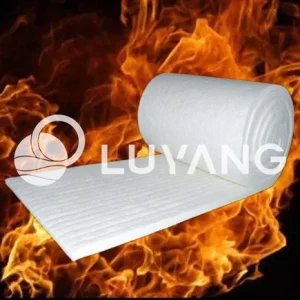
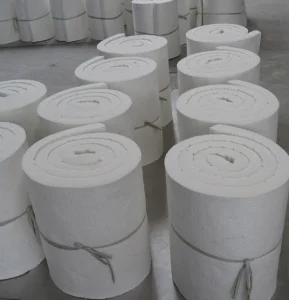
Classified into three temperature grades (1260°C, 1300°C, and 1430°C) with thickness ranging from 6mm to 50mm and densities from 64kg/m³ to 160kg/m³.

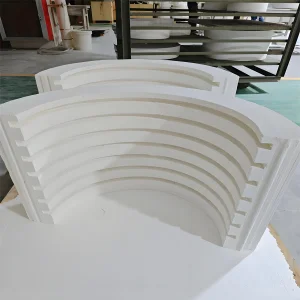
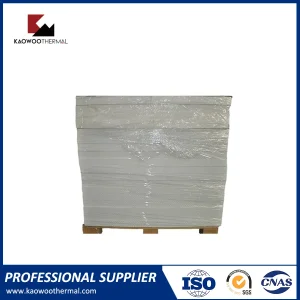
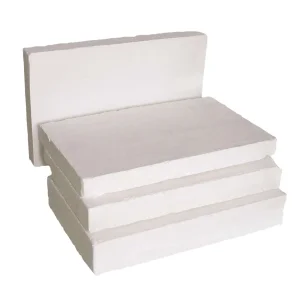
Classified into 1260°C and 1430°C temperature grades with thickness ranging from 6mm to 100mm and densities from 220kg/m³ to 600kg/m³.

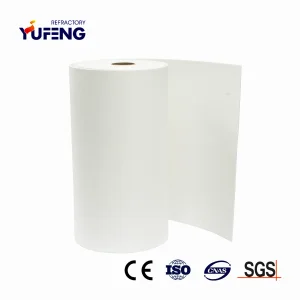
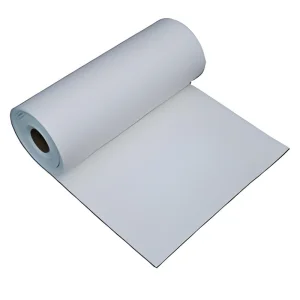
Available in three configurations: 1260°C standard, 1350°C high aluminum, and 1430°C ZrO2. Thickness ranges from 1mm to 10mm with densities from 170kg/m³ to 220kg/m³.

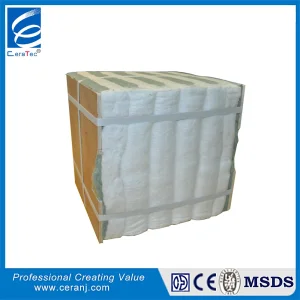
Manufactured from folded or stack-bonded ceramic fiber blankets. Densities span 160kg/m³ to 240kg/m³ and feature pre-installed Type S, M, or T industrial anchoring systems.
| Material Type | Classification Temp (°C) | Bulk Density (kg/m³) | Common Applications |
|---|---|---|---|
| Standard Blanket | 1260 | 64 / 96 / 128 | Reformers, Boilers, Pipe Wraps |
| High-Alumina Blanket | 1350 | 96 / 128 / 160 | Forge Furnaces, Ceramic Kilns |
| Zirconia Blanket | 1430 | 128 / 160 | Ethylene Crackers, Glass Furnaces |
| Ceramic Fiber Paper | 1260 - 1430 | 170 - 220 | Die-Cut Gaskets, Expansion Joints |
Providing specialized systems designed to optimize thermal barriers, structurally minimize heat transfer, and increase production lifespans.

Designed for RTO incinerators, shuttle kilns, rotary kilns, rolling kilns, and muffle furnaces to optimize heat retention.
High-integrity linings for movable and tunnel kilns producing ceramics and structural red bricks.

Food-grade and safe thermal insulation barriers that maximize thermal storage and fuel efficiency.

Refractory linings, ladle backup insulation, and heat treatment covers designed to withstand molten steel spillage.

High-density, low-smoke ceramic blankets offering active and passive flame barrier protection in high-rise buildings.

Flexible wraps using ceramic fibers or high-density Rockwool designed for refinery pipelines and high-pressure steam pipes.
How regional building codes, ASTM metrics, and European Standards dictate custom fiber blanking requirements.
Industrial components are subject to distinct specifications depending on their region of installation. For instance, in the United States, ceramic fiber blanking gaskets used in petrochemical vessels must conform strictly to ASTM C892 (Standard Specification for High-Temperature Fiber Blanket Thermal Insulation). These specifications detail limits on linear shrinkage and water absorption, ensuring the safety of workers in high-pressure oil refining centers.
In the European Union, the presence of refractory fibers requires compliance with REACH guidelines and classification under the European Chemicals Agency (ECHA). Consequently, many European manufacturers require suppliers to deliver customized, pre-blanked pieces that minimize on-site dust generation. By ordering pre-cut blankets and gaskets directly from factories in China under tight dimensional specifications, European facilities avoid the hazard of on-site manual cutting, reducing airborne crystalline silica particles and protecting worker health.
Professional Insight: When selecting a supplier, look for factories that implement post-needle-punching heating treatments. This eliminates organic binders early, preventing the outgassing of irritating fumes during the first heat-up phase on site.
Answering the technical, chemical, and logistics questions most critical to procurement officers and refractory engineers.
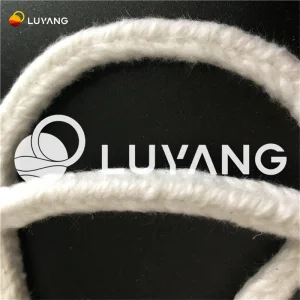
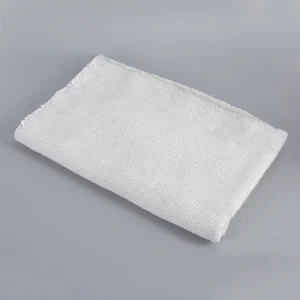
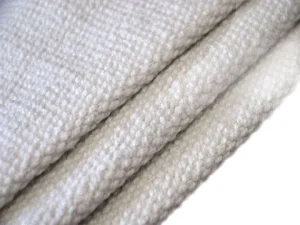
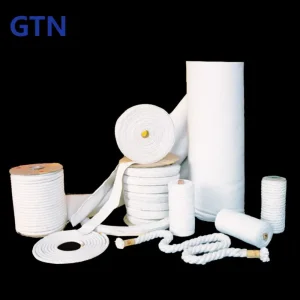
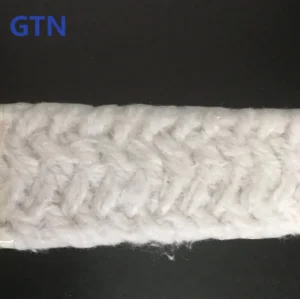
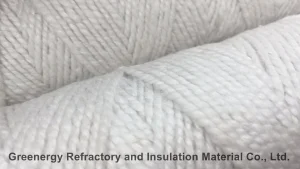
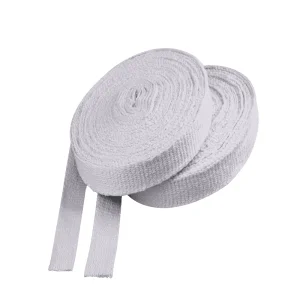
High-durability sealing tapes, woven cloths, and high-purity paper rolls engineered for custom gasket fabrication and extreme shielding.