FibroCeram Materials
Low maintenance high temperature insulation protects equipment exposed to intense heat, repeated cycling, and harsh operating conditions. It may surround furnaces, boilers, exhaust systems, kilns, or industrial piping. Common materials include ceramic fiber, calcium silicate, mineral wool, and microporous insulation. Each option behaves differently under heat, moisture, vibration, and compression. Choosing correctly requires more than comparing temperature ratings. Real performance depends on installation quality, surface preparation, and operating conditions.
The practical goal is Lower maintenance cost for high-temperature insulation solutions. Effective insulation reduces heat loss, protects nearby components, and helps maintain stable process temperatures. It can also reduce surface temperatures around work areas. However, insulation is not maintenance-free. Wet jacketing, cracked joints, loose bands, and damaged coverings can quietly reduce performance. Small defects matter. A trained inspector should check seams, supports, penetrations, and protective cladding during scheduled shutdowns. Manufacturer data and site measurements provide stronger guidance than assumptions.
A reliable approach combines field experience with engineering review. Engineers should consider thermal conductivity, maximum service temperature, fire behavior, mechanical strength, and moisture resistance. Thermal imaging may reveal hidden gaps, although it does not explain every failure. That limitation deserves attention. Some systems look efficient while losing heat through valves, flanges, or poorly insulated supports. Better designs allow access for inspection and repair. They also match the insulation system to the equipment, climate, and maintenance schedule. High-temperature insulation can deliver durable value, but only when design, installation, and follow-up work together.
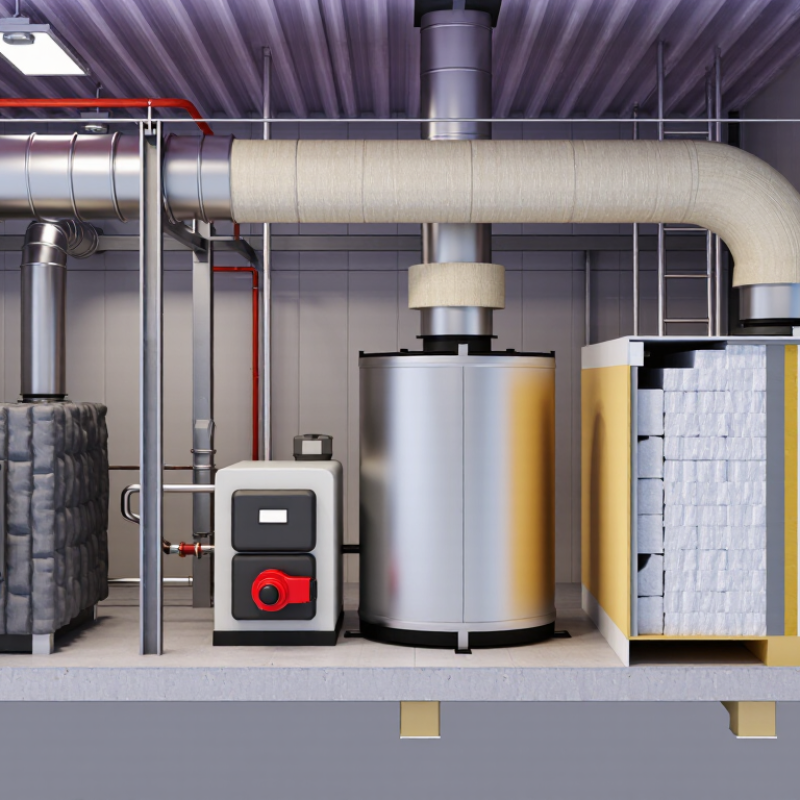
Low-maintenance high-temperature insulation is an engineered thermal barrier for equipment exposed to intense heat.
It may surround furnaces, boilers, exhaust ducts, reactors, and high-temperature piping. Its core purpose is simple: retain useful heat, protect workers from hot surfaces, and reduce unnecessary energy loss.
“Low maintenance” does not mean maintenance-free. It means the system resists moisture, vibration, thermal cycling, and surface damage with limited repair needs.
A practical system usually combines insulation material, protective jacketing, sealed joints, and removable inspection covers. Common materials include mineral wool, calcium silicate, and ceramic fiber. Selection depends on service temperature, chemical exposure, compression strength, and moisture conditions.
Thermal conductivity should be verified through recognized methods such as ASTM C177 or ASTM C518. Small details matter.
A damaged metal jacket can admit water, causing corrosion beneath insulation. That failure is easy to overlook.
The U.S. Department of Energy’s Steam Tip Sheet 17 reports that properly insulated steam systems can reduce heat loss by up to 90%. The IEA’s Energy Efficiency 2023 report identifies industry as responsible for about 37% of global final energy demand.
These figures explain the value of durable insulation, but they require careful interpretation. Savings depend on operating hours, temperature, insulation thickness, and installation quality.
Field inspections often reveal gaps around valves and flanges. Those weak points can undermine an otherwise excellent system. Personnel should check surface temperature, jacketing condition, and wet spots during scheduled maintenance.
Not every “high-temperature” product performs equally well.
What Is Low Maintenance High Temperature Insulation?
A low-maintenance high-temperature insulation system limits heat loss while resisting heat, moisture, vibration, and mechanical damage. Its value comes from stable materials, correct installation, and protective outer layers. In operating facilities, good insulation keeps equipment surfaces safer and reduces energy waste. It also lowers the frequency of repairs around furnaces, pipes, kilns, and process vessels.
Mineral wool suits many industrial areas because it handles high temperatures and remains relatively easy to install. Ceramic fiber withstands more severe heat and works well around furnace linings, burner zones, and expansion gaps. Calcium silicate provides firm support for hot pipes and equipment, especially where compression resistance matters. Microporous panels offer very low thermal conductivity in tight spaces. Aerogel blankets add flexibility around irregular shapes, although their higher cost requires careful justification. Refractory castables create durable, heat-resistant linings where impact or flame exposure is severe.
Moisture matters. Wet insulation can lose performance and encourage corrosion beneath the covering. A complete system may use metal jacketing, sealed joints, expansion allowances, and protective barriers. Loose joints fail early. Inspection remains necessary. Even durable insulation can crack after repeated heating and cooling cycles. In field assessments, small gaps around valves and supports often cause larger losses than expected. The overlooked issue is maintenance access. Engineers should verify removable sections before installation, not after repairs become urgent. That step feels slower, but it prevents damaged insulation from being removed unnecessarily. No system is maintenance-free. (I may be too optimistic there.)
High-temperature insulation reduces heat loss, protects equipment, and can operate for long periods with limited replacement or servicing. The chart compares representative maximum continuous service temperatures for commonly used insulation materials.
Representative typical values; actual limits vary by product formulation, density, installation method, atmosphere, and exposure conditions.
Low-maintenance high-temperature insulation is designed to protect equipment while reducing frequent repairs.
Under extreme heat, its performance depends on more than its rated temperature. Material density, installation quality, joint design, and exposure time all influence results. A small gap can become a serious heat path.
In industrial furnaces, kilns, and process heaters, effective insulation keeps outer surfaces cooler and stabilizes internal temperatures. This reduces energy loss and limits thermal stress on metal casings.
Dense ceramic fiber, mineral-based products, and rigid boards may perform differently during repeated heating and cooling. Thermal cycling matters. Cracks, shrinkage, and loose sections can appear after months of operation.
Moisture control is also important. Wet insulation may release steam rapidly when heated, damaging layers or nearby components. Proper fastening and sealed joints help maintain consistent coverage.
Regular visual checks can reveal darkened surfaces, sagging, or exposed anchors before failures spread. Still, “low maintenance” does not mean maintenance-free. That assumption is too simple.
Temperature readings may look acceptable while hidden insulation deteriorates behind panels. For reliable decisions, inspections should combine surface observations, operating records, and verified temperature data.
Even strong materials can underperform when installed around sharp corners or compressed unevenly. Small installation details often decide long-term performance.
Low-maintenance high-temperature insulation reduces heat transfer around furnaces, kilns, boilers, and process piping. The U.S. Department of Energy’s Steam Tip Sheet No. 1 reports that properly insulated hot surfaces can reduce heat loss by more than 90%, depending on temperature, thickness, and geometry. This improves energy efficiency and protects workers from excessive surface temperatures. Industry calculations should follow ASTM C680 or ISO 12241, rather than relying on a general thickness chart.
Low maintenance does not mean maintenance-free. Moisture, vibration, thermal cycling, and damaged jacketing can reduce insulation performance quickly. A small split around a valve may allow water to reach the metal surface. Corrosion can then develop beneath the insulation, where it remains invisible. API RP 583 identifies moisture control and risk-based inspection as important measures for managing corrosion under insulation. Operators should inspect seams, supports, penetrations, and weather barriers during scheduled shutdowns. Check for wet spots, compressed sections, loose bands, and unusual surface temperatures.
There is a practical limitation. High-temperature systems often expand and contract repeatedly. Rigid insulation may crack, while fibrous materials can settle or lose thickness. The International Energy Agency’s Energy Efficiency 2023 report notes that industry consumed about 37% of global final energy in 2022, so modest thermal losses can become expensive across large facilities. Field experience also shows that “low maintenance” is sometimes overpromised. Material selection, installation quality, and inspection access matter as much as the insulation itself.
| Data Dimension | Typical Information | Benefits | Limitations or Conditions | Maintenance Requirement |
|---|---|---|---|---|
| Definition | High-temperature insulation designed to reduce heat transfer and remain serviceable with limited routine attention under its specified operating conditions. | Supports stable process temperatures, improves worker protection, and can reduce heat loss. | “Low maintenance” does not mean maintenance-free. Inspection is still required. | Establish inspection intervals based on temperature, vibration, moisture, chemical exposure, and operating history. |
| Common insulation forms | Rigid boards, pipe sections, blankets, wraps, castables, modules, and removable insulation covers. | The form can be selected to match flat surfaces, pipes, valves, flanges, furnaces, or irregular equipment. | Complex shapes, access points, and moving equipment usually require more detailed design and inspection. | Check joints, seams, fasteners, covers, and areas around penetrations for gaps or movement. |
| Mineral wool | Noncombustible fibrous insulation commonly used on industrial pipes, vessels, ducts, and equipment. Service temperature depends on the specific product and facing. | Good fire resistance, broad industrial availability, and relatively straightforward installation and replacement. | Performance can decline if it becomes wet, compressed, contaminated, or mechanically damaged. | Keep the weather barrier intact and replace sections that are saturated, compressed, or displaced. |
| Calcium silicate | Rigid, noncombustible insulation often used for high-temperature piping, vessels, and equipment. | Maintains its shape at elevated temperatures and provides good compressive strength when properly supported. | Rigid sections may crack from impact, thermal movement, poor support, or repeated wetting and drying. | Inspect for cracks, open joints, damaged metal jacketing, and water ingress; repair before moisture reaches the insulation system. |
| Ceramic fiber | Lightweight refractory fiber used in furnaces, kilns, heaters, and other applications requiring very high-temperature resistance. | Low thermal mass and rapid heating and cooling can improve thermal-cycle efficiency. | It can shrink, become brittle, or erode under mechanical abrasion, gas flow, vibration, or chemical attack. | Inspect lining condition during planned shutdowns and use suitable protective coatings or rigidization where required by the design. |
| Typical temperature capability | Product ratings range from moderate industrial temperatures to more than 1,000°C, depending on material, density, binder, facing, and exposure. | Allows insulation to be matched to the operating temperature rather than using one material for every application. | The highest stated rating is not automatically the continuous-use rating. Joints, binders, coatings, and jacketing may have lower limits. | Confirm actual operating and upset temperatures against the complete system specification, not only the insulation core rating. |
| Energy efficiency | Insulation reduces conductive, convective, and radiant heat transfer when thickness, density, joints, and surface finish are properly selected. | May reduce fuel or electricity consumption and help equipment reach or maintain its target temperature. | Actual savings depend on temperature difference, surface area, insulation thickness, ambient conditions, operating hours, and energy cost. | Monitor surface temperature, energy use, and process stability to identify deterioration or wet insulation. |
| Personnel protection | A properly designed system lowers accessible surface temperatures and reduces the risk of contact burns. | Improves workplace safety and can reduce the need for additional guarding in accessible areas. | Insulation alone may not eliminate all hazards, especially near hot valves, flanges, vents, and moving machinery. | Measure or verify surface temperatures after repairs and keep warning labels, guards, and barriers in place. |
| Moisture resistance | Most high-temperature insulation systems require weatherproof jacketing, sealed joints, or protective coatings to limit water entry. | Dry insulation generally retains its designed thermal performance and avoids corrosion-related damage beneath insulation. | Water can increase heat loss, promote corrosion under insulation, add weight, and cause freeze-thaw damage. | Inspect jacketing, bands, seams, penetrations, low points, and areas near wash-down operations after heavy rain or cleaning. |
| Mechanical durability | Durability depends on material strength, support spacing, jacketing, vibration, thermal expansion, and impact exposure. | A correctly supported system can remain functional for many operating years with limited localized repairs. | Traffic, vibration, maintenance access, and thermal cycling can loosen, crack, or compress insulation. | Inspect after mechanical work, abnormal vibration, pressure events, and thermal excursions. |
| Thermal expansion and contraction | Hot equipment changes dimensions during operation, so insulation systems need suitable expansion allowances and flexible joints. | Proper detailing reduces cracking, buckling, open seams, and repeated repair work. | Rigid installation without movement allowance may fail prematurely during thermal cycling. | Check expansion joints and high-movement areas during scheduled shutdowns and after major temperature changes. |
| Chemical compatibility | The insulation, binder, coating, jacketing, and sealants must be compatible with process vapors, oils, acids, alkalis, and cleaning chemicals. | Compatible materials reduce corrosion, degradation, odor, fiber release, and unplanned replacement. | A material suitable for dry heat may not be suitable for chemical vapor, liquid contact, or contaminated service. | Review leaks and chemical exposure during inspections; replace chemically degraded components rather than simply covering them. |
| Routine visual inspection | Look for missing sections, damaged jacketing, open seams, staining, bulges, discoloration, exposed fibers, and loose fasteners. | Early detection allows localized repairs before heat loss, corrosion, or safety risks become significant. | Visual inspection may not detect concealed moisture, internal corrosion, or insulation settlement. | Perform routine walk-downs according to site risk and document defects with location, condition, and corrective action. |
| Thermal inspection | Infrared surveys or contact-temperature checks can identify hot spots, missing insulation, wet areas, and damaged seams. | Provides condition information without removing all jacketing and can help prioritize repairs. | Readings are affected by surface emissivity, weather, viewing angle, process load, and access limitations. | Use consistent operating conditions and compare results with previous surveys and design expectations. |
| Repair and replacement | Repairs may involve replacing wet or damaged sections, resealing jacketing, restoring supports, or rebuilding refractory areas. | Targeted repairs can extend system life and avoid the cost and downtime of full replacement. | Incompatible replacement materials or poorly sealed repairs can create new thermal bridges and moisture paths. | Match replacement material, thickness, facing, fasteners, sealants, and movement details to the original design requirements. |
| Best-use conditions | Stable equipment, controlled operating temperatures, limited mechanical abuse, effective moisture protection, and accessible inspection points. | These conditions generally support long service life and low routine maintenance demand. | Severe vibration, frequent thermal shock, persistent wetting, impact, chemical attack, or poor installation may require a more robust system. | Use a documented inspection and maintenance plan based on the actual service environment and applicable safety requirements. |
Note: Temperature limits, thermal conductivity, service life, and maintenance intervals vary by material, thickness, installation quality, operating conditions, and applicable standards. Always verify the complete system design before selection or installation.
What Is Low Maintenance High Temperature Insulation?
Low maintenance high temperature insulation limits heat transfer while resisting repeated thermal stress. In industrial settings, it protects equipment, reduces energy loss, and supports safer surface temperatures. Common materials include mineral fiber, calcium silicate, ceramic fiber, microporous panels, and castable insulation. Each material behaves differently near furnaces, boilers, exhaust ducts, and process piping. The phrase “low maintenance” can mislead. Even durable insulation needs inspection.
In refineries, insulation around hot pipes helps control temperature and prevents accidental contact. Chemical plants use it around reactors, valves, and storage lines. Power facilities apply high temperature systems around boilers, turbines, flues, and steam equipment. Foundries and kilns demand materials that tolerate radiant heat, vibration, and frequent cycling. Outdoor installations also need weather barriers and sealed joints. Moisture can quietly damage performance. Small leaks matter.
Choose insulation by operating temperature, peak temperature, heat-up rate, mechanical load, and chemical exposure. Check thermal conductivity at the actual mean temperature, not only the catalog value. Density matters where compression or impact is expected. Flexible blankets may simplify access around valves. Rigid boards suit flat surfaces, while castable products fit complex furnace shapes. Installation quality remains critical. Gaps, crushed edges, and poor jacketing create hot spots. Field conditions often challenge impressive specifications. A practical review should include maintenance access, worker safety, fire behavior, and expected service life.
It limits heat loss and resists moisture, vibration, and mechanical damage. It reduces repairs, but it is not maintenance-free. That assumption needs checking.
Mineral wool suits many industrial areas and remains relatively easy to install. Ceramic fiber handles severe heat near furnace linings and burner zones. Calcium silicate supports hot pipes and equipment under compression.
Microporous panels provide very low thermal conductivity in narrow spaces. Aerogel blankets bend around irregular shapes. Their higher cost needs careful justification.
Effective insulation keeps outer surfaces cooler and stabilizes internal temperatures. It also reduces energy loss and thermal stress on metal casings. Refractory castables suit areas facing impact or flame exposure.
Wet insulation can lose performance and encourage corrosion beneath the covering. Heated moisture may release steam rapidly. Moisture matters.
Sealed joints, proper fastening, and expansion allowances help maintain coverage. Uneven compression and sharp corners can reduce performance. Small gaps become serious heat paths.
Insulation may crack, shrink, sag, or loosen after thermal cycling. Exposed anchors and darkened surfaces can signal developing damage. Thermal cycling matters.
Combine visual checks, operating records, and verified temperature data. Inspect valves, supports, joints, and removable sections. Hidden damage may remain behind panels.
Removable sections allow repairs without removing large amounts of sound insulation. This saves time around valves and equipment openings. Planning may feel slower. It often prevents unnecessary damage.
Low-maintenance high-temperature insulation is designed to reduce heat transfer, protect equipment, improve energy efficiency, and maintain safe operating conditions in environments exposed to extreme heat. It commonly uses materials such as ceramic fibers, mineral wool, calcium silicate, refractory products, and specialized microporous insulation. These systems are selected for their ability to withstand high temperatures, thermal cycling, mechanical stress, and chemical exposure while maintaining stable insulating performance.
Compared with conventional solutions, low-maintenance insulation can provide longer service life, fewer repairs, reduced heat loss, and improved workplace safety. However, no insulation system is completely maintenance-free; regular inspections are still necessary to identify moisture damage, cracking, compression, or surface deterioration. Common applications include furnaces, boilers, kilns, pipelines, tanks, exhaust systems, and industrial processing equipment. Selection should consider operating temperature, installation conditions, mechanical demands, moisture exposure, maintenance access, and total lifecycle value, helping deliver Lower maintenance cost for high-temperature insulation solutions.
