FibroCeram Materials
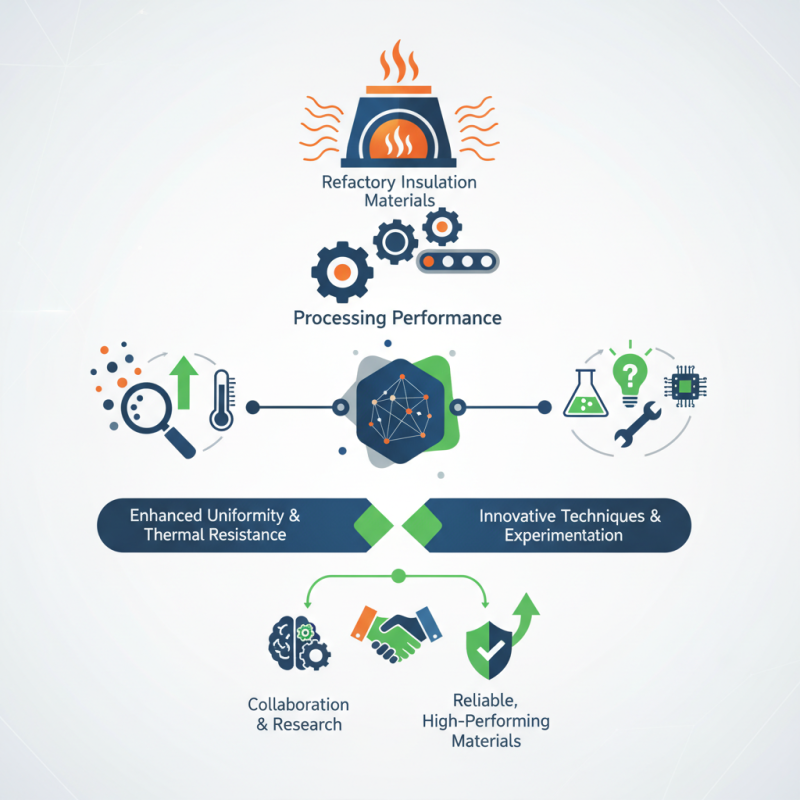
The processing performance of refractory insulation materials plays a crucial role in various industries. Effective processing can lead to enhanced durability and energy efficiency. However, many current methods still face limitations. Common challenges include inconsistent material properties and difficulties in achieving optimal thermal resistance.
To improve processing performance of refractory insulation materials, innovative techniques are needed. Advanced formulations and processing methods can address existing inefficiencies. For instance, adjusting particle size distributions can enhance the uniformity of the material. Despite these advancements, there is still room for experimentation. Variations in processing environments and material sources can lead to unexpected results. This highlights the importance of continual assessment and adaptation in the processing stage.
Furthermore, collaboration with industry experts can yield valuable insights. Engaging in ongoing research will foster a deeper understanding of material behaviors. Ultimately, the goal is to achieve reliable and high-performing refractory insulation materials that meet industry demands. The journey to improve processing performance requires dedication and critical evaluation of existing methods and outcomes.
Refractory insulation materials play a pivotal role in high-temperature industries. Recent developments emphasize advanced processing techniques to enhance performance. For instance, a recent report by MarketsandMarkets indicates the refractory market is projected to reach $28.6 billion by 2026, driven by the need for efficient thermal insulation.
Current trends focus on innovative methods such as additive manufacturing and advanced coating technologies. Additive manufacturing allows for the creation of complex geometries with minimal waste. This technique helps in achieving better thermal resistance properties, crucial for industrial applications. According to a study published in the Journal of Materials Science, using 3D printing can improve the mechanical strength of refractories by up to 30%.
Despite these advancements, challenges persist. The production of high-quality refractory materials often requires meticulous control over raw material properties. Variations can lead to inconsistent performance in extreme environments. Researchers are calling for greater collaboration across industries to address these issues. Emphasis on data-driven approaches could significantly improve material characterizations and processing efficiencies. The intersection of technology and traditional methods remains a focal point for future innovations in this field.
Raw material quality plays a crucial role in optimizing refractory performance. Quality varies significantly among suppliers, leading to disparities in end products. According to industry reports, up to 40% of refractory failures can be traced back to insufficient raw material quality. This statistic highlights the need for stringent quality assessments.
Advanced techniques in raw material processing can improve thermal stability and mechanical strength. For instance, studies show that using high-purity alumina can enhance refractory performance by up to 25%. Conversely, low-quality materials can lead to increased permeability, resulting in premature failure. Production processes often overlook these nuances, causing significant long-term costs.
There is ongoing debate about the best methods for material selection. Some manufacturers rely on conventional testing, while others emphasize real-time monitoring and data analytics. A lack of standardization often leads to inconsistent results. Therefore, many professionals are starting to advocate for more comprehensive testing protocols. This shift is essential for the continuous improvement of refractory insulation materials.
| Raw Material Type | Purity Level (%) | Thermal Conductivity (W/m·K) | Density (g/cm³) | Compressive Strength (MPa) | Flexural Strength (MPa) |
|---|---|---|---|---|---|
| Alumina | 99.5 | 5.5 | 3.20 | 200 | 50 |
| Zirconia | 99.0 | 3.0 | 6.00 | 250 | 60 |
| Silica | 98.5 | 1.5 | 2.65 | 150 | 40 |
| Magnesia | 97.0 | 3.1 | 3.58 | 180 | 45 |
In the pursuit of enhanced processing efficiency for refractory materials, advanced technologies are paving the way. Innovations like automated controlled atmospheres optimize firing processes. These systems improve uniformity in temperature, ensuring consistent material properties. Utilizing data analytics can also identify inefficiencies in production. Digital insights allow manufacturers to adjust parameters in real-time. This responsiveness minimizes waste and elevates product quality.
Another notable development involves advanced 3D printing techniques. This method allows for intricate designs that traditional methods cannot achieve. While undeniably promising, 3D printing faces challenges with material compatibility and strength. Manufacturers must carefully address these issues. Experimentation in this area may lead to breakthroughs or failures that need to be examined further.
Hybrid processing technologies are also gaining attention. Combining different methods can enhance the mechanical properties of refractory materials. However, this approach introduces complexity to the production process. There is a need for continual assessment of cost versus benefit. Striking the right balance is crucial for sustainable practices in refractory manufacturing.
Refractory insulation materials play a crucial role in industrial processes. Their durability is essential for high-temperature applications. Evaluating this durability requires careful testing methods. Various standards, such as ASTM C373, offer insights into water absorption and density. These factors influence thermal conductivity and strength.
In one study, it was found that 40% of refractory failures were linked to inadequate insulation performance. Testing methods must include thermal cycling and mechanical stress analyses. These approaches help simulate real-world conditions and predict long-term performance. Inadequate testing can lead to failures, impacting overall process efficiency.
Moreover, data shows that over 30% of manufacturers have not implemented comprehensive testing protocols. This gap raises concerns regarding the reliability of insulation materials. Enhancing testing methods could lead to better product formulations. Exploring innovative materials, like composites, may further improve performance. Quality assurance is paramount, yet not all companies prioritize it. As the industry evolves, a focus on rigorous testing will be essential for future advancements.
Refractory insulation materials play a crucial role in high-temperature applications. Advances in processing these materials are essential for enhancing performance and safety. Emerging innovations utilize advanced composites and nanomaterials, significantly improving thermal resistance and mechanical integrity. This evolution opens new avenues for applications across various industries, including aerospace and energy.
Incorporating innovative processing techniques is equally important. Techniques such as additive manufacturing can create complex geometries that traditional methods cannot achieve. The challenge lies in ensuring consistency and maintaining quality throughout production. Current practices often struggle with material distribution and scaling up. This inconsistency can lead to performance issues in the final products.
As we explore these innovations, engaging with academia and industry experts becomes critical. This collaboration can foster new ideas and improve existing methodologies. However, adapting to these advancements requires a willingness to rethink traditional approaches. The future of refractory insulation processing rests on refining these techniques, making them reliable. Only then can we fully harness their potential across diverse applications.
: Raw material quality is critical. Poor materials can lead to refractory failures, accounting for up to 40% of issues.
High-purity alumina can enhance performance by up to 25%. It boosts thermal stability and mechanical strength.
Comprehensive testing reduces failures. Many manufacturers lack them, impacting insulation material reliability and performance.
Methods include thermal cycling and mechanical stress analyses. These simulate real-world conditions for better predictions.
Over 30% of manufacturers do not enforce thorough testing protocols. This gap raises concerns about product reliability.
Ensuring consistency during production is challenging. Material distribution issues can cause performance problems in final products.
Collaboration with academia can lead to new ideas. It helps refine existing methodologies and advance material performance.
Water absorption and density significantly affect thermal conductivity and strength, which are essential for durability.
Advanced composites enhance thermal resistance and mechanical integrity. They broaden applications in industries like aerospace and energy.
Some companies prioritize short-term gains over rigorous quality assurance. This oversight can lead to long-term performance issues.
The article "Improve Refractory Insulation Materials Processing Performance" explores the evolving landscape of refractory insulation materials and their processing techniques. Current trends highlight advancements in processing efficiency, driven by improved raw material quality that significantly influences refractory performance optimization. Furthermore, the article discusses advanced technologies that facilitate enhanced processing efficiency, making them crucial for the development of high-performance refractories.
Additionally, it outlines methods for testing and evaluating the durability of refractory insulation materials, ensuring their reliability in various applications. Looking ahead, the article emphasizes the need for future innovations in the processing and application of refractory materials, aiming to continually improve processing performance of refractory insulation materials. This comprehensive analysis provides insights into the critical factors for optimizing refractory technologies in an increasingly demanding industrial environment.
