FibroCeram Materials FibroCeram Materials

How to Achieve Lightweight High Temperature Insulation?

Time:2026-10-01 Author:Madeline
0%

How can engineers reduce insulation weight without sacrificing thermal safety? This question matters in furnaces, exhaust systems, kilns, and high-temperature process equipment. Every kilogram removed can simplify installation, lower structural loads, and improve maintenance access. Yet lightweight insulation is not automatically efficient. Poor material selection may cause heat loss, cracking, or premature failure.

To Achieve lightweight design for high-temperature insulation, engineers must balance density, thermal conductivity, service temperature, strength, and moisture resistance. Ceramic fiber blankets, microporous panels, calcium silicate boards, and lightweight insulating castables each perform differently. A thin microporous panel may reduce heat transfer dramatically, while a ceramic fiber module can fit irregular furnace walls. The correct choice depends on operating temperature, thermal cycling, vibration, and available space.

Details matter. A small gap behind a lining can become a hot spot. Compression during installation can also reduce insulation performance. Experienced teams usually review temperature maps, material data sheets, joint design, and surface protection together. Testing should follow recognized methods where possible, such as thermal conductivity and compressive-strength evaluations at relevant temperatures. Still, laboratory figures may not represent every plant condition. This is where practical judgment becomes important. A design that performs well on paper may need revision after repeated shutdowns, vibration, or moisture exposure. Lightweight insulation is therefore an engineering decision, not simply a search for the lowest density. When safety margins, installation quality, and lifecycle performance receive equal attention, weight reduction becomes more reliable and measurable.
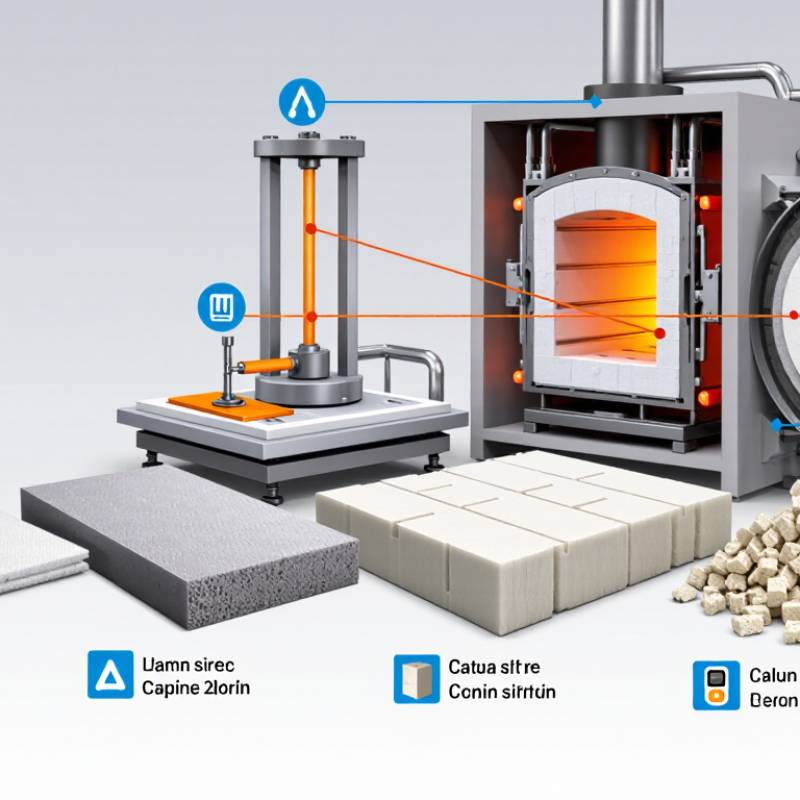
How to Achieve Lightweight High Temperature Insulation?

Defining the Requirements for Lightweight High-Temperature Insulation

Lightweight high-temperature insulation begins with a clear definition of the service conditions. A temperature rating alone is not enough. Specify the continuous temperature, peak temperature, exposure time, and heat-flow target. For example, a furnace wall operating at 1,000°C may need different insulation from a pipe facing brief temperature spikes.

The surrounding atmosphere also matters. Oxidizing air, vacuum, steam, and corrosive gases can change material performance. Define allowable heat loss, available thickness, weight limits, and required surface temperature. Include mechanical loads, vibration, abrasion, and thermal cycling. A fragile lining may perform well in a laboratory but fail during repeated shutdowns. Installation details matter too. Gaps, compression, anchors, and joints can create thermal bridges that reduce real-world efficiency.

Field assessments should measure both thermal performance and handling conditions. Ask how workers will cut, fit, protect, and inspect the insulation. Dust control and surface durability may influence the final choice as much as conductivity. Test representative samples under the expected atmosphere and heating cycle. Small specimens can hide joint problems. We sometimes over-specify temperature resistance while overlooking moisture or movement. That is a costly assumption. A practical requirement sheet should record test methods, acceptance limits, service life expectations, and maintenance access before material selection begins.

How to Achieve Lightweight High-Temperature Insulation?

Defining the Requirements for Lightweight High-Temperature Insulation

The chart compares the estimated insulation mass required to provide a thermal resistance of 1.0 m²·K/W at approximately 600°C. Lower mass per square metre indicates a lighter solution, but selection must also consider service temperature, mechanical strength, moisture resistance, durability, and installation conditions.

Representative engineering values based on typical published property ranges. Calculations use mass per area = density × thermal conductivity × required thermal resistance. Actual performance varies with temperature, product density, compression, moisture, and test method.

Comparing Materials for Heat Resistance, Weight, and Durability

How to Achieve Lightweight High Temperature Insulation?

Choosing lightweight insulation starts with the actual heat, not the material’s marketing label. Temperature, exposure time, airflow, moisture, and mechanical contact all change performance. In thermal design reviews, I compare thermal conductivity at the expected operating temperature. A material tested at room temperature may perform very differently near 1,000°C.

Ceramic fiber offers strong heat resistance with low density. It suits furnace linings, removable covers, and complex shapes. However, repeated vibration can damage its fibers. Aerogel blankets are thinner and extremely light, which helps when space and weight are limited. They can compress under clamps, though, reducing their insulating value. Calcium silicate boards provide better rigidity and surface durability. They are heavier and may crack after repeated thermal cycling. Microporous panels can deliver excellent insulation in tight spaces, but handling requires care.

Weight is only one part of durability. A thin blanket may save kilograms but need a protective layer against abrasion and moisture. Edge sealing also matters. Small gaps can create hot spots around pipes, doors, and fasteners. I once favored the lightest option too quickly; installation damage reduced its real performance. That was a useful mistake. Reliable selection should include fire testing, thermal cycling, compression checks, and service records from similar equipment. The best design is often a layered system: a rigid support outside, flexible insulation around movement zones, and a heat-resistant surface facing the process.

How to Achieve Lightweight High Temperature Insulation? — Comparing Materials for Heat Resistance, Weight, and Durability
Material Typical Density Typical Maximum Continuous Service Temperature Thermal Conductivity at Moderate Temperature High-Temperature Resistance Weight Efficiency Durability and Handling Best-Fit Applications
Aerogel Blanket Approximately 120–180 kg/m³ Approximately 600–650°C, depending on reinforcement and atmosphere Approximately 0.018–0.025 W/m·K ★★★★★ Excellent ★★★★★ Very high Very thin and lightweight; flexible grades resist vibration well. Requires careful protection from abrasion and compression. Space-constrained pipework, hot equipment, aerospace-related systems, and high-performance industrial insulation.
Microporous Silica Panel Approximately 180–350 kg/m³ Approximately 900–1,000°C Approximately 0.020–0.030 W/m·K ★★★★★ Excellent ★★★★☆ High Provides very low heat transfer in a compact thickness. Rigid panels can be brittle and should be protected from impact and moisture. High-temperature furnaces, battery thermal barriers, kilns, and compact thermal shields.
Calcium Silicate Approximately 200–300 kg/m³ Approximately 650–1,000°C, depending on grade Approximately 0.055–0.090 W/m·K ★★★★☆ Very good ★★★★☆ High Rigid, non-combustible, and dimensionally stable. It is relatively easy to cut but can be damaged by impact and may absorb water if left unprotected. Boilers, furnaces, ducts, stacks, and industrial equipment requiring rigid insulation.
Ceramic Fiber Blanket Approximately 64–160 kg/m³ Approximately 1,000–1,430°C, depending on fiber chemistry Approximately 0.050–0.100 W/m·K ★★★★★ Excellent ★★★★★ Very high Extremely lightweight and flexible, with strong resistance to thermal shock. It can shrink under prolonged service and requires mechanical restraint; airborne fibers require appropriate handling controls. Furnace linings, kiln insulation, heat shields, expansion joints, and removable covers.
Calcium-Magnesium-Silicate Wool Approximately 80–160 kg/m³ Approximately 1,000–1,200°C Approximately 0.045–0.085 W/m·K ★★★★☆ Very good ★★★★★ Very high Lightweight, flexible, and suitable for high-temperature service. Performance depends on maintaining proper installation density and protecting the material from mechanical damage. Industrial furnaces, high-temperature piping, boilers, and equipment with complex geometries.
Mineral Wool Approximately 80–180 kg/m³ Approximately 650–750°C, depending on binder and product grade Approximately 0.035–0.055 W/m·K ★★★☆☆ Good ★★★★☆ High Cost-effective, non-combustible, and easy to install. Binders may limit service temperature, and the insulation should be protected from moisture, compression, and vibration. Industrial pipes, tanks, HVAC systems, process equipment, and general building services.
Expanded Perlite Approximately 120–240 kg/m³ Approximately 650–1,000°C, depending on formulation and installation Approximately 0.045–0.075 W/m·K ★★★★☆ Very good ★★★★☆ High Inorganic, non-combustible, and relatively stable at elevated temperatures. Rigid forms can crack under impact, while loose-fill forms require containment. High-temperature pipe insulation, fire-resistant panels, furnace surrounds, and refractory backing.
Vermiculite Board Approximately 180–350 kg/m³ Approximately 900–1,100°C, depending on grade Approximately 0.060–0.100 W/m·K ★★★★☆ Very good ★★★☆☆ Moderate Rigid, machinable, and non-combustible. It offers good dimensional stability but is more vulnerable to impact and moisture than flexible insulation. Fire barriers, kiln construction, furnace components, and high-temperature backing boards.
Firebrick / Dense Refractory Approximately 1,600–2,300 kg/m³ Approximately 1,260–1,700°C, depending on composition Approximately 0.8–1.6 W/m·K ★★★★★ Excellent ★☆☆☆☆ Low Highly durable under compression, abrasion, and direct flame exposure. It is heavy, relatively conductive, and susceptible to cracking from thermal shock if poorly designed. Furnace hot faces, incinerators, fireplaces, kilns, and areas exposed to erosion or direct flame.
Data note: Values are representative engineering ranges for commonly available material grades. Actual performance varies with density, composition, moisture, temperature, atmosphere, aging, installation quality, and mechanical loading. Thermal conductivity generally increases as temperature rises; always verify the manufacturer’s technical data and the applicable design standard before specifying a material.

Designing the Insulation Structure and Selecting Suitable Thickness

How to Achieve Lightweight High Temperature Insulation?

High-temperature insulation works best when the structure, material, and thickness are designed as one thermal system. Begin with the hot-face temperature, target outer-surface temperature, heat-loss limit, and available installation space. Then map heat paths through joints, anchors, doors, and compression points. These details often dominate performance. For layered systems, place dense, heat-resistant material toward the hot side. Use lighter, lower-conductivity layers behind it, where temperatures permit. Stagger joints between layers. Avoid continuous gaps.

Thickness should come from calculation, not habit. Estimate conductivity at the actual mean temperature, not only at room temperature. Add allowances for shrinkage, settling, moisture loss, and installation tolerance. A thicker wall is not always better. Extra thickness can increase weight, stress supports, and create gaps during thermal cycling. On site, check hot spots with thermal imaging and compare them with the design model. That comparison may reveal an imperfect assumption. Revise the layer arrangement before simply adding material. For critical equipment, a qualified thermal engineer should review the design and test results.

Tips: Keep a small trial panel. Measure surface temperature after a complete heat-up cycle. Record joint widths, compression, and visible movement. Use these observations to refine thickness and maintenance intervals. Forgetting expansion space is a common mistake. Don't treat it as minor.

Manufacturing and Installing the Insulation System

How to Achieve Lightweight High Temperature Insulation?

Manufacturing and Installing the Insulation System

A lightweight insulation system begins with controlled material preparation. Fibers, binders, and reinforcing additives must be blended evenly. Uneven mixing creates weak spots during heating. Manufacturing teams should monitor density, moisture, thickness, and curing temperature for every batch. Small variations can affect thermal performance. In my experience, rushed curing often causes shrinkage later. That mistake is easy to overlook. Each panel or module should be inspected for cracks, loose fibers, and dimensional accuracy before shipment.

Installation requires the same discipline. The heated surface must be clean, dry, and structurally sound. Remove rust, dust, and old debris. Install anchors according to the approved layout, not by visual estimation. Joints should fit closely, while planned expansion gaps prevent compression damage. Staggering seams can reduce heat leakage through the system. Measure thickness at several points. One reading is not enough. A qualified engineer should verify clearances, support strength, and operating temperature before commissioning.

Tips: Store insulation under cover. Keep it off wet floors. Avoid crushing edges during lifting. Mark damaged sections immediately. Photograph hidden layers before closing the system. Check gaps after the first heating cycle, because minor movement may reveal installation problems. Rework is inconvenient, but ignoring a small gap can become an expensive thermal failure.

Testing Thermal Performance and Ensuring Long-Term Stability

Lightweight high-temperature insulation must be judged beyond its low density. A material may feel impressive in a laboratory, yet perform differently inside a furnace. Thermal performance testing should measure conductivity across the intended temperature range. Record heating rates, sample thickness, surface condition, and atmosphere. Small gaps can distort results.

Use repeated tests at several temperatures. A hot-face sensor and a cold-face sensor reveal the actual temperature gradient. Compare new samples with aged samples after thermal cycling. Watch for shrinkage, cracking, fiber settling, or changes in surface color. These details often signal declining insulation efficiency. No test is perfect. Even careful measurements contain uncertainty, especially near joints and corners.

Tips: Keep sample dimensions consistent. Calibrate sensors before every test series. Test under real operating conditions when possible. Include humidity exposure if storage is not fully controlled. A short thermal shock test can expose weak bonding, but it cannot predict every failure. Long-term stability needs months of evidence, not one attractive data sheet. Record every change, including minor warping. I once underestimated a small edge gap; the calculated performance looked strong, but the installed result was disappointing. That mistake remains useful. It shows why design review, independent testing, and honest reporting must support material selection.

FAQS

How should lightweight high-temperature insulation be selected?

Start with actual operating temperature, exposure time, airflow, moisture, and mechanical contact. Room-temperature data may mislead near 1,000°C. Compare thermal conductivity at the expected service temperature. Weight matters, but real performance matters more.

Which insulation materials suit different applications?

Ceramic fiber suits furnace linings, removable covers, and irregular shapes. Aerogel blankets save space and weight but may compress under clamps. Calcium silicate boards provide rigidity and surface durability. Microporous panels work well in narrow spaces but need careful handling.

Why can lightweight insulation lose performance?

Vibration can damage flexible fibers. Clamps may crush thin blankets. Abrasion and moisture can also reduce performance. A protective outer layer may be necessary. The lightest option is not always the best option.

How should insulation thickness be determined?

Calculate thickness using conductivity at the actual mean temperature. Consider heat loss, available space, shrinkage, moisture loss, and installation tolerance. Extra thickness can add weight and stress supports. More material is not automatically safer.

How can heat leakage through joints be reduced?

Map heat paths around pipes, doors, anchors, fasteners, and compression points. Fit joints closely and stagger seams between layers. Avoid continuous gaps. Small openings can create visible hot spots.

What should a layered insulation system look like?

Use dense, heat-resistant material toward the hot side. Place lighter, lower-conductivity layers behind it. Add rigid support outside movement zones. Use flexible insulation where thermal movement occurs. Layer direction matters.

What quality checks are important during manufacturing and installation?

Monitor density, moisture, thickness, mixing, and curing temperature for every batch. Inspect panels for cracks, loose fibers, and dimensional errors. During installation, check anchors, clearances, support strength, and thickness at several points. One measurement is not enough.

How can insulation problems be found after commissioning?

Keep a small trial panel and measure surface temperature after a complete heat-up cycle. Use thermal imaging to locate hot spots. Record joint widths, compression, and visible movement. Check again after the first heating cycle. Small movement may reveal a serious gap.

What common mistakes should designers avoid?

Do not rely only on room-temperature test data. Do not ignore expansion space or compress insulation during lifting. I once chose the lightest option too quickly. Installation damage reduced its actual performance. That mistake still needs reflection.

Conclusion

Achieving lightweight high-temperature insulation begins with clearly defining the operating conditions, including maximum temperature, heat-flow limits, available space, mechanical loads, moisture exposure, and expected service life. Materials should then be compared according to thermal resistance, density, durability, chemical stability, and ease of handling. A suitable insulation structure may combine protective layers, low-density insulating cores, and reflective or load-bearing components. Thickness should be calculated from the required thermal performance rather than selected solely by weight reduction. This approach helps achieve lightweight design for high-temperature insulation while maintaining safe surface temperatures and reliable heat control.

During manufacturing and installation, careful attention should be given to dimensional accuracy, joints, compression, sealing, and protection against vibration or environmental damage. The completed system should be tested under realistic operating conditions to verify temperature distribution, heat loss, structural stability, and resistance to aging. Regular inspections can identify damage or performance changes early, supporting long-term reliability and efficient operation.

Madeline

Madeline

Madeline is a dedicated marketing professional with a wealth of expertise in our company's core offerings. With a keen understanding of the industry, she brings a unique perspective to her role, consistently delivering high-quality content that highlights the superior aspects of our products. As......