FibroCeram Materials FibroCeram Materials

Top Equipment Types for Complex Industrial Structures?

Time:2026-11-04 Author:Ethan
0%

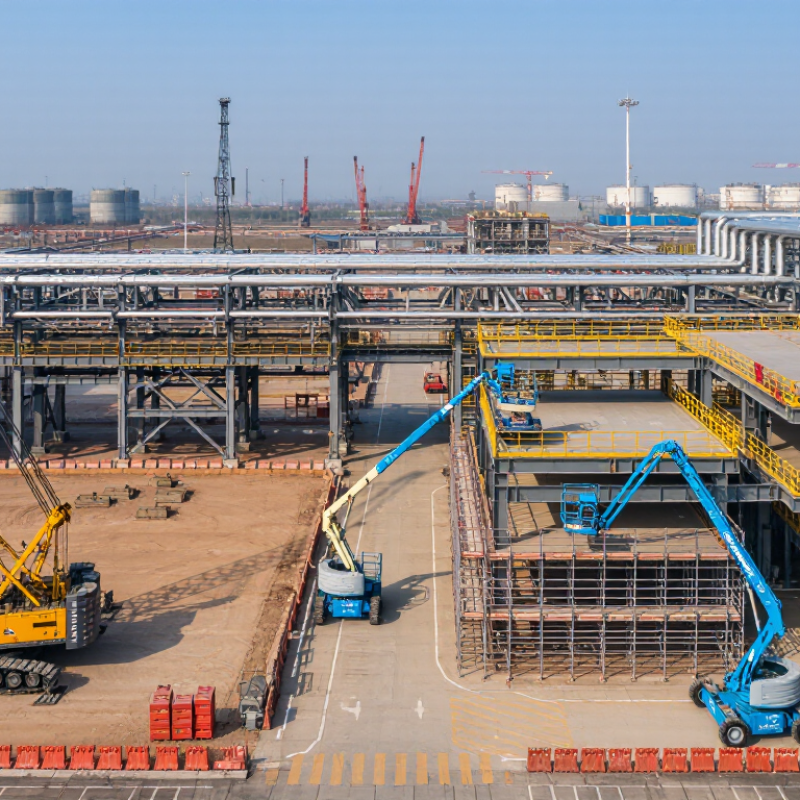
Complex industrial structures bring tight access, changing elevations, heavy components, and work zones that may shift during construction or maintenance. A refinery pipe rack, for example, can place overhead lines above narrow routes and crowded platforms. The right equipment must reach the task without blocking neighboring work or placing excessive loads on the structure. That is the real challenge.

This guide examines equipment types commonly considered for these environments, including crawler cranes, boom lifts, modular scaffolding, telehandlers, and material lifts. Each serves a different purpose. A crawler crane can handle substantial loads on suitable ground, while a compact boom lift may offer better access between obstructions. Scaffolding can create a stable work platform, but its layout and loading need careful review. No single machine fits every site.

The choice depends on reach, capacity, ground conditions, overhead hazards, and the structure’s verified load limits. Site drawings help, but they may not capture every late change. Experienced operators and qualified planners should confirm the actual conditions before equipment is positioned. Small details matter. A narrow turning radius, a low beam, or a soft patch of ground can change the plan.

The goal is to Improve adaptability to complex industrial equipment structures without treating flexibility as a substitute for sound planning. This overview offers practical comparisons and selection questions. Some choices remain imperfect; access, cost, and productivity can pull in different directions. Recognizing that tension is a useful starting point.
Top Equipment Types for Complex Industrial Structures?

Defining Complex Industrial Structures and Their Equipment Needs

Complex industrial structures are not defined by size alone. They combine irregular geometry, heavy loads, tight access, and connections between steelwork, piping, platforms, and process equipment. A pipe rack crossing several elevations, for example, may leave little room for a crane to swing or workers to position components safely. That changes everything.

Equipment needs follow the structure’s geometry and construction sequence. Mobile cranes or gantries may place major steel sections, while telehandlers move materials through restricted areas. Boom lifts provide reach around obstructions; scissor lifts suit level floors and vertical access. Survey instruments help check alignment, and calibrated torque tools support controlled bolting. Temporary bracing can stabilize unfinished frames, but its design should match expected loads and erection stages. Small errors matter.

Selection should account for component weight, lift radius, ground capacity, overhead clearance, and weather exposure. These factors need checking against project drawings and site conditions, not guesswork. In practice, access conflicts often appear only after nearby services are installed. A planned lift may then require a different sequence or smaller equipment. Field measurements help, though they cannot replace an engineered lift plan or competent supervision. Even careful planning can miss a clash; that is a reason to review the setup, not improvise around it.

Earthmoving and Foundation Equipment for Site Preparation

Preparing a site for a complex industrial structure starts with matching equipment to the ground, not simply choosing the largest machine. Excavators remove unsuitable soil, shape drainage channels, and dig foundation areas. Dozers clear and rough-grade broad sections, while motor graders refine access roads and working pads. Haul trucks move spoil without leaving excavators waiting between loads. On soft ground, tracked machines may spread their weight better than wheeled equipment. Still, soil conditions vary across one site. Review geotechnical findings, utility information, and grade plans before work begins; field conditions can expose gaps in an otherwise careful plan.

Tips: Check bucket size against trench dimensions. Keep haul routes firm and clearly marked. Recheck elevations after rain.

Foundation preparation often needs rollers or plate compactors to build consistent support beneath footings and crane pads. Compaction should follow the project specification, with field tests confirming moisture and density rather than relying on appearance. For piling or drilled foundations, dedicated rigs may be needed, but their setup depends on access, subsurface conditions, and structural design. A machine can look productive while removing too much material. Pause when unexpected fill, water, or buried debris appears, and have the responsible site professional assess the condition before proceeding.

Top Equipment Types for Complex Industrial Structures

Typical operating weight ranges for earthmoving and foundation equipment used in site preparation

Larger machines can support demanding excavation, grading, compaction, and foundation work, but the right choice depends on ground conditions, access, and project requirements. Ranges are indicative of common heavy-duty equipment classes; actual weights vary by model and configuration.

Cranes and Hoists for Lifting Structural Components

Top Equipment Types for Complex Industrial Structures?
Cranes and Hoists for Lifting Structural Components

Cranes and hoists help crews position beams, columns, and heavy modules where access is tight. Mobile cranes can serve changing work areas, while tower or overhead cranes may suit projects with fixed lifting routes. Chain and wire-rope hoists offer controlled movement for shorter lifts or final alignment. The right choice depends on component weight, lift radius, headroom, and ground conditions—not weight alone.

Before a lift, confirm the load’s center of gravity and approved attachment points. Check the crane’s rated capacity at the planned radius, then review rigging angles and clearance around nearby steelwork. A lift plan should identify the operator, signal person, and clear communication method. Trial lifts can reveal shifting loads or awkward balance. Even experienced crews can overlook a small obstruction; plans need a fresh site check.

Tips: Keep the load path clear, inspect slings and hooks before use, and move smoothly rather than correcting a swing abruptly. Small details matter. Use tag lines only when the site assessment supports them, and keep workers outside the suspended-load zone. If the component behaves unexpectedly, pause and reassess. A slower lift is often the more controlled lift.

Access and Material-Handling Equipment for Assembly Work

Complex industrial assembly depends on more than getting workers to the right height. The equipment must also bring components close to the work face without blocking other trades. Mobile elevating work platforms suit tasks such as fitting cable trays or aligning small pipe sections. Scaffolds can provide steadier access for longer tasks, especially when workers need tools and parts nearby. Neither option solves every access problem.

For heavier components, overhead cranes and chain hoists can control lifts into tight structural bays. Telehandlers and forklifts help move pallets across prepared routes, while material lifts can raise smaller loads between levels. On one installation, a narrow access aisle made a compact lift more useful than a larger machine. The choice depends on load weight, reach, floor capacity, and turning space. Check these details before equipment arrives.

Hand carts, roller tracks, and vacuum lifters can reduce awkward handling of panels, glass, or sheet metal. They are useful, but only when the route is level and the load is secured. A lift plan should identify the load path, landing area, and communication method. Workers also need clear separation from suspended loads and moving equipment. This is often underestimated. Rechecking clearances during assembly matters, because temporary bracing and stored materials can change the space overnight. A tidy plan can still meet a real site condition imperfectly.

Specialized Tools for Precision Installation and Inspection

Complex industrial structures need more than heavy lifting equipment; they need precise measurement and inspection tools. Total stations establish column coordinates, while laser trackers check flange alignment across long spans. During fit-up, calibrated torque tools help crews apply specified bolt loads. Small errors compound. A single offset connection can complicate pipe routing, access, and later maintenance. For welds and hidden connections, qualified inspectors may use ultrasonic testing, magnetic-particle testing, or borescopes, depending on the material and defect risk. Each instrument should have current calibration records, and measurements should be tied to a clear site datum.

The need for dependable information is not theoretical. FMI and PlanGrid’s 2018 report, Construction Disconnected, attributed 52 percent of rework to poor data and communication, estimating an annual US cost of 31.3 billion dollars. That figure covers construction broadly, not industrial structures alone. Still, it underlines why inspection findings, equipment readings, and drawing revisions must stay linked. Digital models can help, but they are only useful when field teams verify actual conditions. Here is the uncomfortable part: crews sometimes rely on a quick tape check when schedules tighten. It may seem adequate. It is not a substitute for documented instrument checks, independent verification, and a recorded acceptance decision.

Top Equipment Types for Complex Industrial Structures: Specialized Tools for Precision Installation and Inspection

Equipment Type Primary Function Typical Precision or Working Range Best-Suited Applications Key Inspection or Control
Robotic Total Station Measures angles and distances to establish positions and verify installed components. Angle accuracy commonly ranges from about 1 to 5 arc-seconds; distance accuracy is typically a few millimetres plus a distance-dependent component. Column alignment, anchor-bolt checks, structural steel positioning, and monitoring control points. Check instrument calibration, line of sight, stable setup, and survey control before measurements.
Laser Tracker Tracks a reflective target in three dimensions for high-accuracy measurement over large workpieces. Measurement uncertainty is commonly in the tens of micrometres at short ranges, increasing with distance and setup conditions. Precision assembly of large frames, machine foundations, vessel sections, and modular structures. Use calibrated equipment and account for temperature, vibration, target alignment, and line-of-sight limits.
Hydraulic Torque Wrench Applies controlled torque to large structural and mechanical fasteners. Available torque capacities range from a few hundred to tens of thousands of newton-metres, depending on the tool and configuration. Flanged joints, heavy steel connections, pressure equipment, and bolted machinery interfaces. Verify calibration, correct socket fit, specified tightening sequence, and the project’s torque or tension procedure.
Hydraulic Strand Jack Lifts or tensions heavy loads using multiple high-strength strands and controlled hydraulic force. Systems are configured for loads from tens to several thousand tonnes; lift height depends on strand length and the installation arrangement. Bridge segments, heavy modules, large roofs, offshore structures, and restricted-access lifts. Monitor load distribution, strand condition, anchorage, lift synchronization, and the approved lifting plan.
Mobile Elevating Work Platform (MEWP) Provides temporary, adjustable access for installation and inspection at height. Working heights commonly range from a few metres to more than 40 metres, depending on platform type. Bolting, welding access, visual inspection, coating checks, and maintenance of elevated structural members. Confirm ground bearing capacity, load limits, fall protection, pre-use inspection, and operating conditions.
Ultrasonic Thickness Gauge Measures material thickness using sound-wave transit time, often without removing the component. Many instruments cover approximately 0.5 mm to 500 mm, with usable range depending on material, probe, and surface condition. Corrosion surveys of pipes, tanks, pressure vessels, and structural plate. Calibrate against suitable reference blocks and prepare the surface and couplant as required.
Phased-Array Ultrasonic Testing (PAUT) System Uses electronically controlled ultrasonic beams to examine welds and components from multiple angles. Inspection coverage and flaw sizing depend on probe frequency, material, geometry, scan plan, and operator qualification. Weld inspection in thick sections, complex joints, pipelines, and pressure-containing structures. Follow a qualified examination procedure; verify calibration, scan coverage, and recorded data.
Industrial Borescope Provides visual access to enclosed or hard-to-reach internal areas through a small opening. Insertion tube diameters are commonly a few millimetres; reach varies from under a metre to several metres by system type. Internal checks of tubular members, vessels, machinery, cavities, and concealed weld areas. Check image quality, illumination, probe condition, access-point suitability, and image documentation.

Typical values are indicative and vary by equipment configuration, calibration, material, environment, and inspection procedure. Confirm project requirements and applicable standards before use.

FAQS

What makes an industrial structure complex?

Irregular shapes, heavy loads, tight access, and connected systems can make construction challenging. A pipe rack may leave little room for cranes. Small errors matter.

How should lifting equipment be selected?

Check component weight, lift radius, ground capacity, overhead clearance, and weather. Match the equipment to drawings and field conditions. Guesswork is risky.

Which machines help prepare a construction site?

Excavators dig foundations, dozers clear ground, and graders refine access roads. Haul trucks move spoil. On soft soil, tracked machines may spread their weight better.

How can crews check foundation support?

Rollers or plate compactors prepare footing and crane-pad areas. Follow project specifications and verify moisture and density with field tests. Appearance alone can mislead.

What tools support accurate installation?

Total stations locate columns, and laser trackers check alignment across long spans. Calibrated torque tools help apply specified bolt loads. Record the measurements.

How are welds and hidden connections inspected?

Qualified inspectors may use ultrasonic or magnetic-particle testing, or borescopes. The suitable method depends on material and defect risk. Check calibration records.

Why should field data stay linked to drawings?

Connected inspection findings, equipment readings, and drawing revisions help teams track changes. Digital models can help, but crews must verify actual site conditions.

What should crews do when site conditions differ from the plan?

Pause if unexpected water, buried debris, or access conflicts appear. Ask the responsible site professional to assess the issue. Do not improvise around a lift plan. Schedules can pressure people. That deserves reflection.

Conclusion

Complex industrial structures require equipment selected for their scale, layout, ground conditions, and installation sequence. Site preparation may call for earthmoving machines to clear and grade the area, along with foundation equipment suited to soil conditions and structural requirements. Careful planning helps create a stable base and safe work zones before major components arrive.

During assembly, cranes and hoists lift and position heavy structural elements, while access platforms and material-handling equipment support crews and move supplies where needed. Specialized tools help workers align connections, verify measurements, and inspect completed work. Matching equipment to each stage can improve efficiency, accuracy, and workplace safety. To Improve adaptability to complex industrial equipment structures, teams should consider changing site conditions, component dimensions, load requirements, and access constraints when coordinating equipment and installation tasks.

Ethan

Ethan

Ethan is a seasoned marketing professional with a deep expertise in our company's innovative product line. With a passion for sharing knowledge and insights, he takes the lead in regularly updating our corporate blog, where he explores industry trends, product features, and effective marketing......