FibroCeram Materials FibroCeram Materials

China Best Industrial Fire Safety Products Compliance Guide

Time:2026-10-06 Author:Henry
0%

Industrial fire safety is not simply a purchasing decision. It is a continuing responsibility involving design, installation, inspection, training, and maintenance. This China Best Industrial Fire Safety Products Compliance Guide introduces the practical controls manufacturers and buyers should examine before selecting equipment.

Dr. John R. Hall Jr., a respected fire-safety researcher, stated, “Fire safety is a system, not a product.” That principle remains important on a busy factory floor. A certified fire extinguisher cannot protect an obstructed emergency exit. A reliable alarm may fail when sensors are poorly positioned or maintenance records are missing. Small details matter.

To Ensure compliance with industrial fire safety standards, companies should review product certification, test reports, material quality, labeling, installation instructions, and supplier traceability. Relevant requirements may include NFPA, OSHA, EN, ISO, and local authority rules, depending on the facility and market. No single certificate proves complete compliance. The application still needs technical review.

Look closely.

This guide also considers fire doors, suppression systems, alarms, emergency lighting, extinguishers, hydrants, and protective equipment. Each product must match the site’s hazards, such as flammable liquids, combustible dust, electrical panels, or high-temperature processes. Experienced inspectors should verify performance under realistic conditions.

Some decisions remain imperfect. Standards differ between regions, and documentation can be incomplete. That is why careful buyers should request updated evidence, question unclear claims, and schedule independent inspections. Compliance is not a one-time label. It is a living process, and factories must keep improving it.
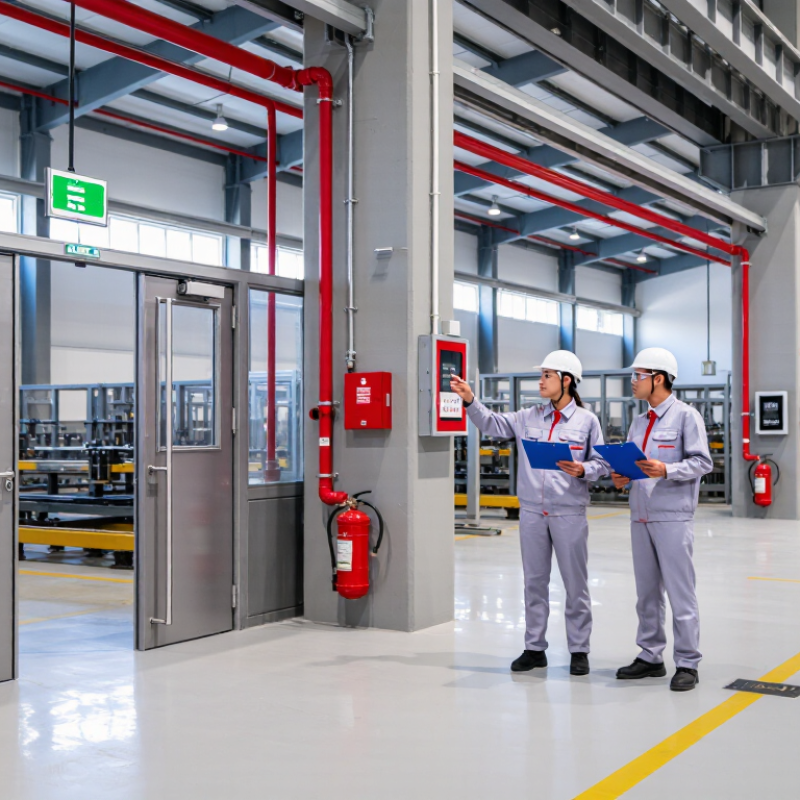
China Best Industrial Fire Safety Products Compliance Guide

Define China’s Fire-Product Scope Under GB 55037 and NFPA Risk Data

China Best Industrial Fire Safety Products Compliance Guide

Defining the product scope starts with GB 55037-2022, China’s mandatory fire safety code for building projects. It links fire protection to building use, height, occupancy, evacuation, compartmentation, and system design. A warehouse storing flammable materials needs a different protection profile from a low-risk office.

The practical scope may include fire alarm devices, emergency lighting, extinguishing equipment, sprinkler components, fire doors, smoke control equipment, and fire-resistant construction materials.

Do not treat every listed product as automatically subject to one approval route. Check the current certification catalogue, applicable GB standards, test reports, factory controls, and project specifications.

NFPA data adds useful risk context, but it does not replace Chinese compliance. The NFPA report Fire Loss in the United States During 2022 recorded about 1.5 million fires, 3,790 civilian deaths, and approximately 18.1 billion dollars in direct property damage.

Those figures support stronger detection, suppression, and inspection decisions. NFPA 13 and NFPA 72 can guide engineering comparisons, while GB requirements govern the Chinese project.

Field experience shows small gaps matter: an unsuitable detector location, blocked access, or an unverified valve can weaken an otherwise complete system.

Some assumptions remain uncertain. Risk categories should be reviewed against real inventory, process heat, dust, maintenance records, and changing occupancy, not copied from a generic checklist.

Classify Extinguishers, Alarms, Sprinklers, and PPE by GB Standards

China Best Industrial Fire Safety Products Compliance Guide

Industrial fire safety starts with correct classification, not attractive packaging. Portable extinguishers should match the fire risk, extinguishing agent, capacity, and applicable GB 4351 requirements. Water-based units suit ordinary combustibles, while dry powder units cover broader hazards. However, compatibility with energized equipment and production materials needs careful review.

Alarm equipment should be separated into detectors, alarm control units, manual call points, and linkage devices. Common references include GB 4715 for detectors and GB 4717 for fire alarm control units. Site conditions matter. Dust, steam, and welding fumes can create false alarms or blind spots. A factory audit should check alarm spacing, cable protection, power backup, and test records.

Sprinkler products belong to the GB 5135 series, but the correct type depends on temperature rating, response time, installation position, and stored goods. PPE requires the same discipline. Protective clothing, helmets, gloves, footwear, and respiratory equipment must match their exact GB or GB/T requirements. Certificates alone are not enough. Inspect labels, factory reports, material damage, and replacement dates. I have seen checklists look complete while ignoring maintenance access. That is an uncomfortable gap, but it deserves attention.

Verify Product Ratings, Test Methods, and NFPA 10 Service Intervals

China Best Industrial Fire Safety Products Compliance Guide

Industrial fire safety products should be verified before purchase, not after installation. Check the extinguisher rating, fire class, agent type, discharge range, and operating temperature. A higher rating is not automatically better. It must match the hazard, room size, and likely fuel.

Ask for traceable test reports from a competent, recognized laboratory. Confirm the test method, sample identification, pressure checks, and production date. Product labels should remain readable after transport and warehouse storage. For imported equipment, compare documents with the exact model delivered. Small differences matter. I have seen paperwork match a catalog while the cylinder marking differed. That should stop the acceptance process.

Tips: Record each unit’s location, rating, seal condition, pressure indicator, and inspection date. NFPA 10 generally expects user inspections at least monthly and maintenance by trained personnel at least annually. Some extinguishers require six-year internal maintenance, while hydrostatic testing intervals depend on the extinguisher type and construction. Always verify the applicable NFPA 10 edition and local authority requirements. A service sticker alone is weak evidence; keep inspection records, parts details, and technician qualifications. The schedule may seem excessive. It is easier to review records than explain an unavailable extinguisher after an incident.

China Best Industrial Fire Safety Products Compliance Guide

Verify product ratings, recognized test methods, and NFPA 10 inspection and service intervals before procurement or installation.

How to use this chart: Monthly visual inspection and annual maintenance are routine benchmarks. A six-year internal maintenance interval commonly applies to stored-pressure dry chemical extinguishers, while hydrostatic testing may be required at five-year or twelve-year intervals depending on extinguisher type, cylinder construction, and the applicable NFPA 10 table.

Product fire ratings must be verified from the permanent label and listing documentation. Ratings such as A, B, C, D, or K are not inferred from agent quantity. Confirm that the product was tested under the applicable recognized product test method, that the rating matches the intended hazard, and that the current NFPA 10 edition, local code, manufacturer instructions, and authority having jurisdiction are followed.

Complete CCC Certification, Type Testing, Factory Audits, and Traceability

China Best Industrial Fire Safety Products Compliance Guide

Complete CCC Certification, Type Testing, Factory Audits, and Traceability

For industrial fire safety products entering China, compliance begins with product classification, not paperwork. The applicable CCC scope must be confirmed against the product’s structure, function, materials, and intended installation. A reliable review maps each model to current certification rules, technical standards, and test parameters. Small differences matter. An alarm component, hose assembly, or suppression control unit may require different evidence. Treating similar products as identical creates avoidable delays.

Type testing should use production-representative samples, including critical seals, sensors, valves, and wiring. Test records need clear model numbers, drawings, revision codes, and controlled sample identification. If a factory changes a material after testing, the report may no longer represent the shipped product. That gap is easy to miss. It deserves a formal change-control review. Practical teams compare laboratory results with incoming inspection records and production data. They also verify calibration status before relying on measurements.

Factory audits examine more than clean floors and certificates. Auditors normally check purchasing controls, process instructions, operator training, inspection points, nonconforming product handling, and corrective actions. Traceability should connect raw materials to finished cartons through batch numbers, labels, and retained records. A digital system helps, but paper logs still fail when entries are late or incomplete. This is an area for honest reflection. A polished file cannot replace consistent factory behavior. Before shipment, verify certification marks, packaging information, and production status against approved records. Keep evidence accessible for surveillance and future model changes.

Audit Suppliers Using ISO 45001 Controls and Global Fire-Loss Data

China Best Industrial Fire Safety Products Compliance Guide

A supplier audit should test controls, not polished brochures. ISO 45001 provides a useful structure for reviewing hazard identification, worker competence, emergency planning, and corrective action. It does not certify a fire extinguisher, alarm, or suppression system. Buyers must verify product-specific test reports, traceable materials, calibration records, and batch inspections. Ask for evidence from an independent, competent laboratory. Sample products from finished stock, not only approved samples.

Global fire-loss data shows why this discipline matters. NFPA’s Fire Loss in the United States During 2023 reported about 1.50 million fires, 3,670 civilian deaths, and property damage near 22.3 billion US dollars. CTIF’s World Fire Statistics reports also show continuing pressure on industrial and commercial fire prevention worldwide. These figures are not a China-specific forecast, but they expose the cost of weak controls. During an audit, compare supplier procedures with actual warehouse conditions: blocked exits, dusty sensors, unlabeled chemicals, or expired inspection tags reveal more than certificates.

ISO 45001 evidence should include risk registers, toolbox training, contractor controls, incident investigations, and closure dates. Check whether management reviews recurring failures. Some audits still overvalue paperwork. That is a mistake. Record photos, interview operators, and witness an emergency drill. A supplier may meet a documented process while missing a practical hazard. The audit should question its own assumptions, too. Controls can look complete until a night-shift worker explains what really happens.

China Best Industrial Fire Safety Products Compliance Guide - Audit Suppliers Using ISO 45001 Controls and Global Fire-Loss Data

Supplier-audit matrix for industrial fire safety products manufactured in China. The checklist separates occupational health and safety management controls from product conformity evidence and uses recognized international standards and publicly reported fire-loss statistics.
Audit Dimension ISO 45001 Control Area Product or Process Requirement Objective Evidence to Review Reference Requirement or Benchmark Risk Priority Audit Result
Legal and regulatory compliance ISO 45001 Clauses 4.2, 6.1.3 and 9.1.2 The supplier shall identify applicable Chinese laws, export-market requirements, fire codes, occupational safety rules and product standards before production and shipment. Current legal register; compliance-obligation evaluation; documented corrective actions; evidence that regulatory changes are communicated to engineering and production teams. No overdue legal nonconformity and documented evaluation of applicable obligations at planned intervals. High Pass / Partial / Fail
Leadership and accountability ISO 45001 Clauses 5.1 and 5.3 Top management shall assign responsibility for worker safety, fire prevention, emergency readiness and product conformity. Signed OH&S policy; organization chart; named emergency coordinator; management-review minutes; defined authority to stop unsafe production. Responsibilities are documented, communicated and supported with resources and decision-making authority. High Pass / Partial / Fail
Hazard identification and risk assessment ISO 45001 Clause 6.1.2 The supplier shall assess ignition sources, combustible materials, electrical hazards, hot work, battery charging, pressure systems, chemical storage and maintenance activities. Process risk assessments; fire-load inventory; hazardous-area review; hot-work permit records; change-management assessments; worker consultation records. Risk assessments cover routine, non-routine, maintenance, contractor and emergency conditions. Critical Pass / Partial / Fail
Fire detection and alarm products ISO 45001 Clauses 8.1 and 8.2 Smoke, heat, flame and fire-alarm equipment shall be specified, tested, calibrated and traceable to the applicable product standard and intended environment. Type-test reports; routine-test records; calibration certificates; firmware or configuration control; detector sensitivity records; lot traceability. Testing follows the applicable product standard and the approved technical specification; failed units are segregated and dispositioned. High Pass / Partial / Fail
Portable fire extinguishers ISO 45001 Clauses 8.1.1 and 8.1.4 Extinguishers shall have verified extinguishing performance, pressure integrity, correct agent identification, safe operating instructions and production-batch traceability. Hydrostatic or pressure-test records; agent formulation and fill-weight records; valve and cylinder inspection records; labeling and instruction review; sample-retention records. Conformity is demonstrated against the destination-market standard and approved design; counterfeit or untraceable components are prohibited. Critical Pass / Partial / Fail
Fire hoses, hydrant equipment and couplings ISO 45001 Clauses 8.1 and 9.1 Hoses, couplings, valves and hydrant accessories shall meet pressure, leakage, dimensional, material and connection requirements for the intended system. Pressure-test curves; leakage-test records; dimensional inspection reports; material certificates; coupling compatibility checks; batch identification. No leakage or dimensional deviation beyond the approved specification; test equipment is calibrated and results are retained. High Pass / Partial / Fail
Fire pumps and water-based systems ISO 45001 Clauses 8.1, 8.2 and 9.1 Pumps and related equipment shall be verified for rated flow, pressure, automatic start, power supply, control-panel function and emergency operation. Factory acceptance test; pump performance curve; controller test; power-failure simulation; assembly inspection; maintenance instructions; nonconformity records. Measured performance matches the approved data sheet and applicable installation or certification requirements. Critical Pass / Partial / Fail
Fire doors, shutters and passive protection ISO 45001 Clauses 8.1.1 and 8.1.2 Passive fire-protection assemblies shall maintain specified fire resistance, smoke-control performance, hardware compatibility and installation tolerances. Fire-resistance test report; construction drawings; bill of materials; intumescent-seal records; hardware inspection; installation and labeling instructions. Tested assembly configuration is not changed without engineering approval and documented technical justification. High Pass / Partial / Fail
Electrical safety and control panels ISO 45001 Clauses 8.1.2 and 8.1.4 Electrical products shall control shock, short-circuit, overheating, ingress, grounding and unauthorized design changes. Insulation and dielectric-strength tests; grounding continuity records; enclosure ingress evidence; component approval list; electrical schematic revision control. Safety-critical components are approved, traceable and protected from substitution without formal change approval. Critical Pass / Partial / Fail
Chemical agents and clean-agent systems ISO 45001 Clauses 6.1.2, 8.1 and 8.2 Fire-suppression agents shall be identified, stored, handled and filled under controlled conditions, with environmental and worker-exposure risks assessed. Safety data sheets; agent batch certificates; cylinder-fill records; ventilation assessment; leak-test results; exposure controls; waste and recovery records. Chemical hazards are communicated and controlled; restricted or environmentally regulated agents are not substituted without documented approval. Critical Pass / Partial / Fail
Supplier and outsourced-process control ISO 45001 Clause 8.1.4 Critical external providers for cylinders, valves, electronic components, extinguishing agents and testing services shall be evaluated and monitored. Approved-supplier list; supplier audits; incoming inspection plans; certificates of analysis; subcontractor safety requirements; supplier corrective-action records. Safety-critical outsourced processes have defined acceptance criteria and are not accepted solely on a supplier declaration. High Pass / Partial / Fail
Emergency preparedness and response ISO 45001 Clause 8.2 The facility shall maintain emergency plans for fire, explosion, chemical release, power failure, evacuation and rescue, including coordination with external responders. Emergency plans; evacuation maps; drill records; alarm audibility checks; extinguisher and hose-station inspections; emergency-contact list; post-drill corrective actions. Drills are evaluated, lessons are recorded and corrective actions are assigned with deadlines and responsible owners. Critical Pass / Partial / Fail
Worker competence and training ISO 45001 Clauses 7.2 and 7.3 Workers shall be competent for fire prevention, equipment operation, hot work, chemical handling, emergency evacuation and inspection tasks. Training matrix; competency assessments; induction records; operator authorization; refresher training; contractor training and language-appropriate instructions. Personnel performing safety-critical tasks have current competence evidence before independent work. High Pass / Partial / Fail
Inspection, testing and calibration ISO 45001 Clause 9.1 Monitoring and measurement equipment shall be calibrated or verified, and safety inspections shall be planned, recorded and reviewed. Calibration certificates; gauge and test-equipment register; inspection schedules; test results; out-of-tolerance evaluations; equipment status labels. Calibration status is visible and results are traceable to the product batch, work order or inspection activity. High Pass / Partial / Fail
Traceability and product release ISO 45001 Clauses 8.1 and 8.6 Only conforming products shall be released, with traceability to raw materials, production date, inspection results and responsible personnel. Batch or serial-number system; final inspection records; release authorization; certificate-of-conformity process; quarantine-area controls; shipment records. A shipped unit can be linked to its critical components, test results and production records. Critical Pass / Partial / Fail
Incident reporting and corrective action ISO 45001 Clauses 10.2 and 10.3 Fire incidents, near misses, product failures, customer complaints and nonconformities shall be investigated for root causes and systemic actions. Incident log; root-cause analysis; containment records; corrective-action effectiveness checks; recurrence analysis; management escalation criteria. Actions address underlying causes, include responsible owners and are verified for effectiveness before closure. High Pass / Partial / Fail
Global fire-loss risk context ISO 45001 Clauses 6.1.1 and 6.1.2 Procurement risk should reflect the consequences of fire, including deaths, injuries, business interruption, property damage and supply-chain disruption. Product criticality assessment; customer-site hazard profile; business-continuity analysis; historical incidents; fire-load and occupancy assumptions. The latest available national or sector fire-loss data is reviewed during product-risk and supplier-priority decisions. High Pass / Partial / Fail
Supplier approval decision ISO 45001 Clauses 9.1, 9.2 and 10.3 Approval shall be based on evidence, risk, corrective-action performance and the intended destination-market requirements rather than price alone. Completed audit report; weighted score; open critical findings; corrective-action plan; re-audit decision; technical approval and procurement sign-off. Any unresolved critical product-safety or legal-conformity finding requires containment and management approval before shipment. Critical Approved / Conditional / Rejected
Reference notes: ISO 45001:2018 clause references are used for occupational health and safety management controls; ISO 45001 certification does not by itself prove that a fire safety product conforms to a product-performance standard. Product requirements should be matched to the destination market and the applicable standards, codes and authority approvals. Global fire-loss context should be refreshed with the latest available data from recognized authorities, such as national fire statistics agencies, fire-service organizations, building-safety authorities and the United Nations disaster-loss databases. The audit-result fields are intended for supplier assessment and should be completed using verified records, witnessed tests and representative product sampling.

FAQS

How should portable fire extinguishers be selected?

Match the extinguisher to the fire risk, fuel, room size, and operating conditions. Water-based units suit ordinary combustible materials. Dry powder units cover broader hazards. Higher ratings are not always better. Fit matters more.

What information should be checked on an extinguisher?

Check the fire class, agent type, capacity, discharge range, pressure indicator, and operating temperature. Record its location and inspection date. The label must remain readable. A damaged seal needs attention.

How often should extinguishers be inspected and serviced?

User inspections should normally occur at least monthly. Trained personnel should perform maintenance at least annually. Some units require internal maintenance after six years. Testing intervals depend on construction and extinguisher type. Confirm local requirements.

What documents should accompany fire-safety products?

Request traceable test reports from a competent laboratory. Review model numbers, sample identification, test methods, pressure checks, and production dates. Compare documents with the exact delivered model. Small differences matter. Paperwork can mislead.

How should factory alarms be classified and installed?

Separate detectors, alarm control units, manual call points, and linkage devices. Review detector spacing, cable protection, backup power, and test records. Dust, steam, and welding fumes may cause false alarms. They may also hide real smoke.

What should be considered when choosing sprinklers?

Select sprinklers by temperature rating, response time, installation position, and stored goods. The correct type depends on the warehouse environment. A ceiling system may not suit every storage arrangement. Access matters too.

What should be checked for protective equipment?

Match clothing, helmets, gloves, footwear, and respiratory equipment to their applicable requirements. Inspect labels, material damage, factory reports, and replacement dates. Certificates alone are not enough. A cracked face shield is obvious. Hidden wear is harder.

What does effective certification and traceability control involve?

Confirm the applicable certification scope for each model, structure, material, and intended use. Type testing should use production-representative samples. Track seals, sensors, valves, wiring, and material changes. Connect raw materials to finished cartons through batch records. Clean files do not prove consistent production.

Conclusion

This guide explains how to identify industrial fire safety products that fall within the scope of China’s GB 55037 requirements while using NFPA risk data as a supporting reference for hazard assessment. It outlines how to classify fire extinguishers, alarm systems, sprinklers, and personal protective equipment according to applicable GB standards. The guide also emphasizes reviewing product ratings, test methods, installation conditions, inspection records, and recommended service intervals to ensure equipment remains reliable throughout its lifecycle.

To ensure compliance with industrial fire safety standards, organizations should establish a complete certification and quality-control process, including required CCC certification, type testing, factory audits, product traceability, and documentation management. Supplier evaluations should incorporate ISO 45001-based safety controls, manufacturing consistency, corrective-action procedures, and relevant fire-loss data. By combining technical verification, risk-based purchasing, regular maintenance, and transparent supplier oversight, industrial facilities can reduce fire risks and build a more accountable, resilient safety management system.

Henry

Henry

Henry is a dedicated marketing professional with a profound expertise in the company's offerings. With years of experience in the industry, he possesses an impressive understanding of the market dynamics and consumer behaviors that drive success. Henry is committed to sharing his insights through......