 FibroCeram Materials
Chemical stability is a practical requirement in coatings, polymers, adhesives, pharmaceuticals, and industrial fluids. In China, manufacturers increasingly combine formulation control with advanced testing to improve product performance. The goal is clear: Enhance chemical stability in harsh operating environments.
High humidity, strong acids, alkaline cleaners, heat, and repeated temperature changes can quickly damage vulnerable materials. A sealing compound may swell after weeks of exposure. A protective coating may blister near a coastal factory. These details reveal why laboratory results alone cannot define the best solution.
Reliable Chinese suppliers often use purified raw materials, stabilizers, corrosion-resistant additives, and controlled curing processes. They may also apply accelerated aging, immersion testing, thermal cycling, and compatibility analysis. Experienced engineers compare test conditions with real production environments. This step matters.
No single formula works everywhere. That assumption can fail.
A strong solution should match the chemical medium, operating temperature, pressure, service life, and maintenance schedule. Independent verification can strengthen confidence, especially when products must meet ISO, ASTM, or industry-specific requirements. Documentation should include batch records, test methods, exposure times, and observed failure modes.
Some recommendations remain imperfect because field conditions change. A material that performs well in a controlled chamber may behave differently beside salt spray, vibration, or fluctuating pressure. Careful suppliers acknowledge these limits instead of promising absolute durability. Practical experience, transparent data, and continuous improvement provide a more dependable path toward chemical stability.
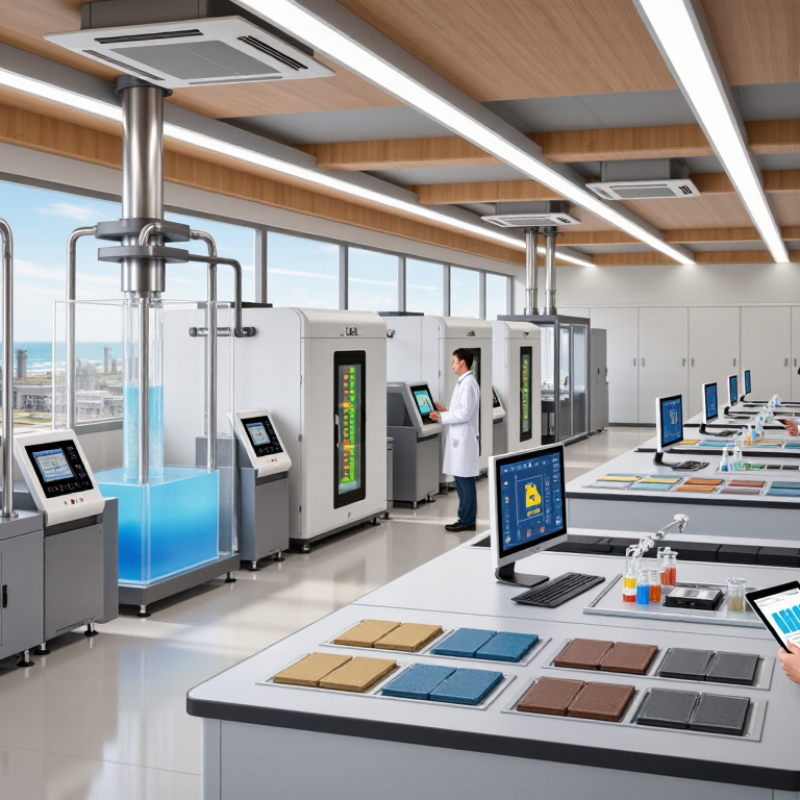
China Best Solutions to Enhance Chemical Stability?
Chemical Stability: Definition, Importance, and Core Evaluation Criteria
Chemical stability describes a substance’s ability to preserve its identity, purity, and performance over time. Temperature, humidity, light, oxygen, pH, and container materials can accelerate degradation. A clear solution may still contain invisible impurities.
In practical development work, laboratories in China often combine controlled storage with analytical testing. Samples may be held at 25°C and 60% relative humidity, then exposed to accelerated conditions at 40°C and 75% relative humidity. Light studies can reveal changes in color, potency, or molecular structure. Testing should measure assay, degradation products, pH, appearance, viscosity, and particulate matter. Small details matter.
Reliable evaluation requires validated methods, reference standards, calibrated instruments, and traceable records. Container-closure compatibility also deserves attention. A chemical may react with rubber, plastic, glass, or metal surfaces during storage. Oxygen exposure can create a different degradation pattern from heat alone. No test is perfect. One weakness is assuming accelerated results always predict real-time behavior. They do not.
Better solutions include oxygen-controlled filling, suitable moisture barriers, light-resistant packaging, and temperature monitoring throughout transport. Chinese research teams can improve reliability by combining local climatic data with international stability guidance. Independent review of unexpected results is valuable. A missed interaction or poorly mixed sample can distort the entire study. Stability decisions should therefore rely on trends, not one attractive data point.
| Evaluation Dimension | What It Measures | Typical Test Conditions or Metric | Common Acceptance Consideration | Stability-Enhancement Approach |
|---|---|---|---|---|
| Assay and Potency Retention | The amount of active chemical remaining after storage or processing. | Quantitative assay by a validated stability-indicating analytical method; results are commonly reported as a percentage of the initial value. | The product specification should define a justified assay range and account for method variability, manufacturing variation, and shelf-life requirements. | Reduce exposure to heat, oxygen, moisture, light, and reactive impurities; optimize formulation pH and packaging. |
| Degradation Products | Chemical impurities formed through oxidation, hydrolysis, photolysis, thermal degradation, or interaction with excipients. | Trend individual and total degradants using chromatographic methods such as HPLC or GC, as appropriate. | Each specified or unspecified impurity should remain within scientifically justified limits and applicable regulatory thresholds. | Use high-purity raw materials, control trace metals, add suitable antioxidants or chelators when justified, and avoid incompatible excipients. |
| Temperature Sensitivity | The rate at which chemical reactions accelerate as temperature increases. | Arrhenius modeling may be used to estimate temperature dependence; a 10°C increase often increases reaction rate by approximately 2–4 times, depending on activation energy. | Use temperature studies to identify degradation pathways and establish storage or transport limits. | Select heat-resistant formulations, reduce thermal exposure during processing, and validate temperature-controlled logistics when needed. |
| Humidity and Hydrolytic Stability | Sensitivity to water vapor, absorbed moisture, and water-driven chemical reactions. | Relative-humidity studies commonly include 60%, 65%, or 75% RH at controlled temperatures, depending on the product and climatic zone. | Monitor assay, degradants, water content, dissolution or release behavior, and physical changes over time. | Use moisture-barrier packaging, desiccants where appropriate, low-moisture excipients, protective coatings, or anhydrous processing. |
| pH-Dependent Stability | The effect of acidity or alkalinity on reaction rate, solubility, ionization, and degradation pathways. | Evaluate degradation across a justified pH range using buffered solutions or formulation-relevant media. | Identify the pH region with the lowest degradation rate while maintaining acceptable solubility and product performance. | Use buffering agents, adjust formulation pH, separate incompatible components, or select a more stable salt or solid form. |
| Oxidative Stability | Susceptibility to oxygen, peroxides, light-generated reactive species, or metal-catalyzed oxidation. | Assess oxygen exposure, peroxide challenge, headspace conditions, and trace-metal effects where relevant. | Oxidation-related impurities should remain controlled throughout the proposed shelf life. | Apply nitrogen flushing, low-oxygen packaging, oxygen scavengers, antioxidants, chelators, and protection from excessive light. |
| Photostability | The effect of ultraviolet and visible light on chemical potency, impurities, color, and physical performance. | A commonly used pharmaceutical photostability exposure is at least 1.2 million lux-hours of visible light and at least 200 watt-hours per square meter of near-UV energy. | Compare exposed and protected samples for assay, degradation products, appearance, and other critical quality attributes. | Use light-resistant containers, opaque secondary packaging, UV-absorbing materials, and controlled warehouse lighting. |
| Solid-State and Polymorphic Stability | Changes in crystal form, amorphous content, hydration state, crystallinity, or particle structure. | Evaluate with techniques such as XRPD, DSC, TGA, microscopy, water-content testing, and particle-size analysis. | The selected solid form should remain within defined physical and chemical specifications during storage. | Select a stable polymorph, control humidity and temperature, optimize crystallization, and limit mechanical or thermal stress. |
| Packaging Compatibility | Potential migration, adsorption, permeation, leaching, or chemical interaction between the product and its container. | Compare packaging systems under long-term and accelerated conditions; assess moisture-vapor and oxygen transmission where relevant. | The package should maintain product quality and provide adequate protection throughout distribution and use. | Choose high-barrier materials, suitable liners and closures, compatible elastomers, and an appropriate container size and headspace. |
| Accelerated Stability Testing | Provides an early indication of degradation behavior and potential storage risks. | A commonly used condition for many drug products is 40°C ± 2°C and 75% RH ± 5% RH for up to six months, when applicable. | Results support development decisions but do not automatically replace long-term stability data. | Use stress testing to prioritize formulation, process, packaging, and storage improvements before scale-up. |
| Long-Term Stability Testing | Confirms chemical stability under the proposed market storage conditions. | Common examples include 25°C ± 2°C/60% RH ± 5% RH or 30°C ± 2°C/65% RH ± 5% RH, depending on the intended market and product. | Evaluate assay, degradants, appearance, water content, dissolution or release, and other product-specific attributes. | Use real-time trends to establish shelf life, retest period, storage instructions, and in-use conditions. |
| Analytical Method Capability | Whether the test method can reliably distinguish the unchanged chemical from relevant degradation products. | Use validated, stability-indicating methods with documented specificity, accuracy, precision, linearity, range, and detection capability. | The method should detect meaningful changes without confusing degradation with analytical variability. | Develop forced-degradation studies, improve chromatographic separation, and use orthogonal techniques when necessary. |
| Overall Stability Decision | The combined assessment of chemical, physical, microbiological, and functional quality over time. | Use time-point trends, statistical evaluation where appropriate, degradation kinetics, and risk-based evaluation of critical quality attributes. | A stable product remains within predefined specifications under labeled storage and reasonably foreseeable handling conditions. | Combine robust formulation design, controlled manufacturing, protective packaging, validated testing, and continuous stability monitoring. |
It means a substance keeps its identity, purity, and performance over time. A clear solution can still contain invisible impurities.
Heat, humidity, light, oxygen, pH, and container materials can accelerate degradation. Repeated warming and cooling may add hidden stress.
Samples may stay at 25°C and 60% relative humidity for real-time observation. Accelerated studies may use 40°C and 75% relative humidity. Light exposure can reveal color or potency changes.
Testing should examine assay, degradation products, pH, appearance, viscosity, and particles. Molecular structure may also require specialized analysis. Small details matter.
Rubber, plastic, glass, or metal may interact with the stored chemical. Seals, moisture barriers, and light protection also affect product life. The container is part of the formulation.
No. Accelerated results may not match real-time behavior in every situation. Transport vibration, repeated opening, and unexpected heat can change the outcome. That assumption needs review.
They can use validated methods, calibrated instruments, reference standards, and traceable records. Independent review helps investigate unusual results. One missed interaction can distort the whole study.
Mixing time, drying temperature, cleaning controls, and ingredient interactions may affect performance. The main active ingredient is not the only concern. Formulation review is safer.
Decisions should follow trends across multiple data points, not one attractive result. Temperature monitoring during transport adds useful evidence. Even a good study may need revision.
Chemical stability determines how well a substance maintains its composition, performance, and safety during storage, processing, and use. It is essential for product reliability, consistent quality, extended service life, and reduced waste. Core evaluation criteria include resistance to heat, moisture, oxygen, light, pH changes, mechanical stress, and interactions with other materials. Formulation design, raw material purity, packaging conditions, manufacturing controls, and storage environments all influence stability performance.
China offers a broad range of practical solutions, including controlled formulation optimization, protective coatings, suitable stabilizing additives, moisture- and oxygen-barrier packaging, surface treatment, and improved process control. These approaches can help manufacturers Enhance chemical stability in harsh operating environments while maintaining efficiency and safety. Stability performance should be verified through accelerated aging, thermal analysis, compatibility testing, environmental exposure, and long-term monitoring. By matching testing methods and stabilization technologies with the chemical’s properties and application conditions, users can select suitable solutions for industrial, agricultural, energy, materials, and other compliant applications.
